
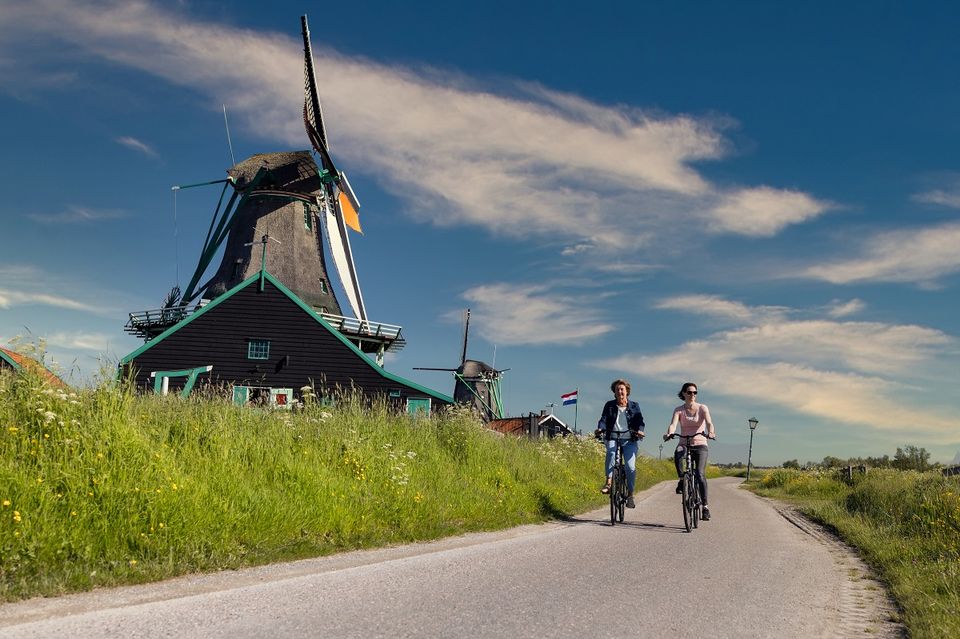
Ode to the picturesque Laag Holland landscape
The scenery of Laag Holland has been the inspiration of many an artist for centuries. This route takes you past these idyllic spots...
Claude Monet, Jan Toorop and even Paul Signac were inspired to produce their masterpieces here.
Ode to the picturesque Laag Holland landscape
Laag Holland is a region where beautiful pictures are guaranteed. Especially on a sunny day, you are occasionally short of eyes. Wide views over the Markermeer, interrupted here and there by a sailing boat. Vast meadows with grazing cows and sheep and twittering birds. Picturesque villages with old, monumental buildings with special facades where you can still taste the atmosphere of days gone by. Stately windmills that recall times when they were still hard at work grinding polders dry. And here and there a touch of traditional costume. It is the image that many foreigners have of the Netherlands and that people from all over the world come to enjoy.
So ...
Claude Monet, Jan Toorop and even Paul Signac were inspired to produce their masterpieces here.
Ode to the picturesque Laag Holland landscape
Laag Holland is a region where beautiful pictures are guaranteed. Especially on a sunny day, you are occasionally short of eyes. Wide views over the Markermeer, interrupted here and there by a sailing boat. Vast meadows with grazing cows and sheep and twittering birds. Picturesque villages with old, monumental buildings with special facades where you can still taste the atmosphere of days gone by. Stately windmills that recall times when they were still hard at work grinding polders dry. And here and there a touch of traditional costume. It is the image that many foreigners have of the Netherlands and that people from all over the world come to enjoy.
So do artists. For centuries. Over the years, Laag Holland has been home to several great talents. For instance, Fabritius (Rembrand's most talented pupil) was a born and bred Beemsterling, the eccentric Anton Heyboer lived with his five wives in Den Ilp and made tens of thousands of works there, and Maarten Oortwijn charted the development of his hometown Purmerend through the years with his drawings.
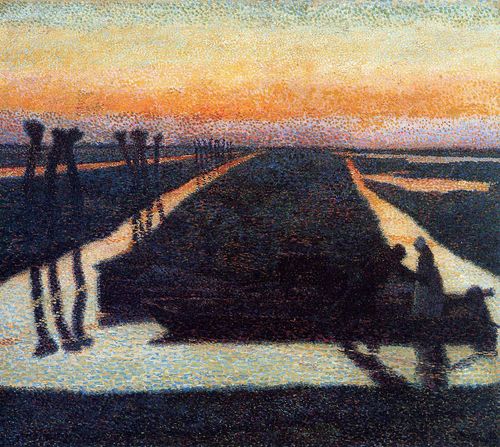
But there were also passers-by. How about Paul Signac? He visited Volendam and paid for his stay at Hotel Spaander with a work of art. It turned out to be the most expensive paid overnight stay ever. And Jan Toorop created one of his most famous works in picturesque Broek in Waterland. The painting went all over the world. And finally, Claude Monet. Who does not know him? He was so inspired by the Zaan region that he made about 35 works of art from it.
Where have all these icons been? What did they do and see? And why were they so fascinated by Laag Holland? To find out, you can now follow in their footsteps for a day. See Laag Holland the way they did. Discover the landscapes they were so inspired by and experience the atmosphere of the historical villages that accommodated them. Walk in the footsteps of the famous painters by following this route; it promises to be a fun and unique experience!
This route has been developed as a circular tour. It is therefore possible to start at any point. The route is approximately 92 km. Ideal for an e-bike/e-scooter tour, but also as a multi-day route. Stay overnight at one of the special accommodations along the way and set off full of energy during the day to discover the most picturesque spots. From museums with impressive collections to beautiful vistas, with always a nice break spot nearby.
Tips on the go:
- Visit the Zaans Museum and admire a real Claude Monet.
- As you cycle through the Zaan bend in Wormer, you imagine yourself in Arnold de Lange's painting
- See the impressive rusk tower in Wormer
- Along the way you will see several mills including Molen de Koker, the place where the paper for Beethoven's scores was developed, and further along, the Necker mill along the North Holland Canal
- Pause in Purmerend and have a look at the Koemarkt and the Purmerends Museum
- Farm the Unicorn in Middenbeemster is arguably one of the most beautiful farms in the country
- Buy stamps of Fabritius' world-famous 'Little Goldfinch' at the Betje Wolff Museum
- In Edam, enjoy the special protected townscape. Visit the Edam Museum and the historic Cheese Market.
- From the Dike in Volendam, you have a view over the setting Paul Signac used one of his world-famous paintings (tip! The Volendam museum has a real Paul Signac in its collection).
- Take the audio tour in Volendam: Volendam Artists' Village
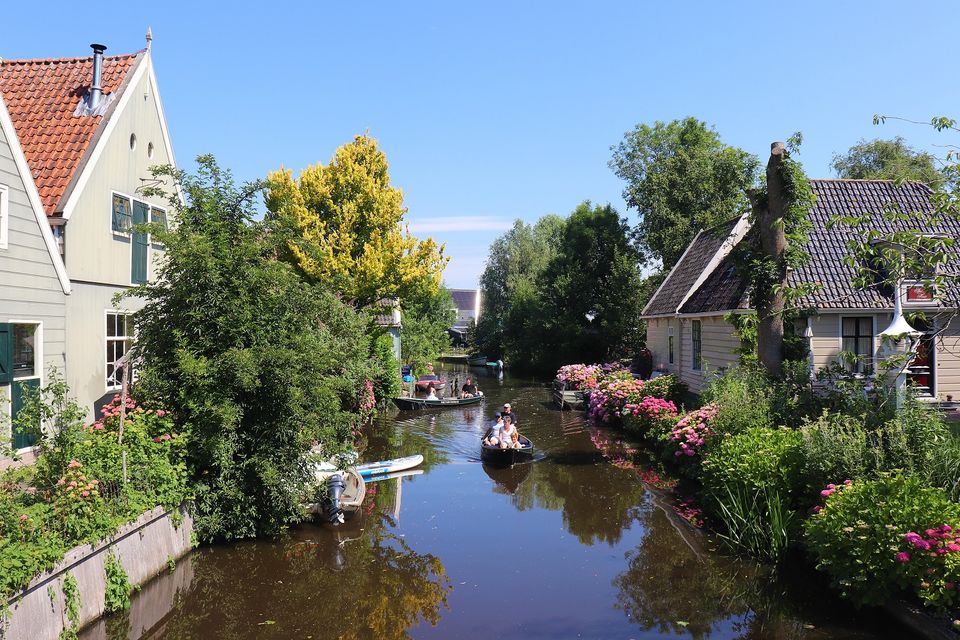
- Rent a boat in Overleek and take a look at the polders from the water. Jan Toorop made the famous painting'Broek in Waterland' here
- Become one with nature at visitor centre Ilperveld or at Oostzanerveld. Enjoy the endless views over the unique peat meadow landscape, where various boating excursions are possible
- Visit the Anton Heyboer gallery in Landsmeer
- Check out the Twiske Mill. Did you know that this water mill still serves and is inhabited by a real miller?
Do you have a little less time? Then choose one of the three partial routes. These routes range from 36 to 42 km and also show you a wonderful glimpse of picturesque Laag Holland, with various break points along the way. From catering establishments to museums, all located along the route.
1. Want to cycle in the Edam, Volendam and Monnickendam area? Check out the partial route here.
2. Want to cycle in the Purmerend and Beemster area? Check out the partial route here.
3. Want to cycle in the Zaanstad, Wormerland, Landsmeer and Oostzaan area? Check out the partial route here.
Don't have your own bike? There are several locations along the route where you can rent a bike or e-bike.
You are going to see this
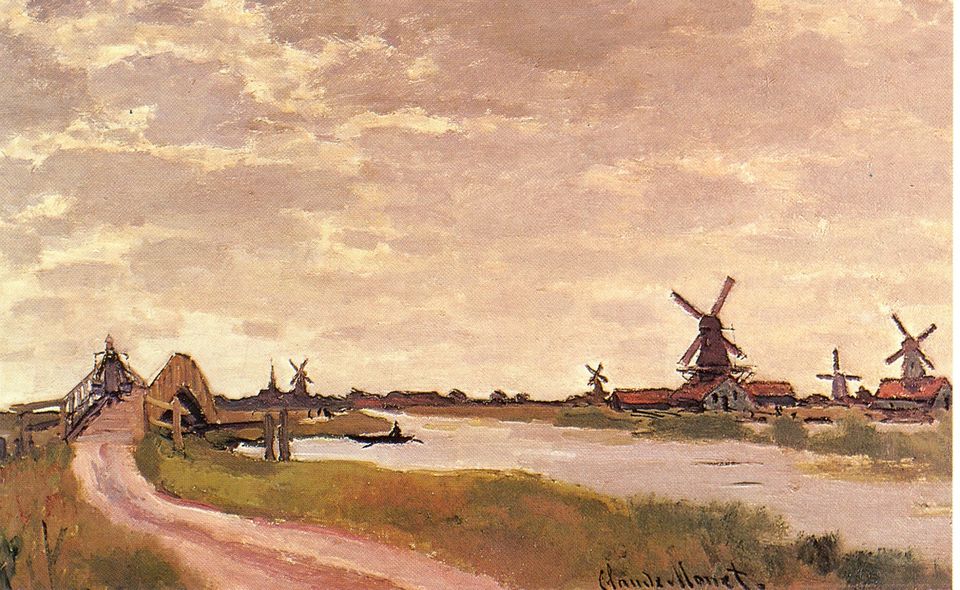
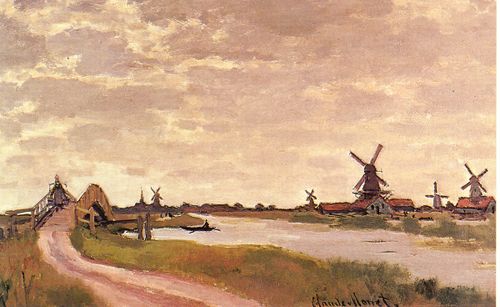
Claude Monet: Haaldersbroek in 1871
During his visit to Zaandam, Monet was so impressed by the Zaanse landscape, mills and wooden ships that he produced 25 paintings and nine sketches of them.
Claude Monet: Haaldersbroek in 1871
During his visit to Zaandam, Monet was so impressed by the Zaanse landscape, mills and wooden ships that he produced 25 paintings and nine sketches of them.
His works showcase multicoloured buildings, windmills, wooden houses, beautiful cloudscapes, shipping and activity. The landscape and some of the places he visited can still be seen today on a guided walk through the centre of Zaandam. You will walk past several places where Monet made his paintings at the time, such as the famous blue house and the place where Monet painted the painting 'De Voorzaan en de Westerhem'.
If you would like to see this Monet work in real life after the walk, set course towards the Zaans Museum. They acquired it a few years ago. Besides, here you can admire all the paintings and sketches Monet made in Zaandam in 1871 in full size in an interactive presentation. Even the letter Monet wrote to his good friend and painter Camille Pissarro on the day of his arrival in Zaandam can be found here.
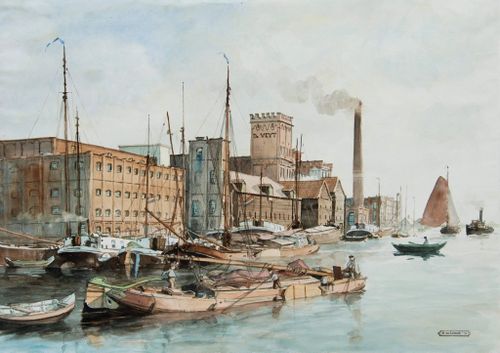
Arnold de Lange: Zaanbocht
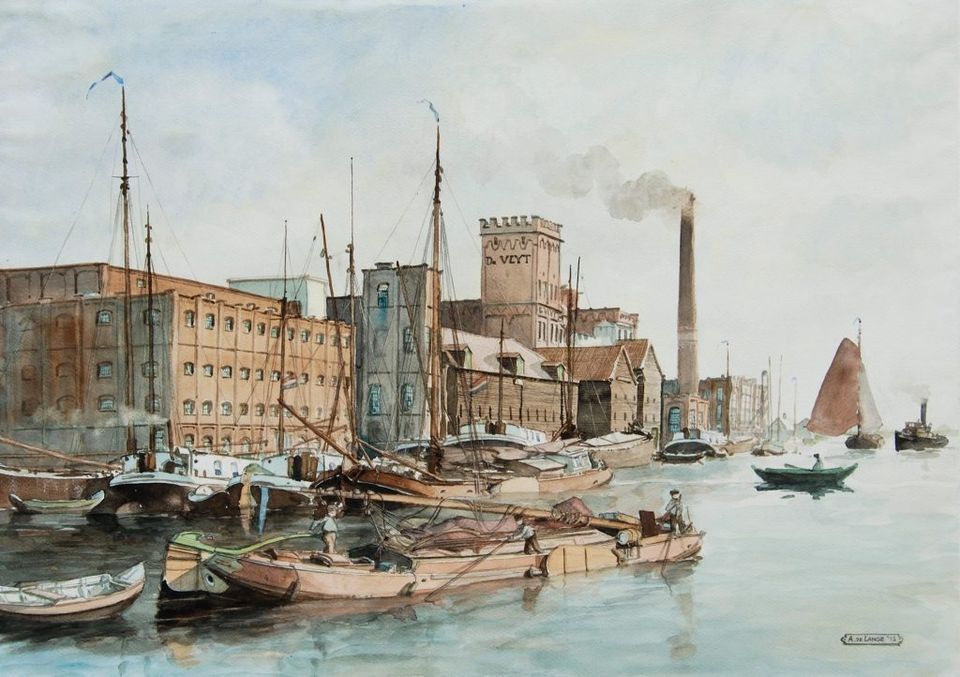
Arnold de Lange, born in Wormerveer in 1968, is self-taught and, as a painter, takes inspiration from the old masters of the 17th, 18th and 19th centuries.
Arnold de Lange: Zaanbocht
Arnold de Lange, born in Wormerveer in 1968, is self-taught and, as a painter, takes inspiration from the old masters of the 17th, 18th and 19th centuries.
He mainly focuses on painting figurative subjects such as landscapes, village views and prints of the Zaan and North Holland countryside, and lately also a lot of maritime works with mainly ship portraits of Dutch classic ships, newly built with classic lines or ships from earlier centuries. His oeuvre also includes other maritime subjects such as inland navigation scenes or coastal and seascapes.
These maritime works stem from two of the painter's passions n.v. maritime history and painting. Before putting an idea for a painting on canvas, Arnold does a lot of research into the subject he wants to depict. To do this, he visits shipping museums where he studies ship models or dives into archives in search of, for instance, construction drawings of ships he wants to portray. The artist gets much of his knowledge from books in his library at home.
His paintings are regularly exhibited and used as illustrations for books and magazines, and several institutions and private collectors of maritime art own works by him.
Rusk Tower
The tower marks an important piece of history of Wormer/Jisp at the time of the whaling and rusk-baking industries.
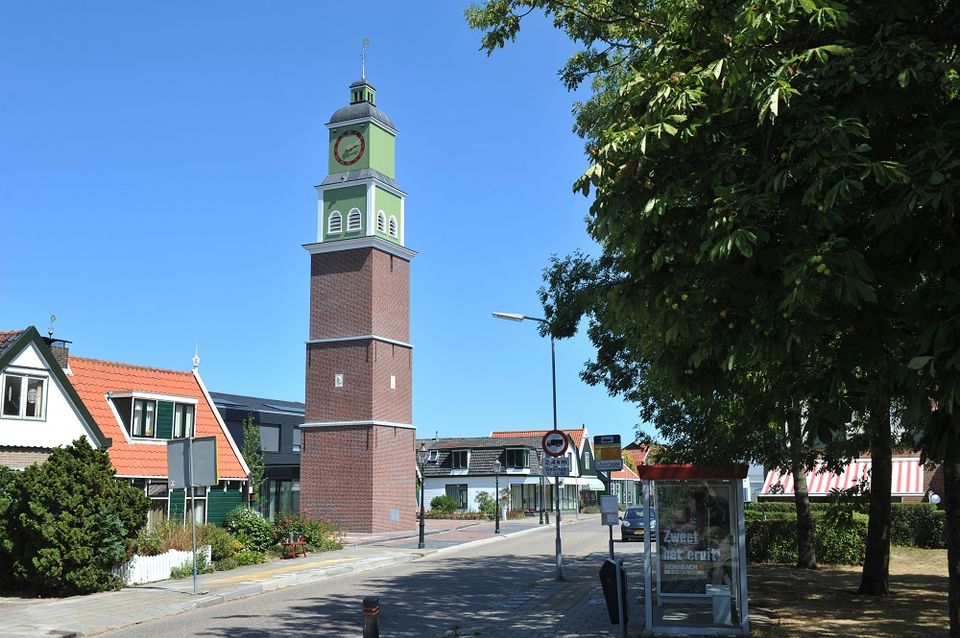
Rusk Tower
The tower marks an important piece of history of Wormer/Jisp at the time of the whaling and rusk-baking industries.
The baking of rusks largely took place in wooden buildings. To prevent fire, it was decided by the municipal council on 20 December 1605 that the fireplaces of the ovens had to remain extinguished between 6pm-24am to prevent overheating. After first the night watchman signalled the time signals with his radel through the village, later the church bell signalled it. However, because in the western part of the village the church bell could not be heard properly in certain wind directions, an additional detached bell tower was built in 1620.
Flour mill De Koker
The history of De Koker dates back to 1592, the year the flour mill was first mentioned. Together with other mills, it ground flour for ships' rusks and for the starch used to keep lace collars in shape.
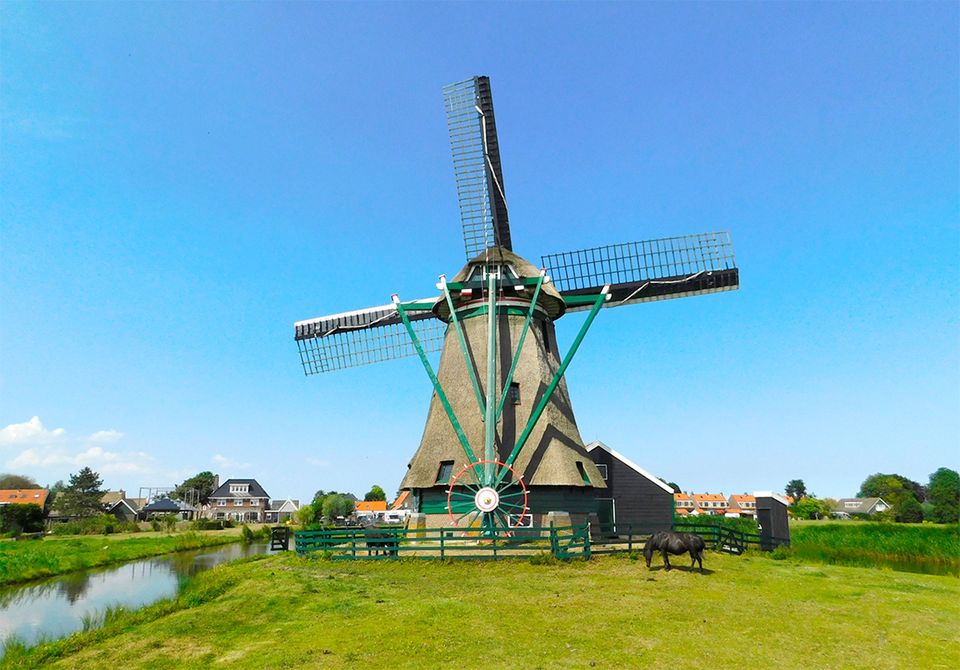
Flour mill De Koker
The history of De Koker dates back to 1592, the year the flour mill was first mentioned. Together with other mills, it ground flour for ships' rusks and for the starch used to keep lace collars in shape.
Ship's rusk was eaten on board the ships of the VOC and WIC. Ship's rusks were nutritious and kept for a very long time. De Koker is the only remaining flour mill that made the flour for ship rusks.
In the 19th century, the mill burned and was struck by lightning after being rebuilt. Thanks to a flour mill from Graft, De Koker could be rebuilt again. In1928, the mill fell into disuse only to be added to the property of De Zaansche Molen 20 years later in deplorable condition. Needless to say, De Koker was restored.
Remarkably, until the end of the 19th century, the mill was supplied with grain by means of a boat that sailed up to the mill.
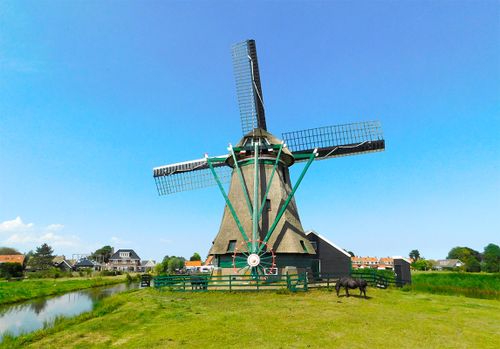
The Neckermolen
The Neckermolen (Nekker mill) from 1631 is a reed-covered octagonal ground-sailor with an old Dutch sails. Together with an electric pumping station, the polder mill pumps the Wormer, Jisp and Neck water board.
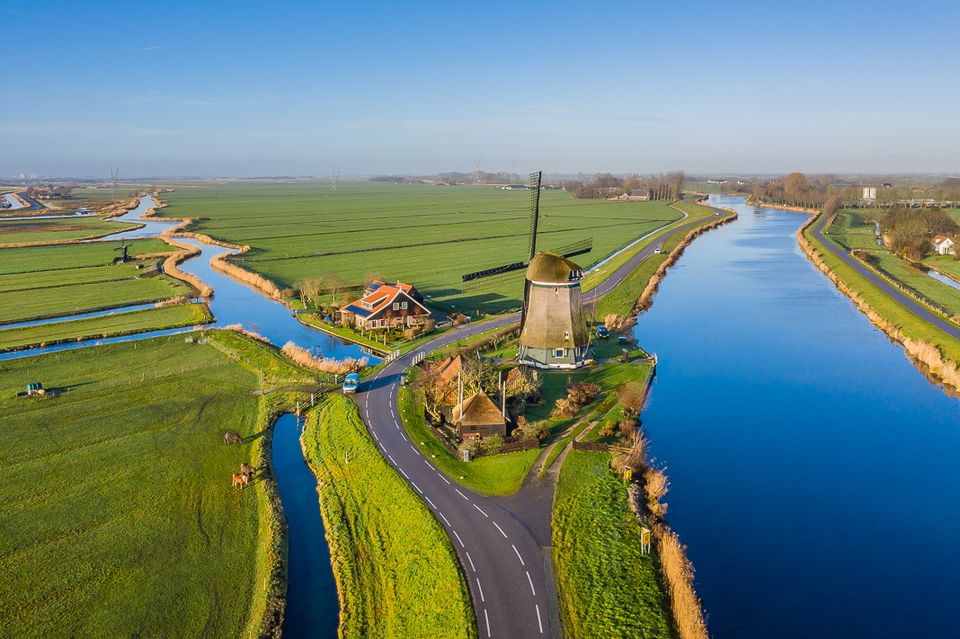
The Neckermolen
The Neckermolen (Nekker mill) from 1631 is a reed-covered octagonal ground-sailor with an old Dutch sails. Together with an electric pumping station, the polder mill pumps the Wormer, Jisp and Neck water board.
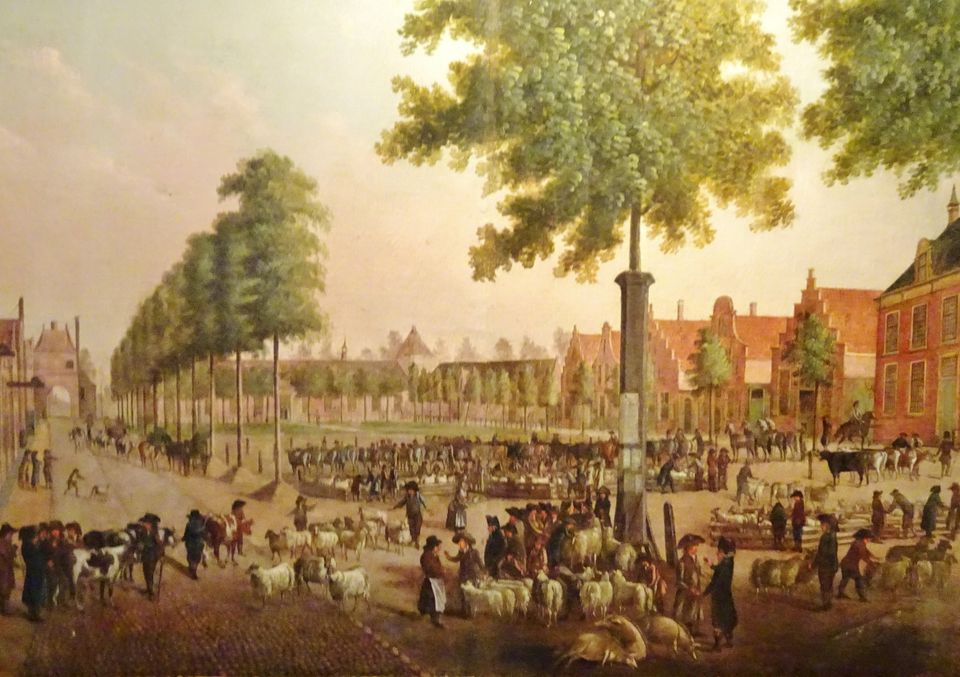
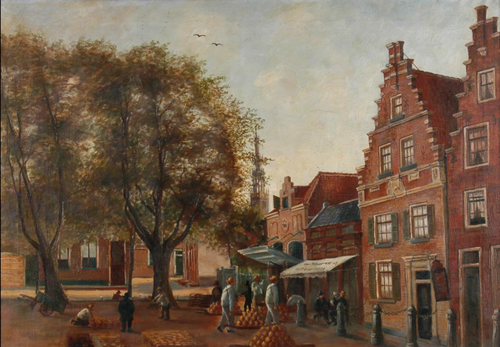
Painter unknown: Koemarkt in Purmerend
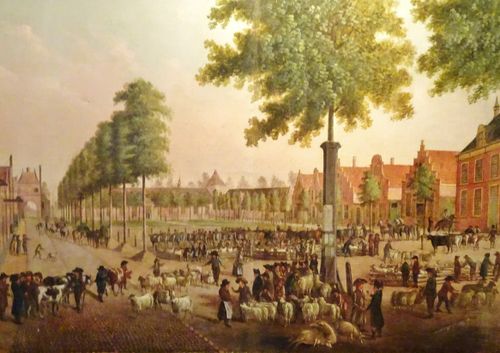
The painting is an oil on canvas. The depiction gives a good idea of the functioning of the Beestemarckt, as the Koemarkt was then called.
Painter unknown: Koemarkt in Purmerend
The painting is an oil on canvas. The depiction gives a good idea of the functioning of the Beestemarckt, as the Koemarkt was then called.
After the reclamations of the Beemster, Purmer and Wormer in the early 17th century, Purmerend had become an important market town, selling the agricultural produce of the surrounding countryside. And that meant a lively and busy market. A farmer with cows just passed through the Purmerpoort. Not only cows, but also sheep, pigs and horses are waiting for a new owner. Here they are engaged in handshaking. The cows are tied to a rope stretched between posts. The sheep and pigs are herded together and on the large tree in the middle hangs an announcement the sale of horses. The painting is unique because no other paintings of the Koemarkt from this period are known.
Purmerends Museum
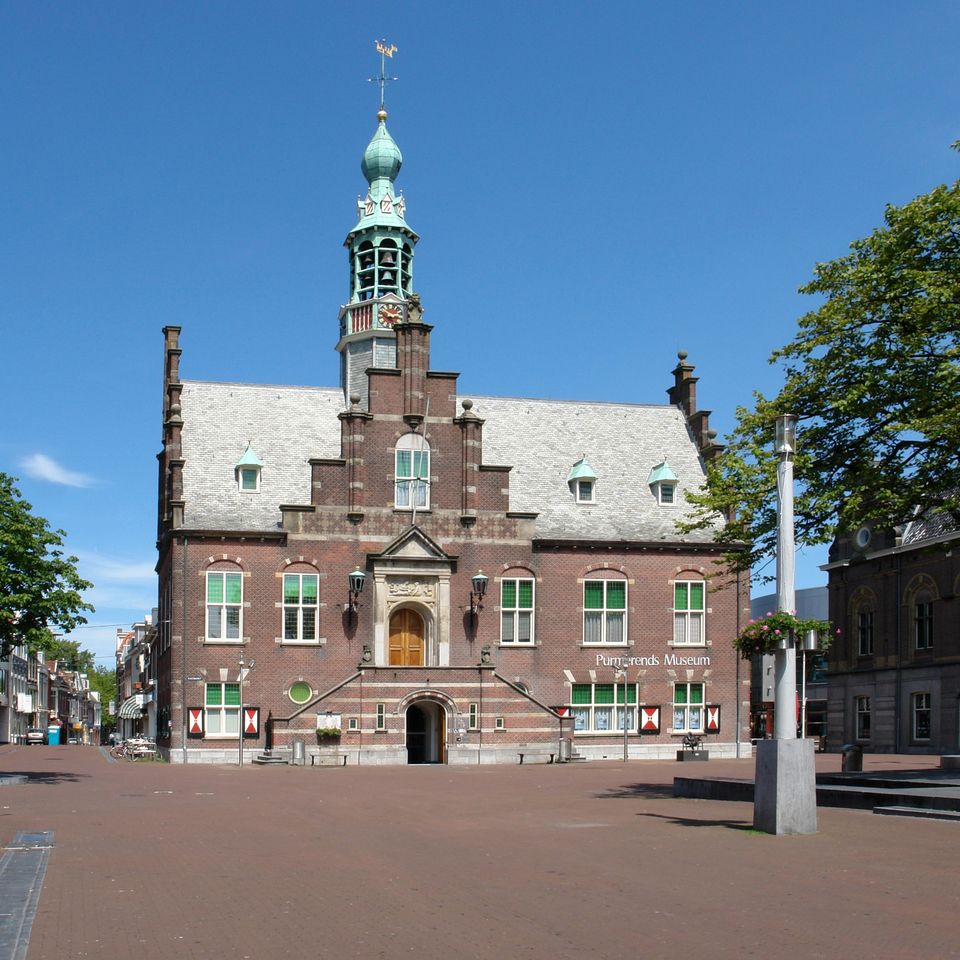
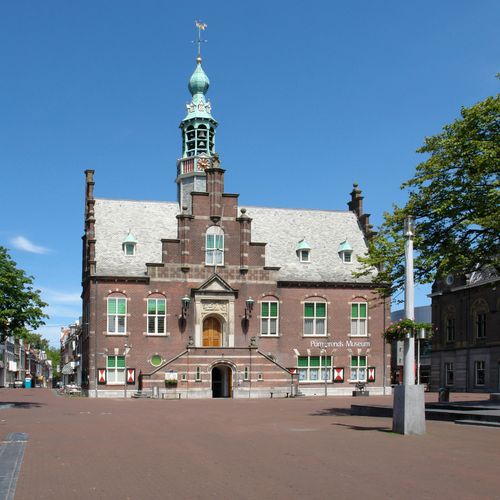
In the heart of Purmerend, in the middle of the Kaasmarkt, stands the Purmerends Museum. This former town hall tells the history of Purmerend; from fishing village to market town between the reclamations of the Beemster, the Purmer and the Wormer.
Purmerends Museum
In the heart of Purmerend, in the middle of the Kaasmarkt, stands the Purmerends Museum. This former town hall tells the history of Purmerend; from fishing village to market town between the reclamations of the Beemster, the Purmer and the Wormer.
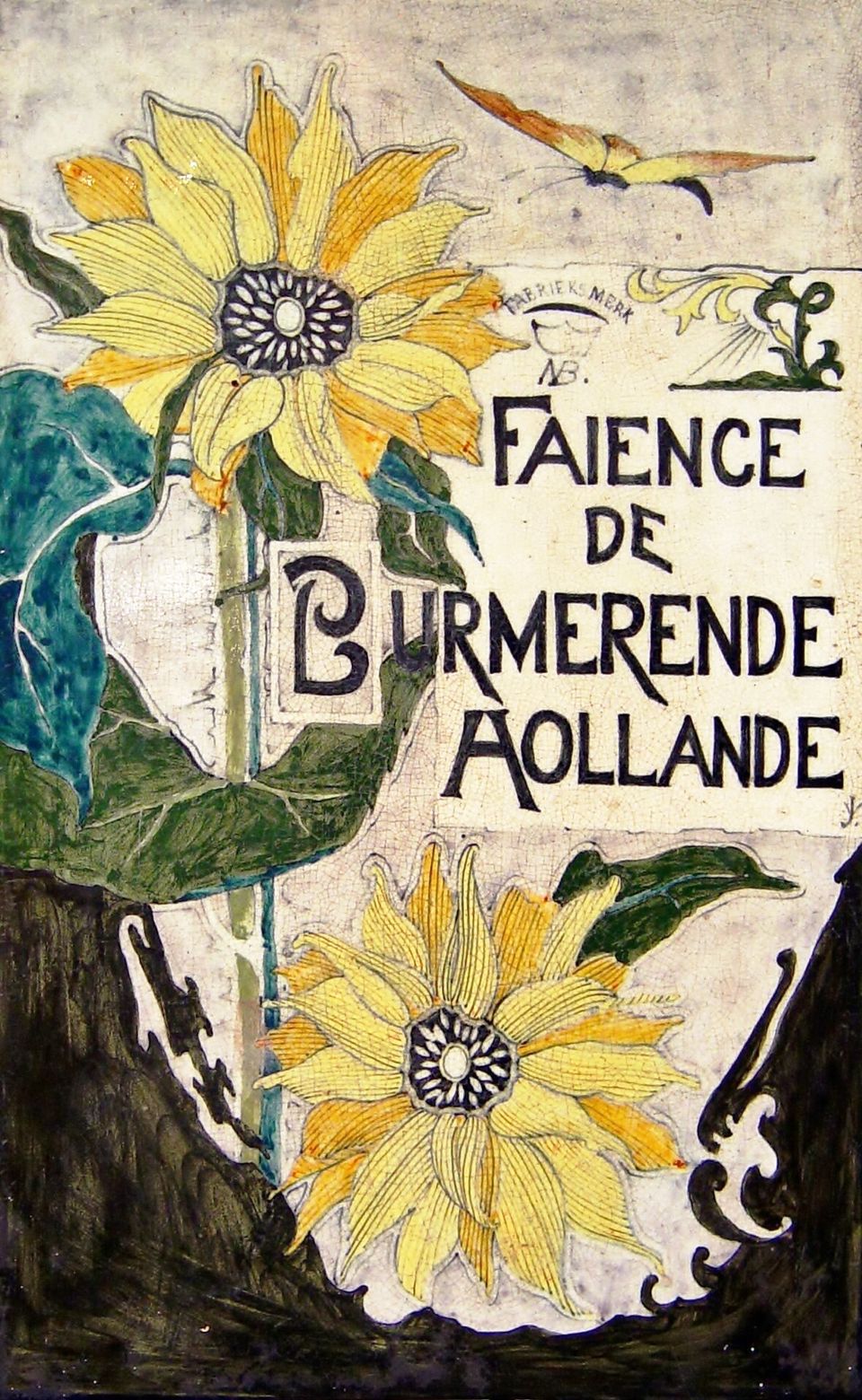
In addition, the museum displays early work by Purmerend-born architects and designers J.J.P. Oud and Mart Stam and designer Jac. Jongert, known for the classic Van Nelle house style. The museum also has the largest collection of Purmerends Jugendstil pottery from the period 1895-1907 with beautiful vases, bowls and sculptures by the earthenware bakeries Wed. N.S.A. Brantjes & Co, NV Haga, L. Huisenga and Jb Vet & Co.
The museum also hosts temporary exhibitions throughout the year, often focusing on themes related to the history of the city and region or (hand-painted) ceramics.
In the Museum Shop and VVV Purmerend adjacent to the museum, visitors will find all kinds of information about the town and region, such as maps, folders and cycling and walking routes, as well as various local and regional products, books and small promotional gifts.
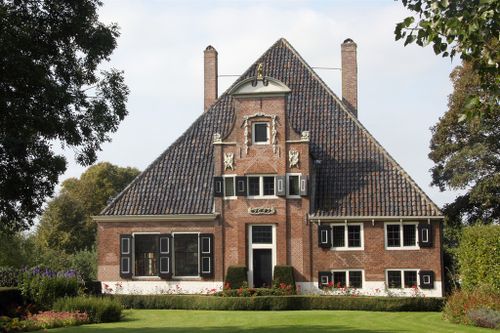
Farm "The Unicorn"
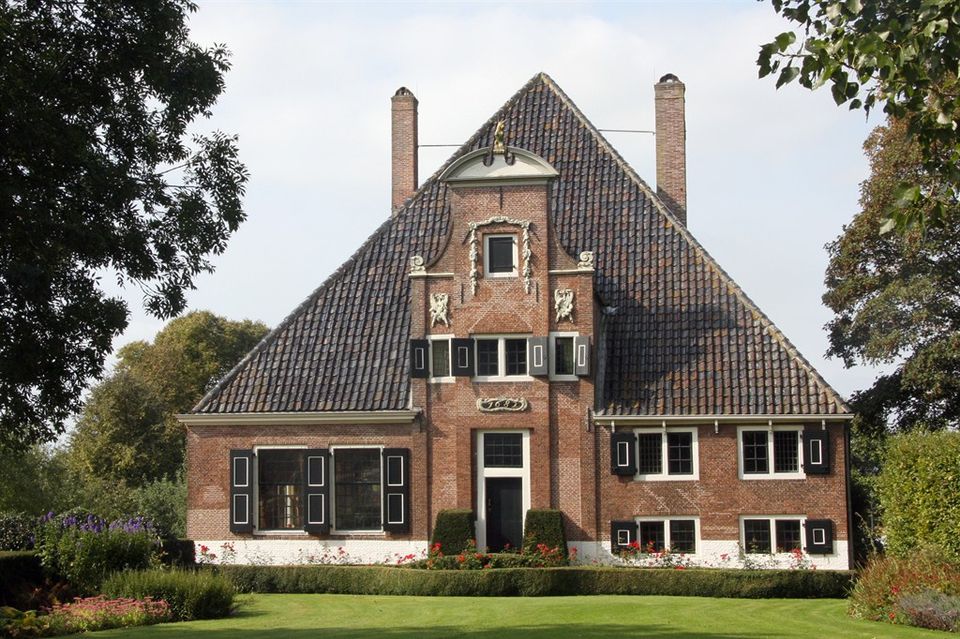
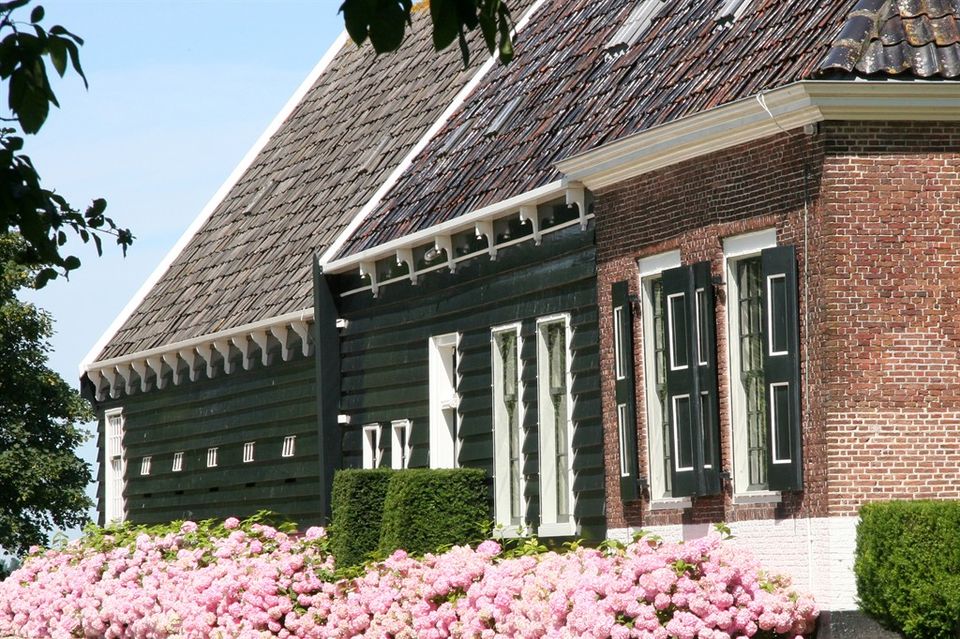
Farmhouse "De Eenhoorn" is the richest example of a stolp farm in De Beemster. The living area is made of brick and the barn area extended backwards is made of wood.
Farm "The Unicorn"
Farmhouse "De Eenhoorn" is the richest example of a stolp farm in De Beemster. The living area is made of brick and the barn area extended backwards is made of wood.
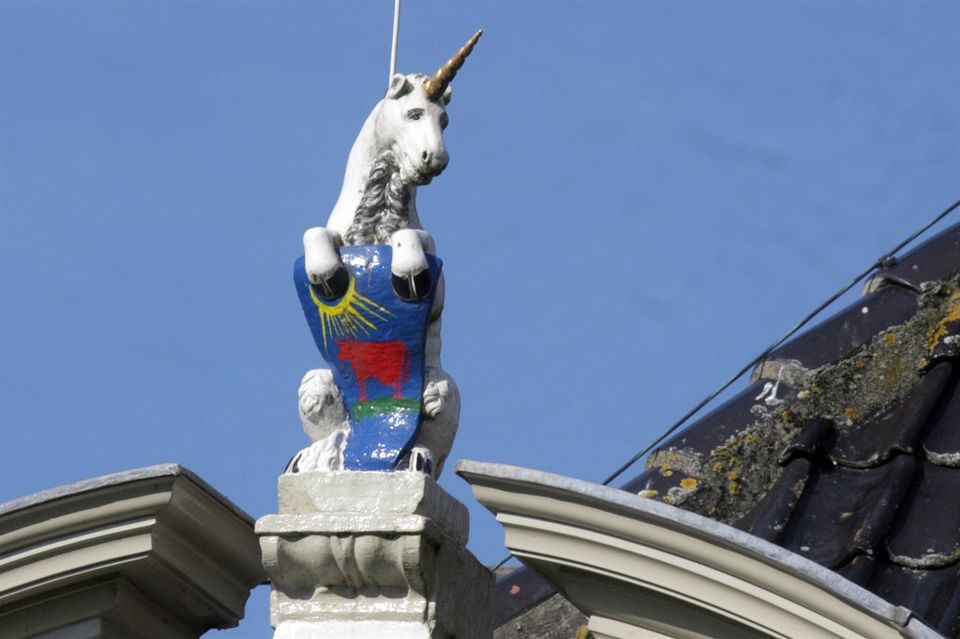
The raised central part with neck gable is a variant of the Amsterdam Vingboons style (Philip Vingboons), crowned with, among other things, the statue of a unicorn and decorated with carved gable ornaments and a cartouche with 1682. The living area is partly cellared and the milk cellar has a tiled fireplace.
Typical of these farms are the large orchards. These had several functions: in addition to fruit production, they provided coppicing and tool wood. In early spring, sheep and their newborn lambs roamed there. Later in summer, calves grazed there. The client then was the mayor of Hoorn.
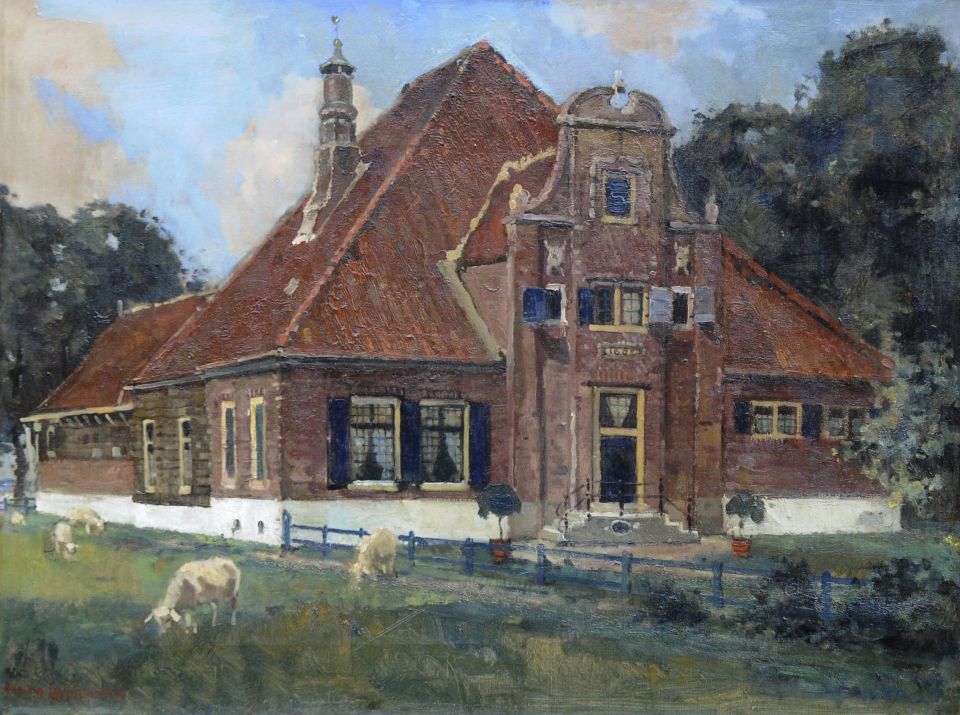
Frans Langeveld: Farm De Eenhoorn
Amsterdam native Frans Langeveld studied chemistry before devoting himself entirely to painting.
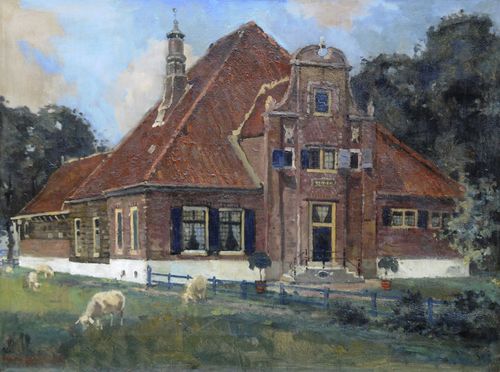
Frans Langeveld: Farm De Eenhoorn
Amsterdam native Frans Langeveld studied chemistry before devoting himself entirely to painting.
He took classes at the Rijksnormaalschool in the capital and was then a pupil of G.W. Dijsselhof. Initially, he painted landscapes, Amsterdam cityscapes and interiors. His work is firm, robust and somewhat rugged in structure. Plodding people, action, movement and the epic in nature attracted him.
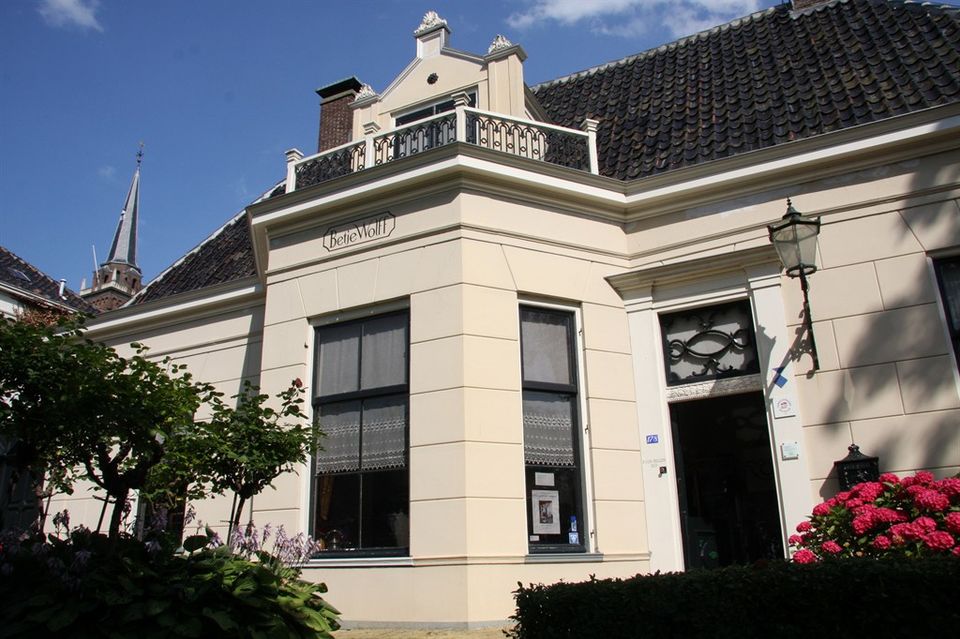
Betje Wolff Museum
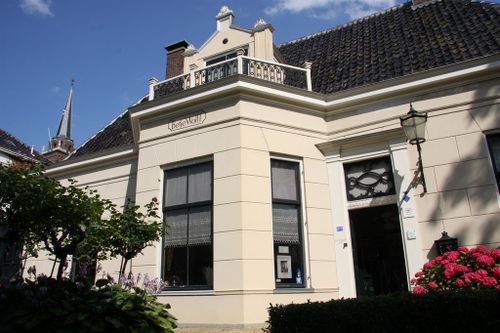
The former vicarage of the N.H. church in Middenbeemster has housed the "Betje Wolff Museum" since 1950.
Betje Wolff Museum
The former vicarage of the N.H. church in Middenbeemster has housed the "Betje Wolff Museum" since 1950.
The name of this museum is taken from the well-known 18th-century writer Elizabeth Wolff, born Bekker, who lived in the rectory during her marriage to Reverend Adrianus Wolff (1759 - 1777).
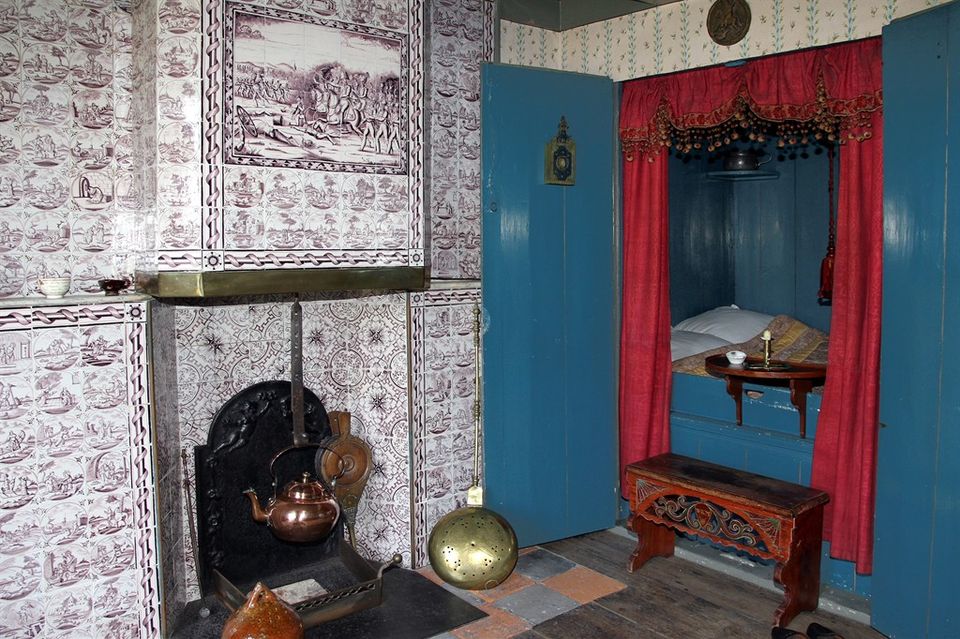
The museum offers a large number of period rooms from different periods and brings to life three centuries of living culture of Beemster and its surroundings. Furthermore, the museum has an 18th-century-style restored parsonage garden. Changing exhibitions are organised in summer.
Kipperust
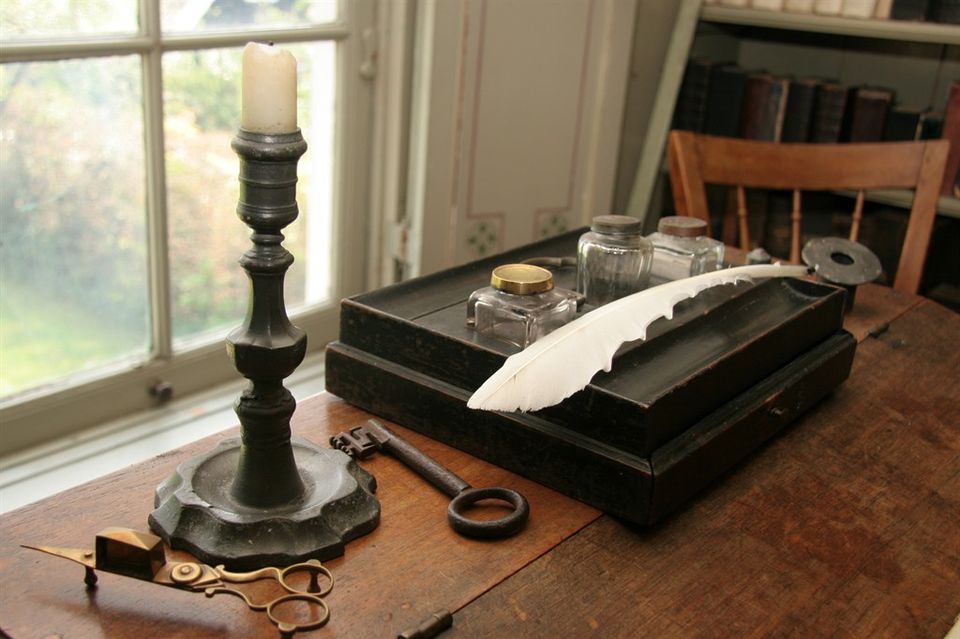
The attic houses Betje's study and book room, which she herself called 'Kipperust' and which was fully restored in 1953. The library contains almost complete editions of the works of Betje Wolff and her lifelong friend Aagje Deken, as well as many books that were once part of Betje's treasury.
With the help of a lavishly illustrated guidebook, visitors can walk freely through the museum. For groups, there is the possibility of an introduction and/or guided tour. In addition, the museum offers many other facilities. Due to the historical layout of the building, Museum Betje Wolff has limited access for the disabled.
Edam Museum
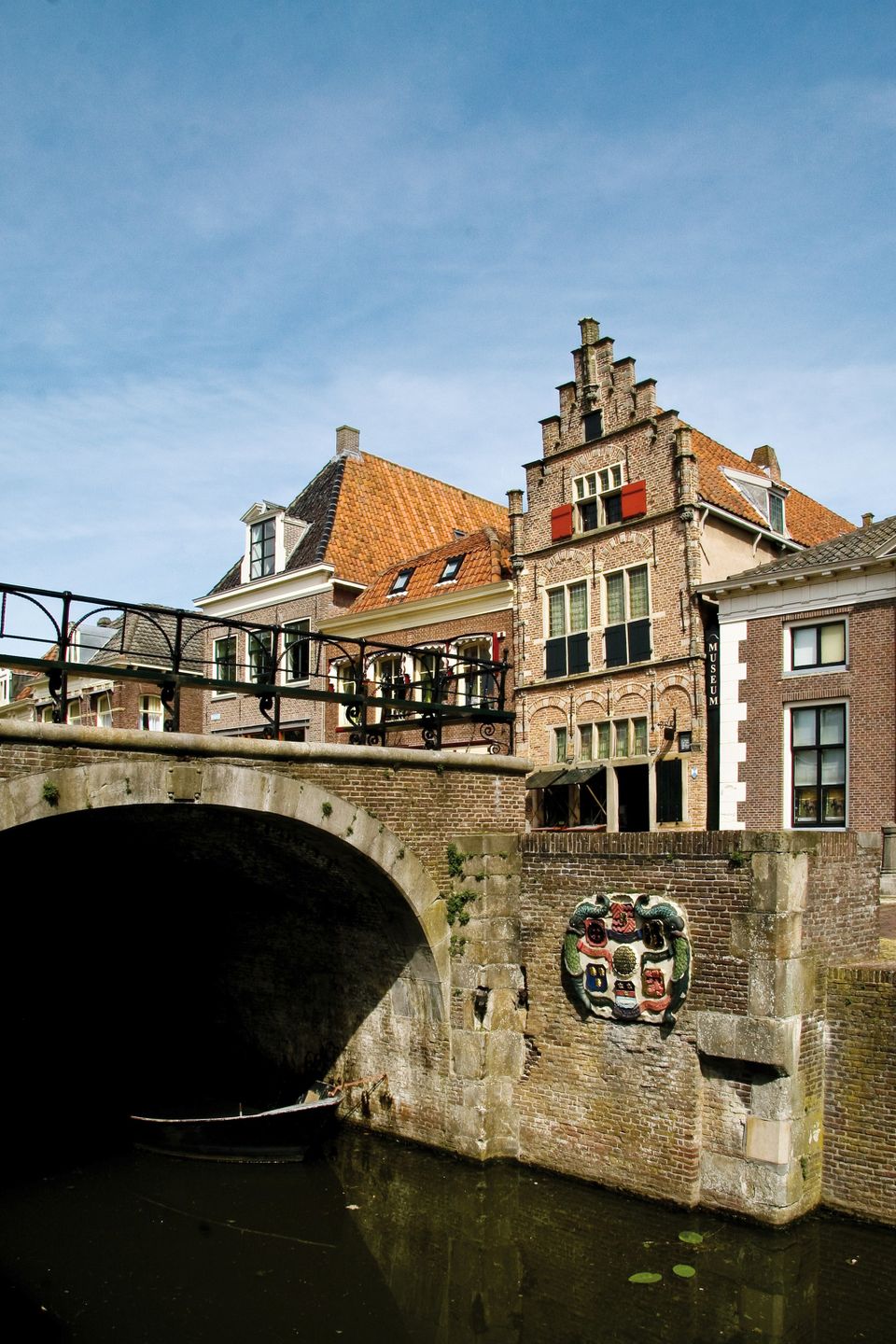
Edams Museum is one of the oldest museums in North Holland!
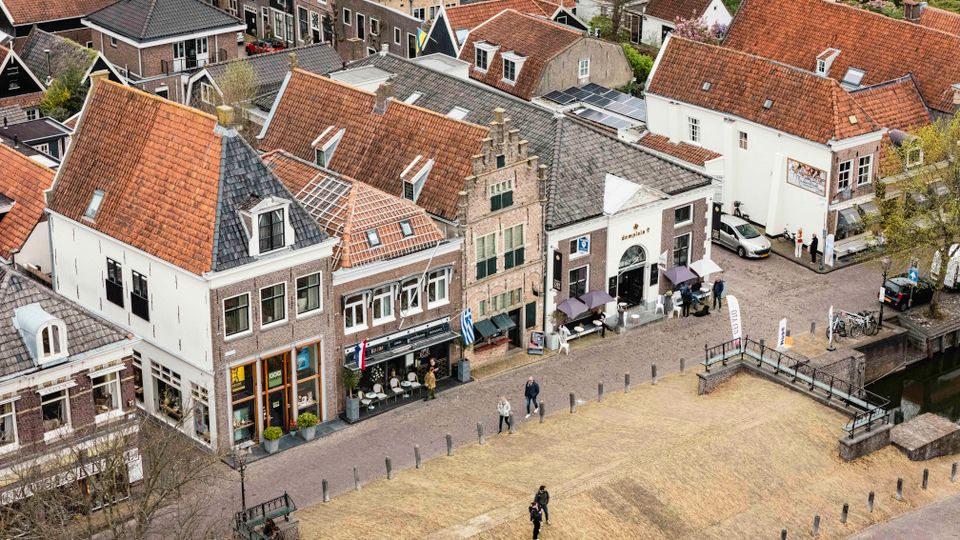
Edam Museum
Edams Museum is one of the oldest museums in North Holland!
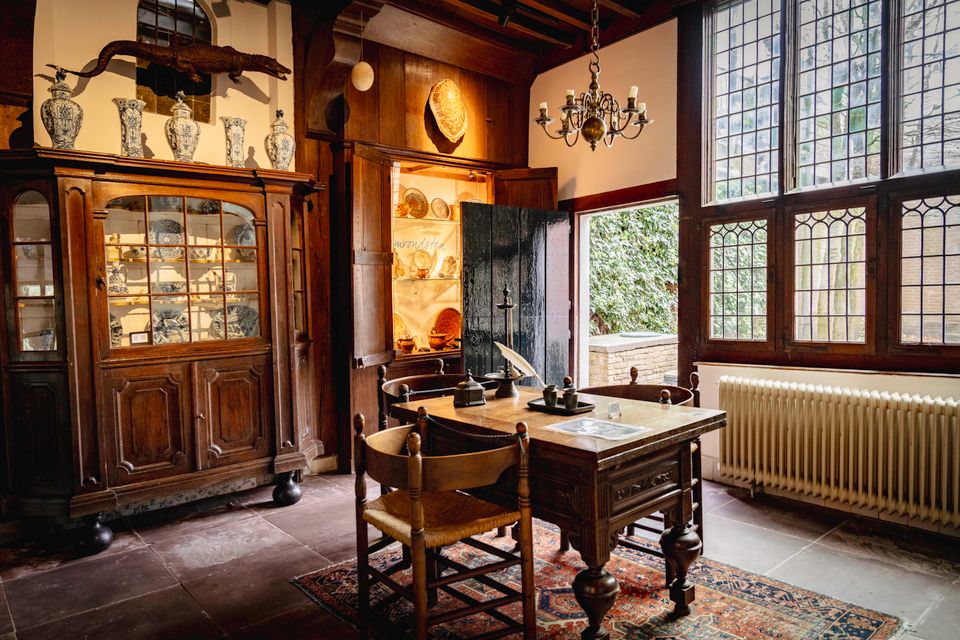
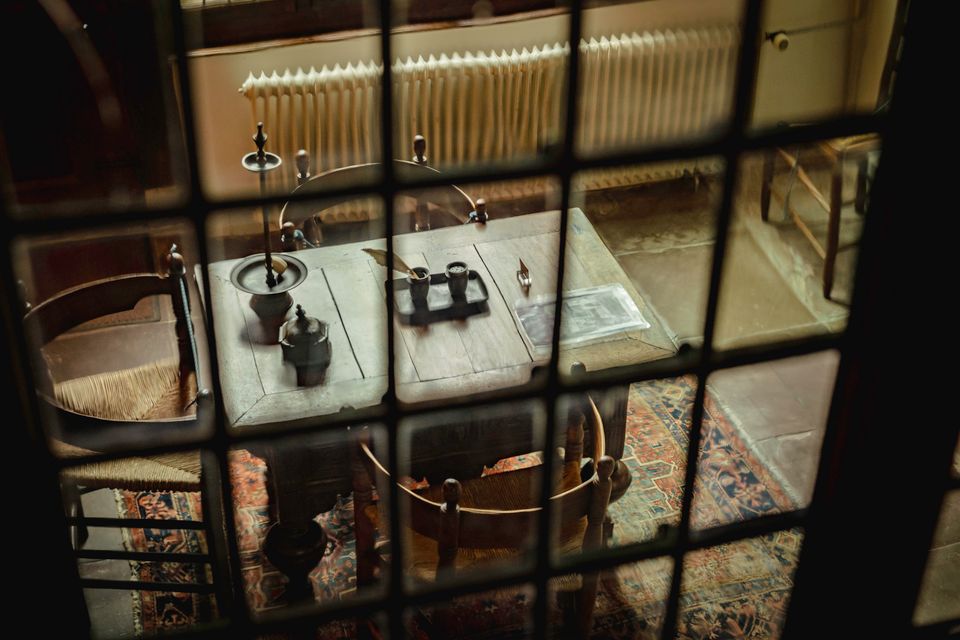
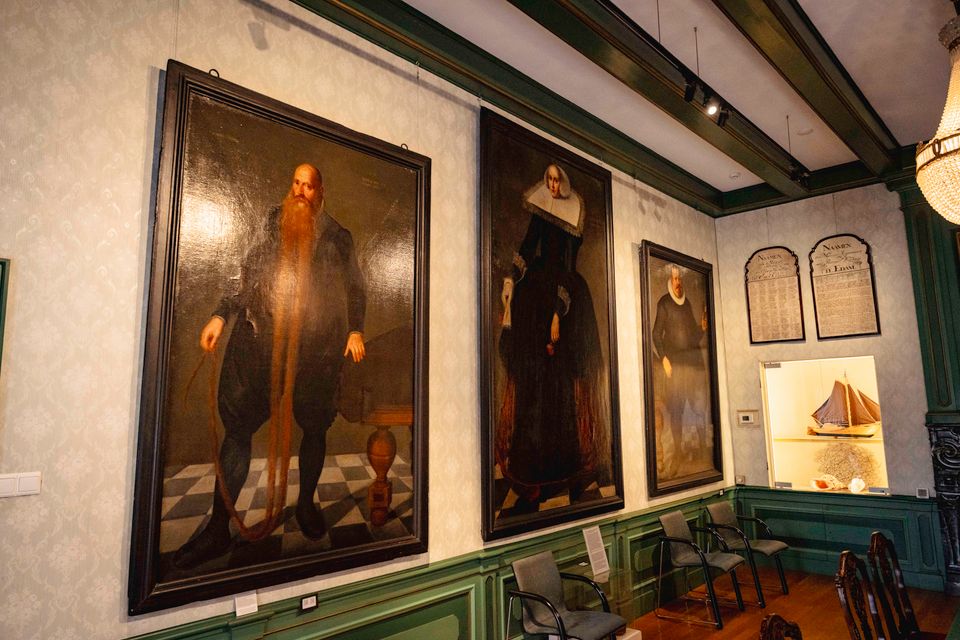
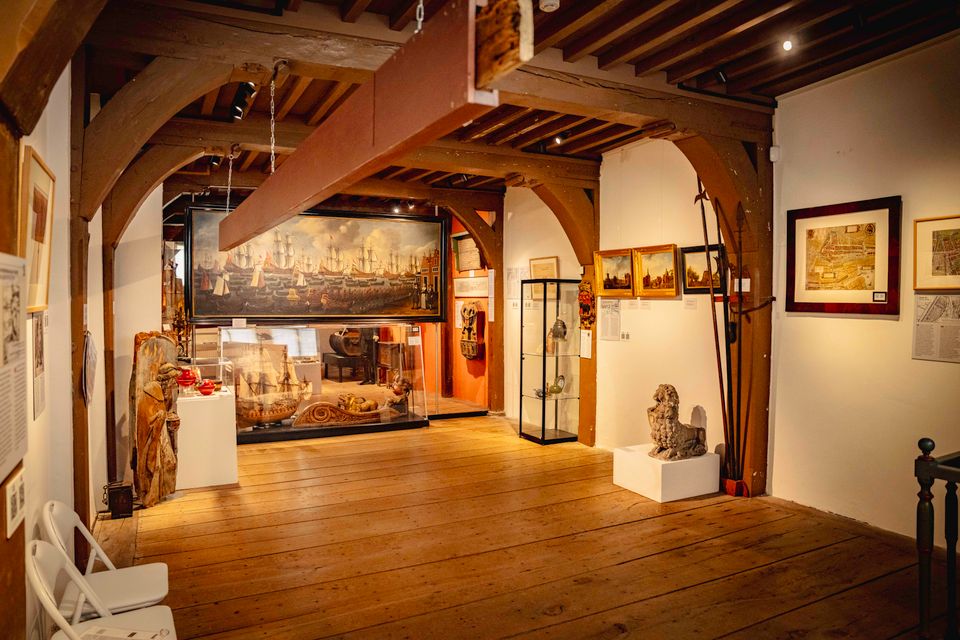
It tells, in two monumental locations right in the centre, the story of Edam's rich history: shipbuilding, ceramic industry, architecture, dignified families and ordinary daily life. The collection is very diverse and includes classic and modern paintings, ceramics, archaeological finds, furniture, and all kinds of other curiosities. In short, everything related to the history of Edam.
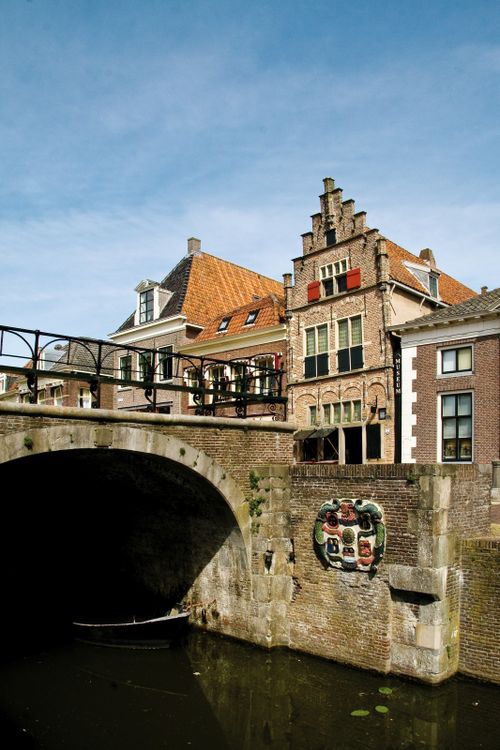
The 'Steenen Coopmanshuys' - Damplein 8
The beautiful late-gothic merchant's house is Edam's oldest stone house and was built between 1540 -1550. The Edam city council decided to purchase the property in 1893 and, after a thorough restoration led by Pierre Cuypers and Victor de Stuers, put it into use as a museum from 1895. The interior was hardly changed. When you cross the threshold of the building, you step right into the golden age.
The floating basement is famous here! It is a loose container, floating on the groundwater. Due to ebb and flow (the Edam museum is located at the Dam, where there used to be a (sea) lock), the Zuiderzee influenced the groundwater level. Because the cellar could move with the groundwater level, it was never flooded. Floating cellars are not unique. Edam, and especially Amsterdam, had many. However, the floating cellar in the Edam Museum is the only publicly accessible one in the Netherlands and therefore unique!
The Town Hall of Edam - Damplein 1
On the first floor of Edam's old town hall, dating from 1737, is the second location of the Edam Museum. These rooms, including the monumental mayor's room, are the backdrop for a changing exhibition each year.
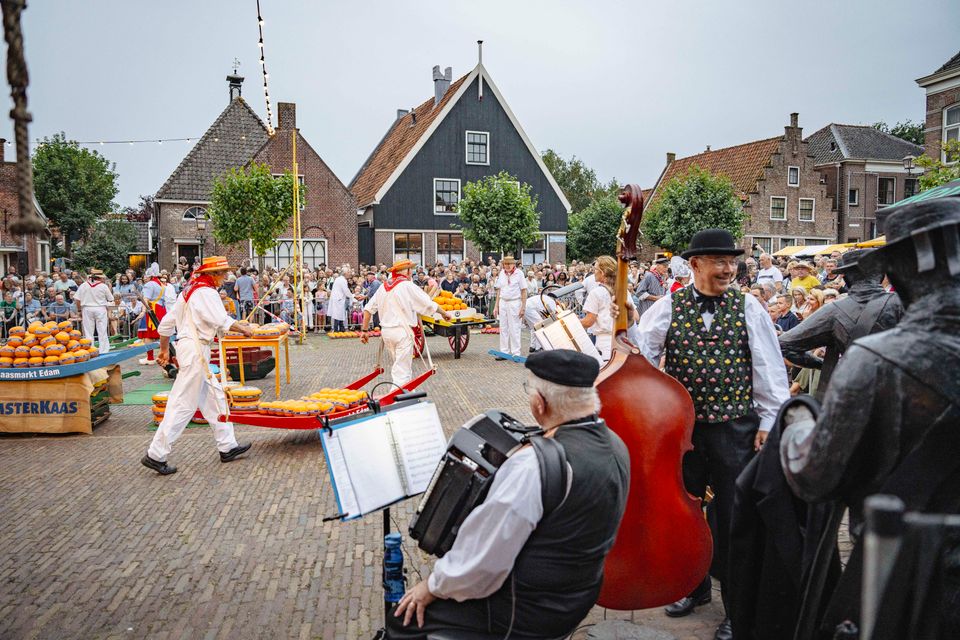
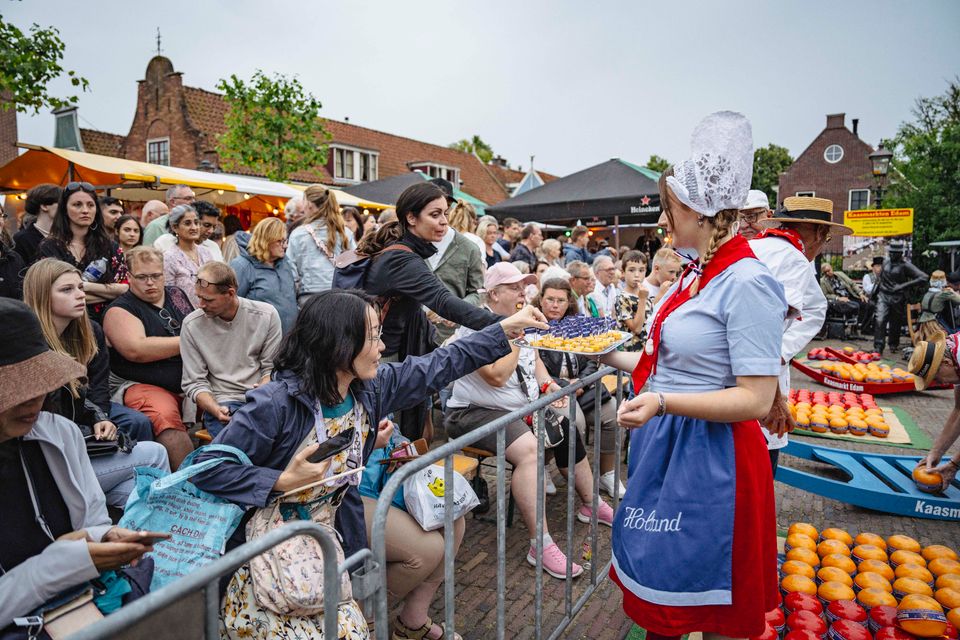
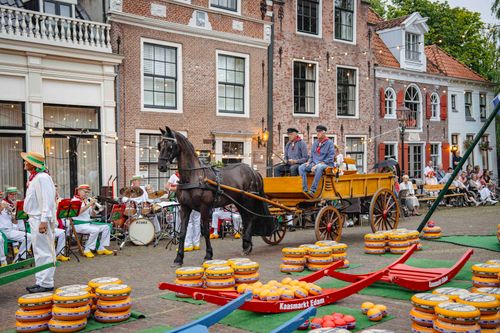
The Cheese Market Edam
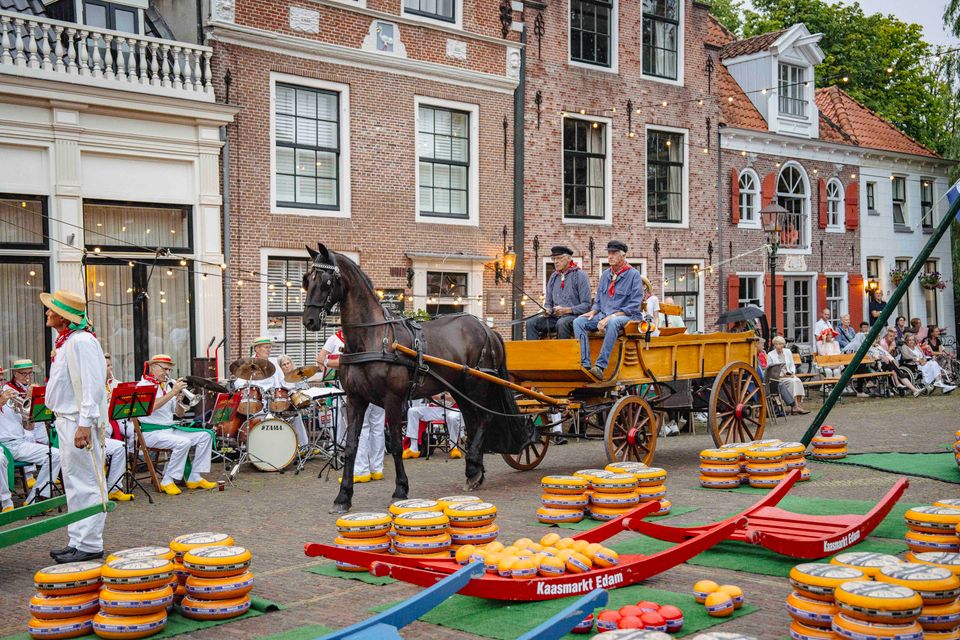
Whoever says Laag Holland, says cows. And whoever says cows, says cheese. This has been the case for centuries and so many cheese markets have sprung up in this region over the years. Three of them have been preserved and can therefore be visited!
The Cheese Market Edam
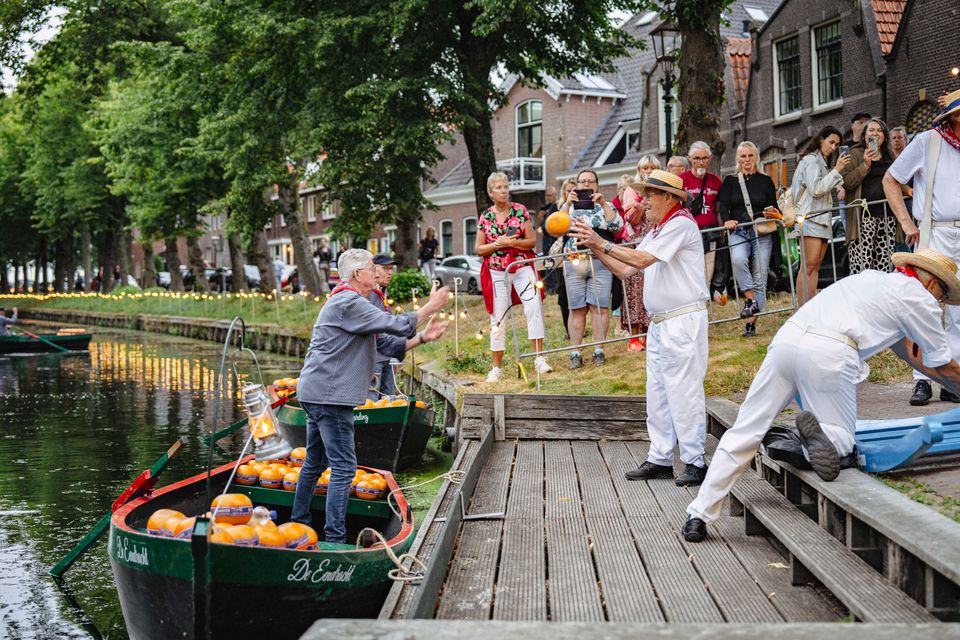
Whoever says Laag Holland, says cows. And whoever says cows, says cheese. This has been the case for centuries and so many cheese markets have sprung up in this region over the years. Three of them have been preserved and can therefore be visited!
One of the preserved cheese markets is Edam's cheese market and it is definitely worth a visit! In July and August, the Edam cheese markets take place on Wednesday mornings (except on 29 August). During the cheese market, volunteers re-enact the former trade and cheeses are brought in by wagons and boats. Did you know that one of the most popular Dutch cheeses - Edammer - owes its name to this town?
For more information, check out the Edam Cheese Market website!
Anthony Beek: Cheese market Edam
Anthony Beek was born in Edam in 1882. He took his first painting lessons in Amsterdam before continuing his studies at the Academy of Fine Arts in Paris.
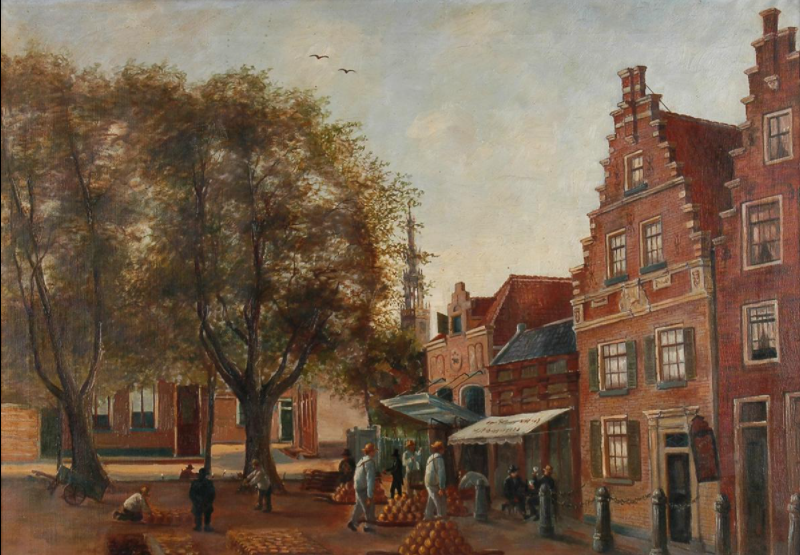
Anthony Beek: Cheese market Edam
Anthony Beek was born in Edam in 1882. He took his first painting lessons in Amsterdam before continuing his studies at the Academy of Fine Arts in Paris.
He was a member of the 'Art Society Gerard Dou'. His first monumental paintings 'The Kevelaar', 'Church Walk at Evening', the 'Night Watch of Edam' and 'St Martin's Feast' were discovered by Dutch painter D.B. Nanninga, who introduced him to the art company of Meijer W. Goudeket (1903-1943) in Amsterdam. The young artist subsequently painted for this internationally active company. A speciality of Anthony Beek was interpreting the colours of old masters such as Rembrandt and Gerard Dou.
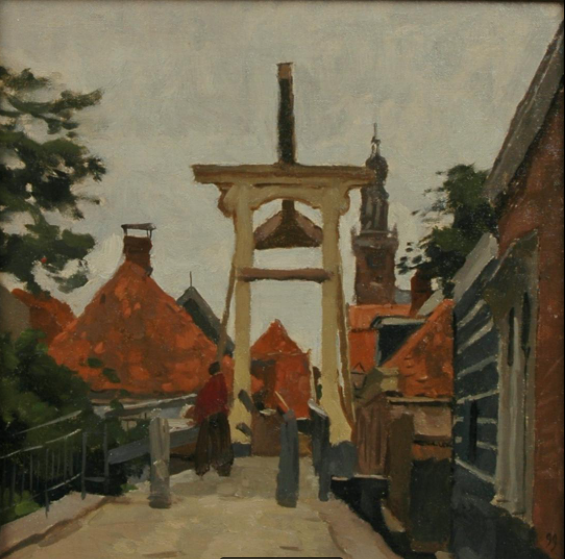
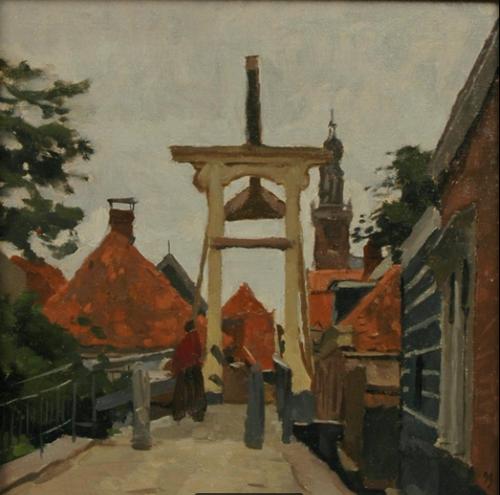
W.B. Tholen: Kwakel bridge
Willem Bastiaan Tholen (Amsterdam, 1860 - The Hague, 1931) was one of the most talented artists of his time and was very successful during his lifetime.
W.B. Tholen: Kwakel bridge
Willem Bastiaan Tholen (Amsterdam, 1860 - The Hague, 1931) was one of the most talented artists of his time and was very successful during his lifetime.
He won several awards and his art was sold all over the world. Tholen became especially loved and sought after by art collectors after his life.
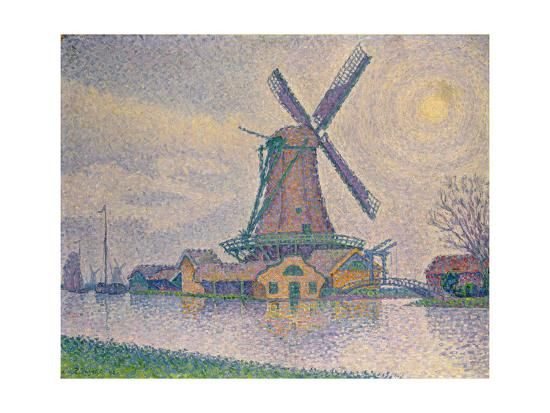
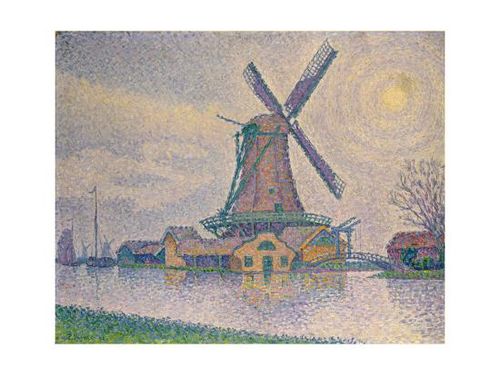
Paul Signac: the Zuidpolder mill
Paul Signac lived from 1863 to 1935 and is considered one of the most important representatives of pointillism alongside Georges Seurat.
Paul Signac: the Zuidpolder mill
Paul Signac lived from 1863 to 1935 and is considered one of the most important representatives of pointillism alongside Georges Seurat.
In pointillism, dots of paint in primary colours are applied to the canvas. The workings of the human brain then cause a secondary colour to be perceived. By putting small red and yellow dots next to each other, for example, one sees orange. The dots are usually set on a white background. Pointillist paintings excel because of the very bright, almost luminous, impression they make.
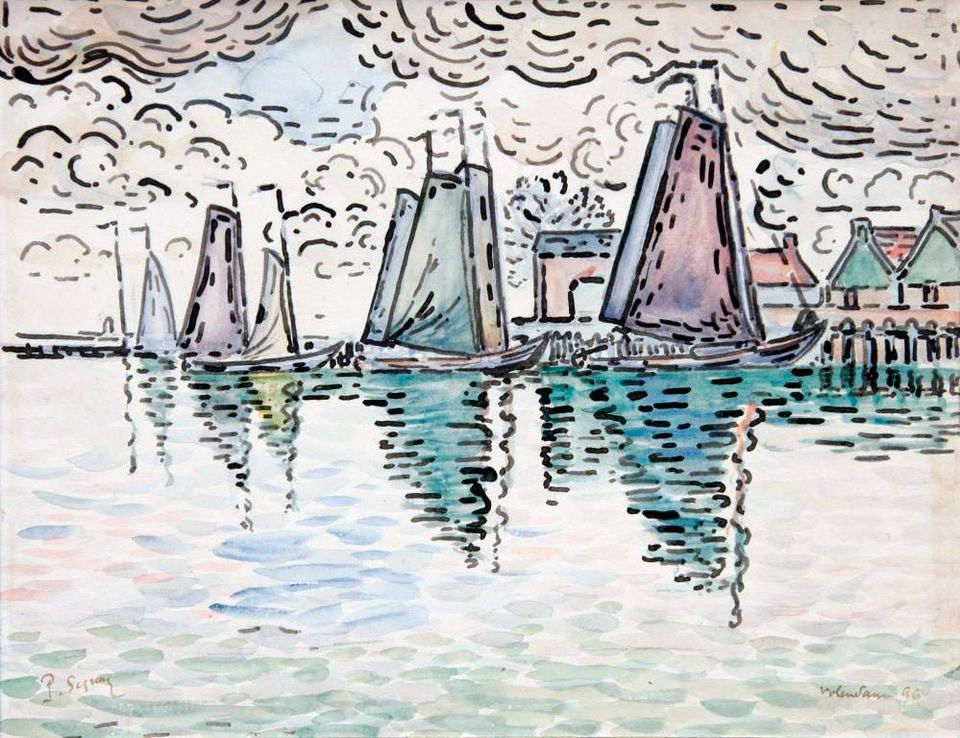
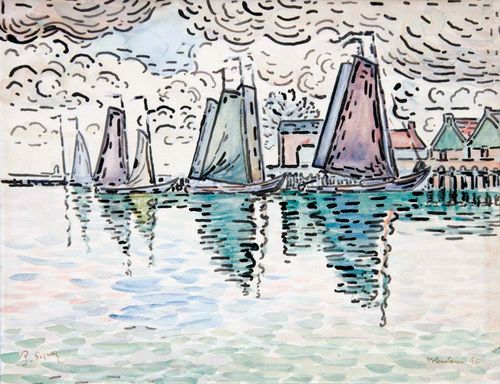
Paul Signac: Port of Volendam
This well-known painter and graphic artist lived from 1863 to 1935 and is considered one of the most important representatives of pointillism alongside Georges Seurat.
Paul Signac: Port of Volendam
This well-known painter and graphic artist lived from 1863 to 1935 and is considered one of the most important representatives of pointillism alongside Georges Seurat.
In pointillism, dots of paint in primary colours are applied to the canvas. The workings of the human brain then cause a secondary colour to be perceived. By putting small red and yellow dots next to each other, for example, one sees orange. The dots are usually set on a white background. Pointillist paintings excel because of the very bright, almost luminous, impression they make.
Paul Signac stayed at hotel Spaander in Volendam in 1894 and paid the bill with a painting of the Volendam harbour. The watercolour hung in the hotel's lobby for years and the artwork is now estimated to be worth around €100,000. So in hindsight, it was the most expensive overnight stay ever..... These days, you can view the painting at the Volendam Museum.
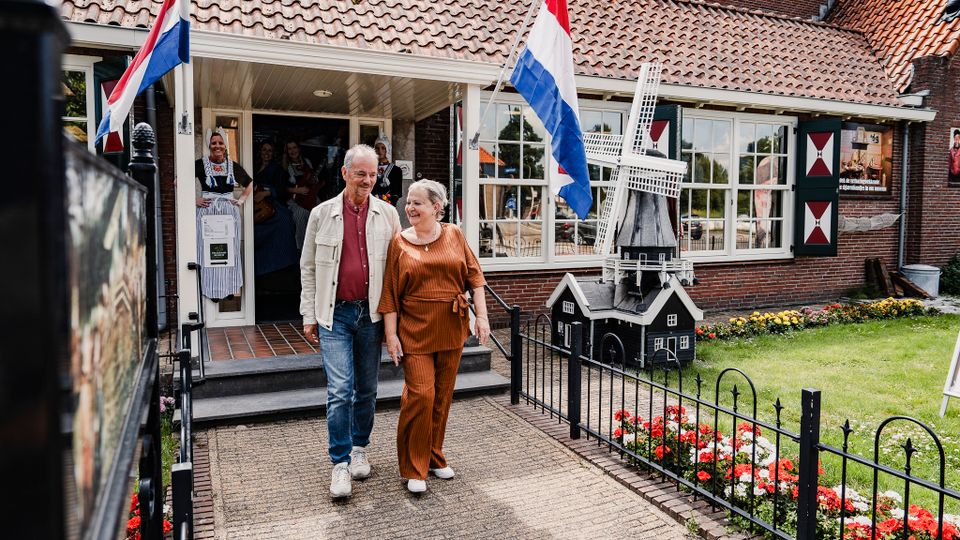
Volendam Museum
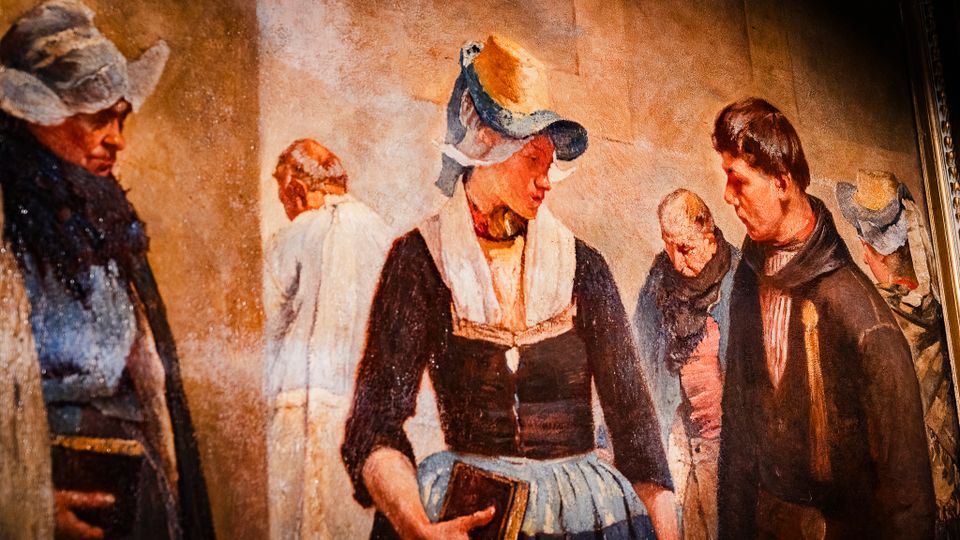
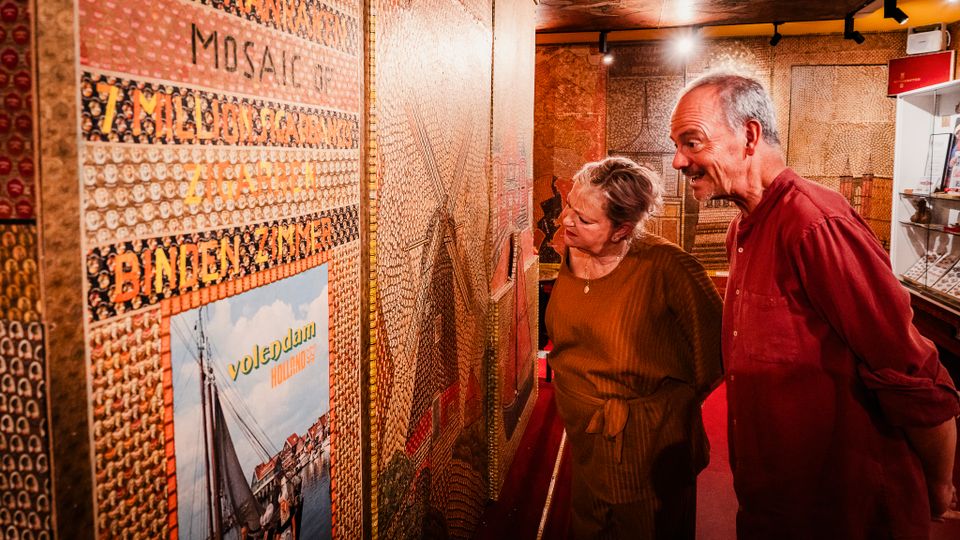
In the heart of Volendam is the Volendams Museum, where you will find one of the most extraordinary collections in the Netherlands. If you want a glimpse into 19th-century Dutch life, this is the place to be!
Volendam Museum
In the heart of Volendam is the Volendams Museum, where you will find one of the most extraordinary collections in the Netherlands. If you want a glimpse into 19th-century Dutch life, this is the place to be!
At the Volendams Museum, you will find an extensive collection of paintings, drawings, truthful old interiors and much more. Works by famous painters such as Henricus Rol and Edwin Austrin Abbey are displayed alongside fishing equipment and traditional costumes. One of the highlights of the museum is the cigar band house, with mosaics made from 11 million cigar bands. This collection of colourful images of world-famous buildings, works of art and windmills was started in 1947 and has been one of the Volendam Museum's main attractions since 1995.
Come along and discover the story of the consequences of the New Year fire in 't Hemeltje in Volendam during the latest exhibition "Interrupted time".
Especially for children
For young and old, scavenger hunts are available inside the Volendam Museum and outside in the old town of Volendam. This is a fun way to find out more about the history of Volendam. For the youngest children (4-7 years), there is a photo puzzle tour. Can you find all the photos in the museum?
For kids aged 8 to 12, there is a word puzzle tour that leads them through the museum in search of all the hints to solve the word puzzle. Who will be the first to complete the word puzzle?
Magical Wands
Experience magical moments in our museum with our enchanting wands! Make a rat walk, a spider come to life or sounds reverberate with just a wave of the wand. Discover and experience the wonders of our interactive special effects and be enchanted by the magic.
It is not necessary to reserve a time slot to visit this venue with your City Card or Museum annual pass. Make sure your City Card or Museum annual pass is valid at the time of your visit.
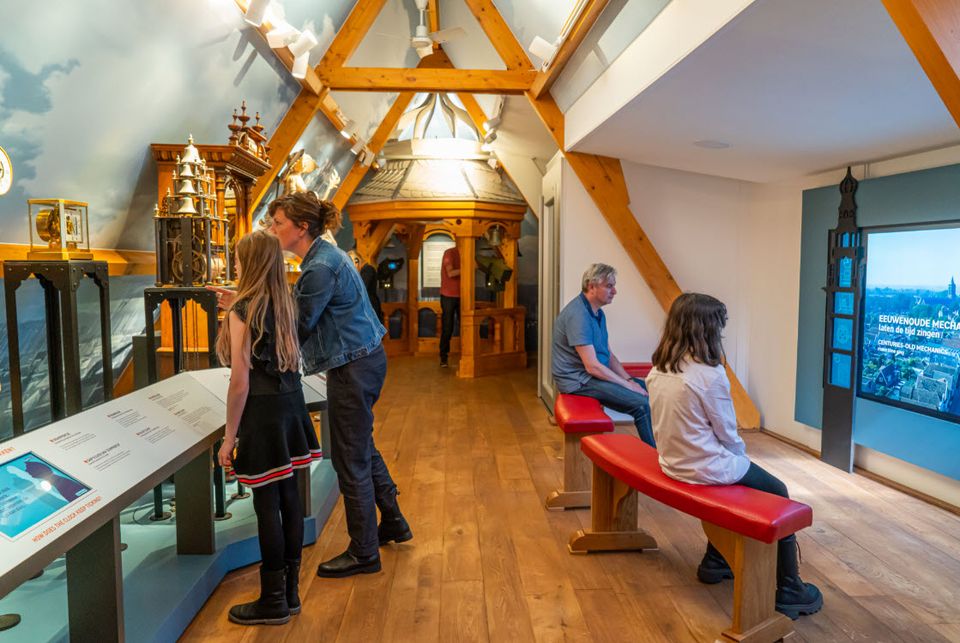
Waterlands museum the Speeltoren
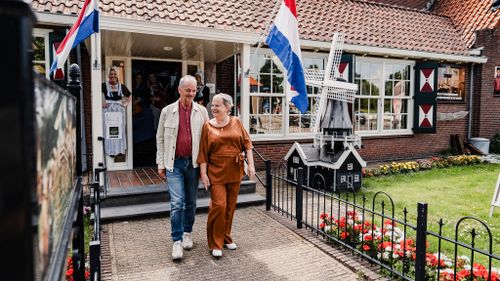
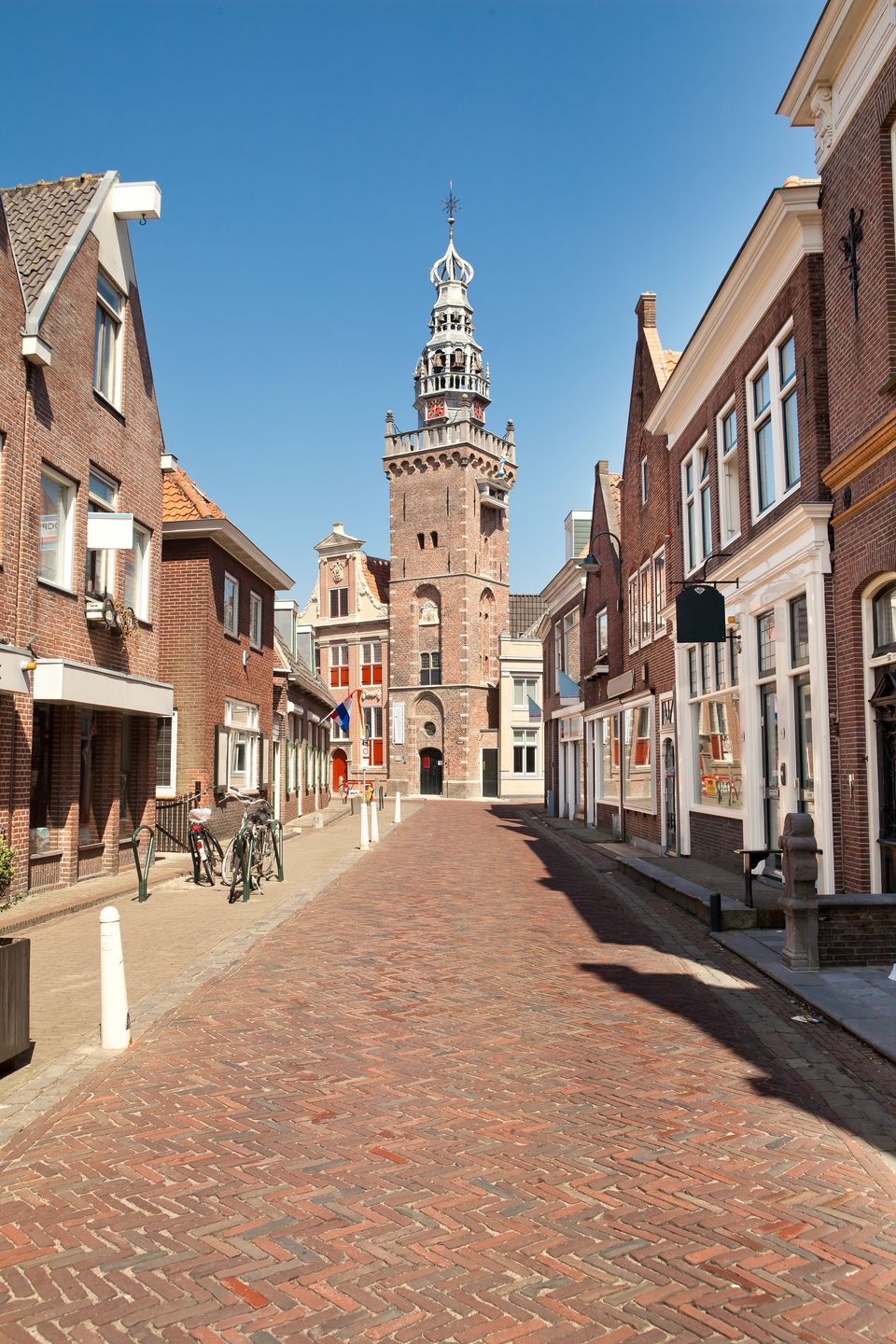
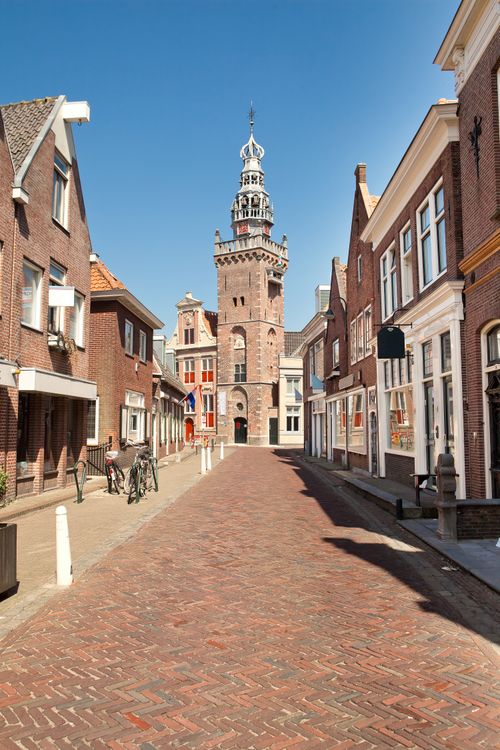
The Waterlands Museum De Speeltoren tells the story of Waterland and Europe's faintest carillon. See how the Waterland landscape was created and learn more about the rich history of its beautiful towns and contemporary art.
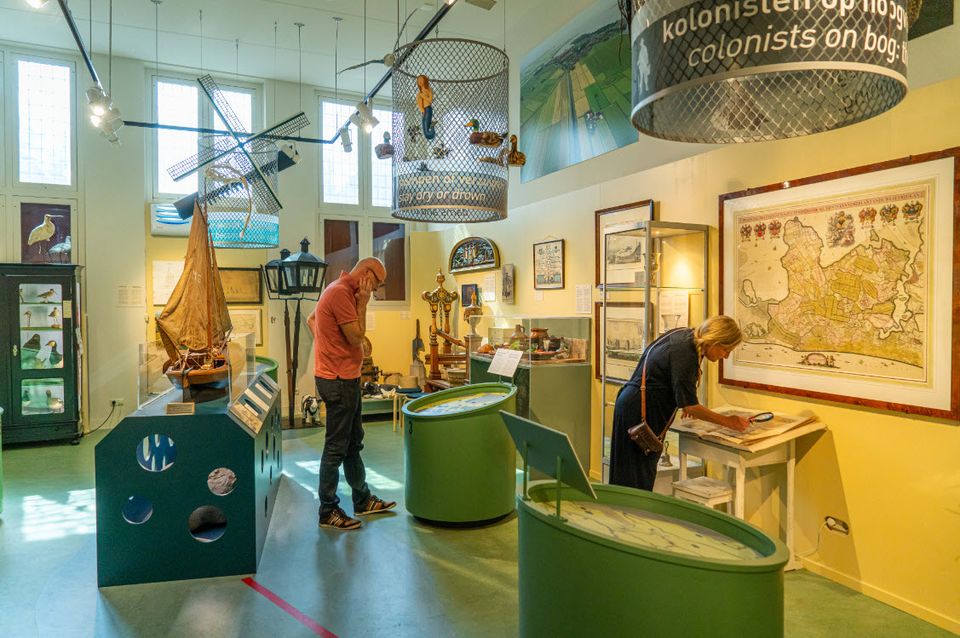
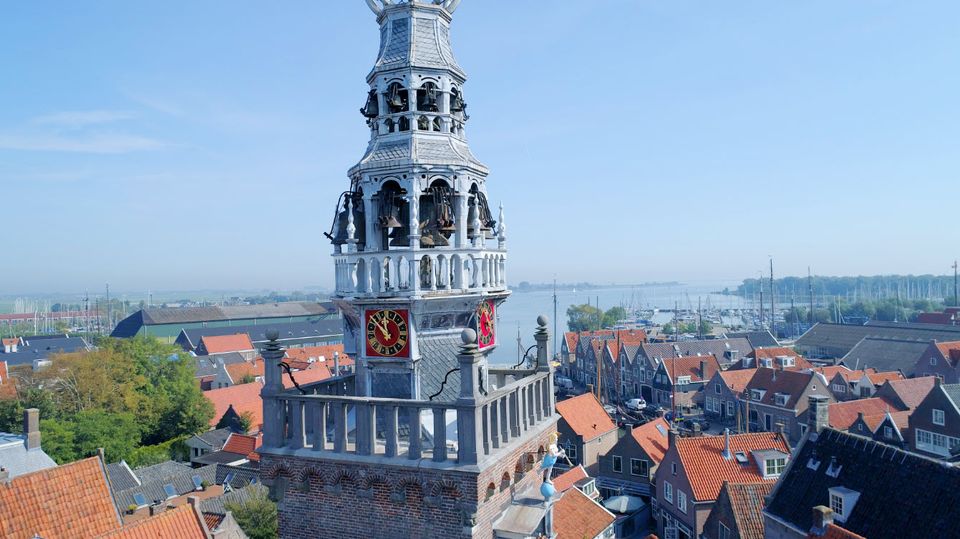
Waterlands museum the Speeltoren
The Waterlands Museum De Speeltoren tells the story of Waterland and Europe's faintest carillon. See how the Waterland landscape was created and learn more about the rich history of its beautiful towns and contemporary art.
In the museum, you will find several rooms:
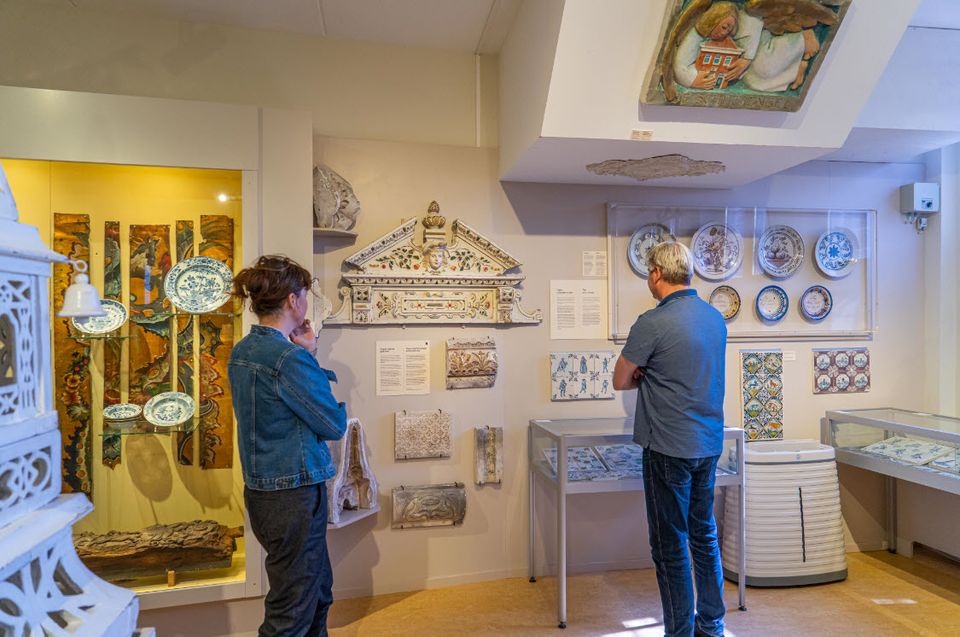
History hall: In the history hall, the times of yesteryear revive. It began with the monks who took charge of the land as early inhabitants. See the soil finds but also church books of Galilee. And get an insight into the way of life of the Waterlanders over the centuries.
Water and Land Hall: In the Water and Land Hall, you will see 2000 years of the genesis of our frogland. Man and nature, past and present, determine everything. Everywhere on the walls, the ceiling and in little nooks and crannies you will discover something new.
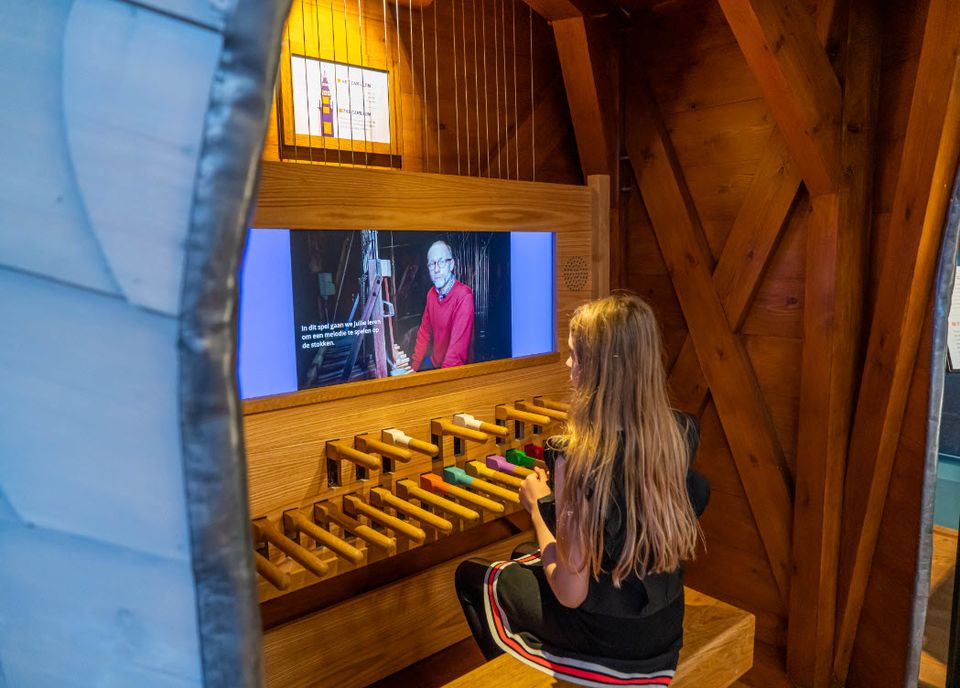
Carillon Hall: The carillon hall has been completely renovated. The entire attic has been redecorated around the experience of the tower and its unique carillon and clockwork. Watch a film about the clockwork in the tower or play a recreated carillon yourself!
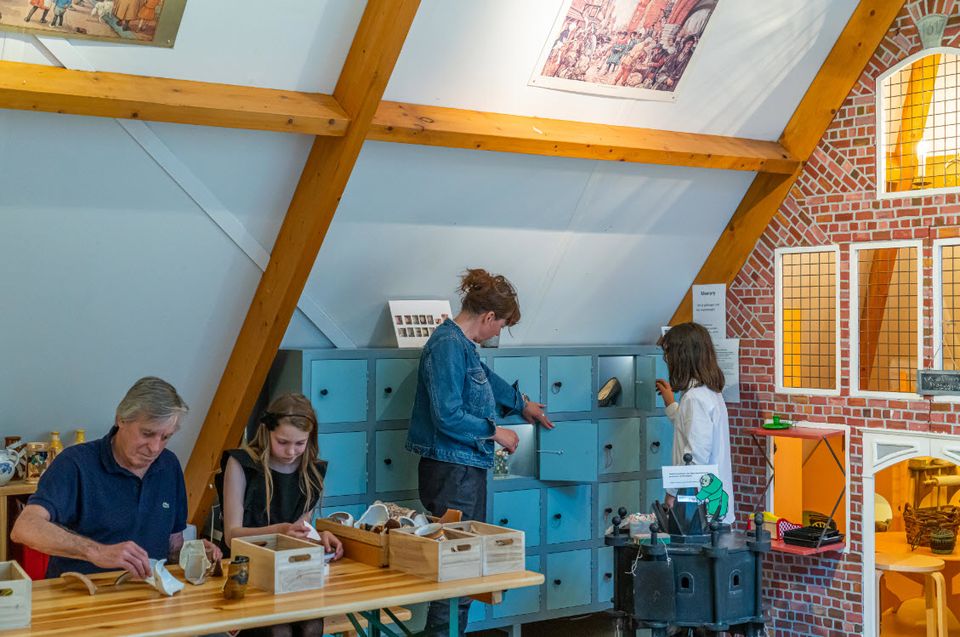
Junior Attic: Especially for children, the museum houses the Junior Attic. Here, children can investigate and discover endlessly. Become a real archaeologist and go exploring in the discovery house!
Besides these permanent exhibitions, the museum has a temporary exhibition a few times a year. For more information of the temporary shows, go to the website of Waterlands Museum De Speeltoren.
The Broeker House
Eat, celebrate, get lost (and linger).


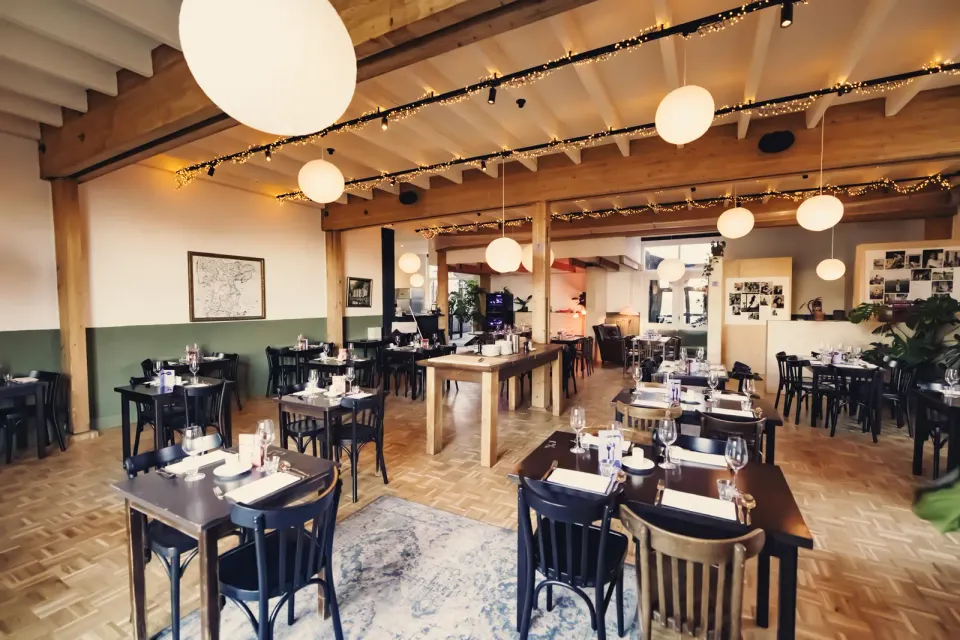
The Broeker House
Eat, celebrate, get lost (and linger).
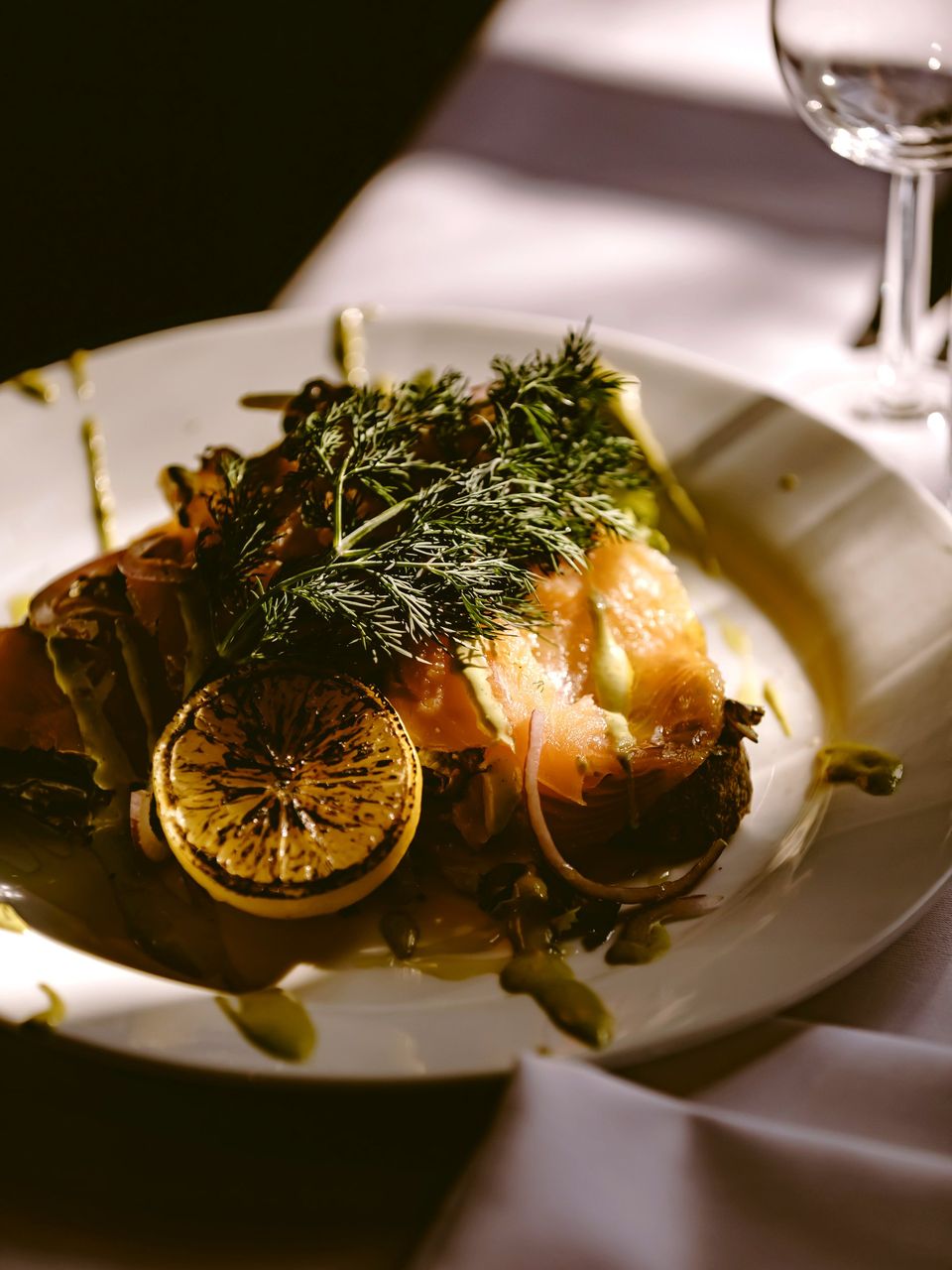
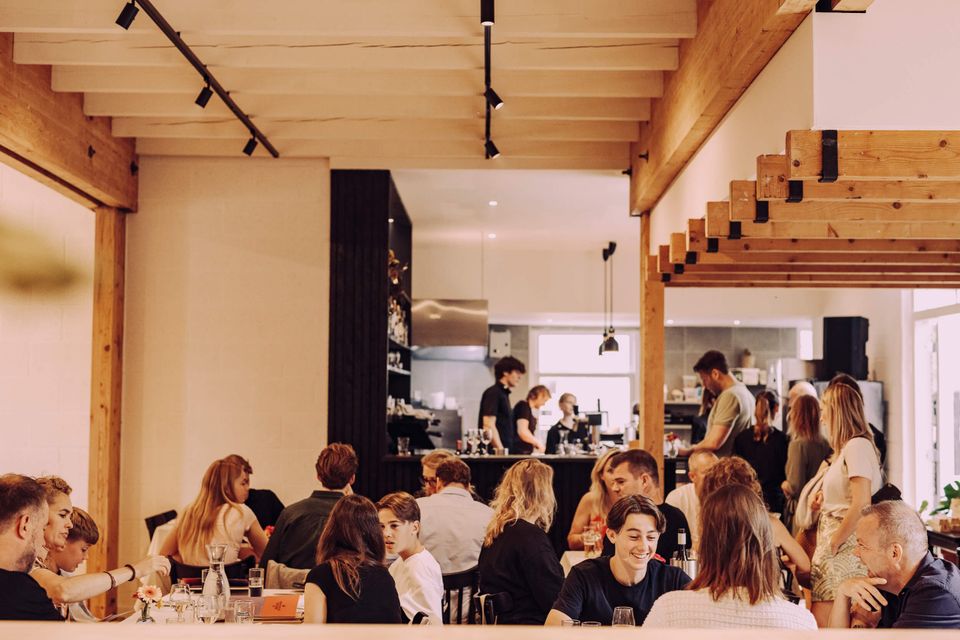
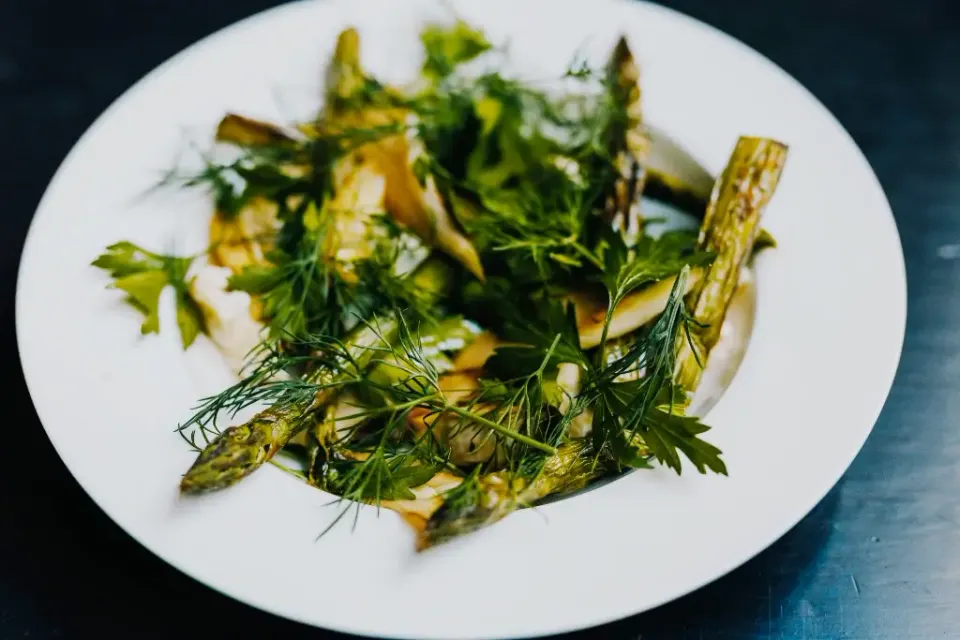
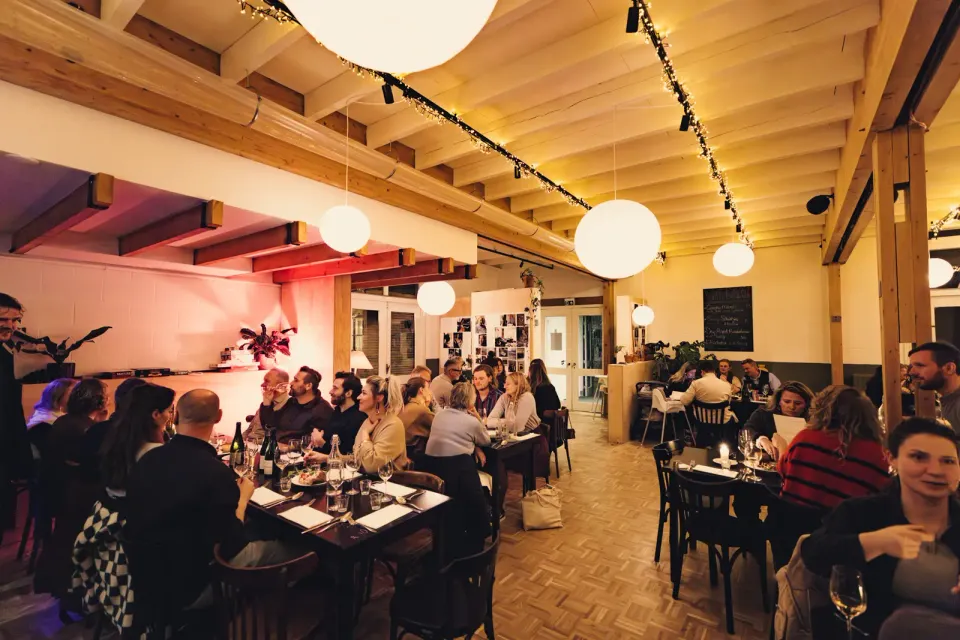
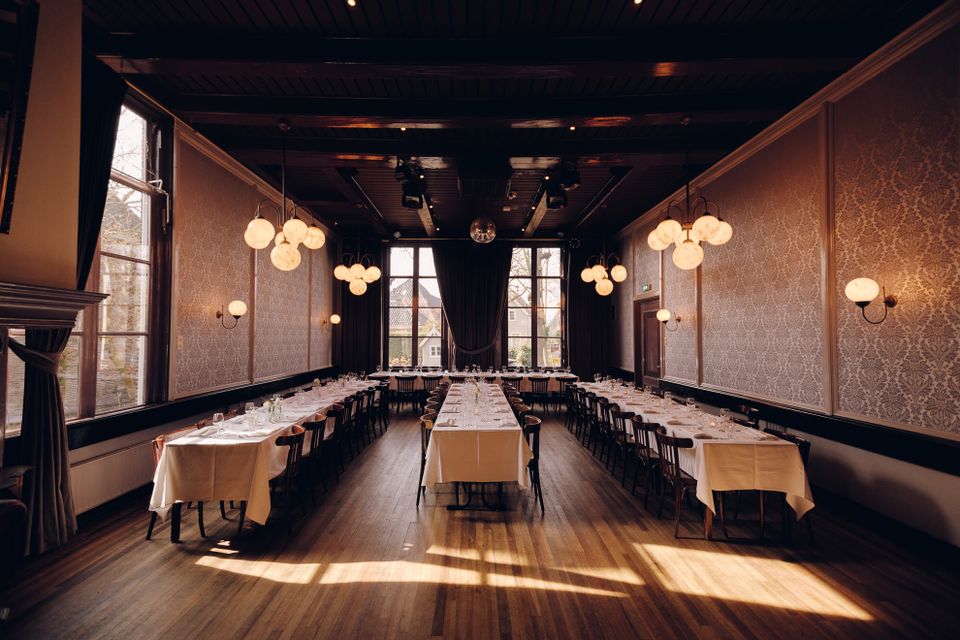
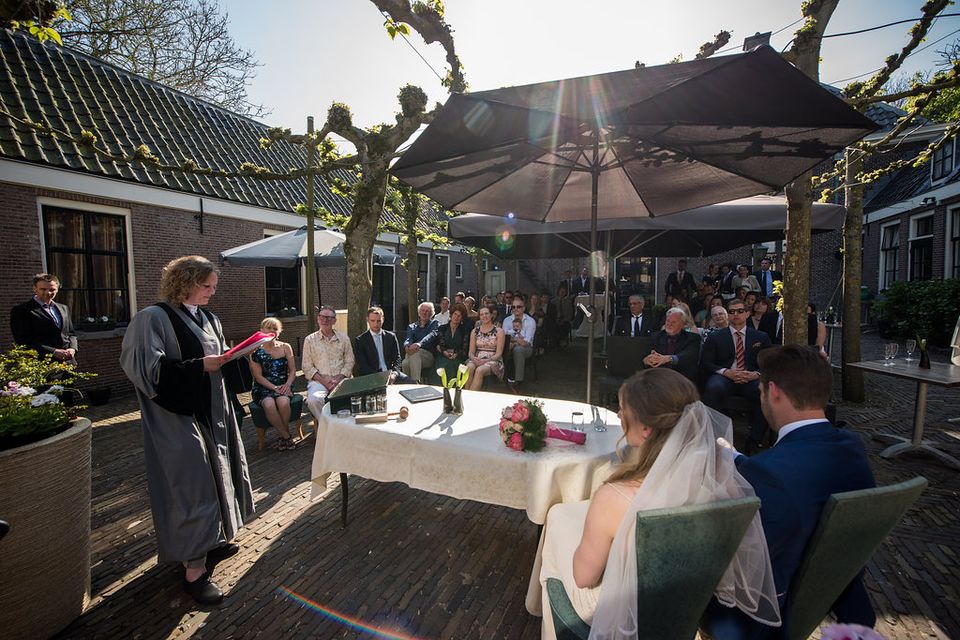
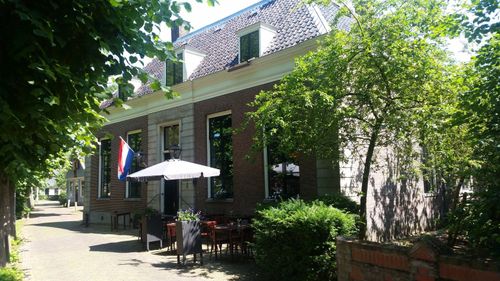
In the heart of Broek in Waterland you will find Het Broeker Huis - a 17th-century monument full of flavour, atmosphere and stories. Donated by Neeltje Pater to the church, now open to everyone as a village house. Here you lunch and dine at long tables, say "I do" under the trees, hold meetings with a monumental roof over your head, party until you can't take it any more and sleep next to the romantic courtyard garden.
Restaurant, wedding venue, meeting place and B&B - all in one characterful building: with perhaps the most beautiful terrace and courtyard in Waterland.
Lunch and dinner in Het Broeker Huis
We cook low-key and simple; but with baking flavour. Local, in season, on a wood fire and without fuss. No 'concept', no 'experience'. No 'passion', but fire. You eat here overlooking the water, with your kids in the play corner or with friends at the bar lingering until the sun goes down.
Weddings, parties and meetings
A party in the Regency Room. A drink in the courtyard. A brainstorming session in the Garden Room. Or getting married in the green open air and dancing until after midnight. At Het Broeker Huis, (almost everything) is possible - and nothing is required. Four characterful rooms, a large courtyard garden, terrace, a boat, peace & quiet - just a stone's throw from Amsterdam.
Spend the night in the Broeker House
From summer 2025, you can stay overnight in our B&B on the courtyard garden. A monumental house of 110 m² with two bedrooms, spacious living room, luxurious bathroom, private kitchen and breakfast by chef Thijs. Ideal for bridal couples, families, party guests or those just not yet home.
Jan Toorop: Broek in Waterland
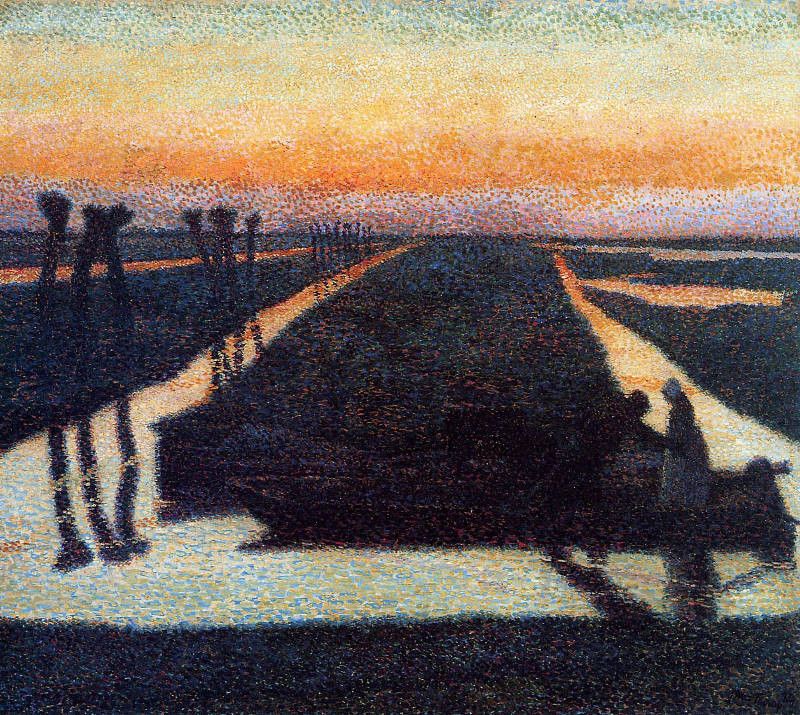
Jan Toorop was a Dutch artist with an Indonesian background who began his career as an impressionist.
Jan Toorop: Broek in Waterland
Jan Toorop was a Dutch artist with an Indonesian background who began his career as an impressionist.
Through pointillism, however, he eventually developed into a symbolic artist. Jan grew up in Indonesia. The wild nature of the jungle and the shadow play of the Wajang dolls inspired his art later in life. Eastern and Western influences often came together in his works. In 1889, Toorop travelled to Broek in Waterland and created one of his best pointillist artworks.
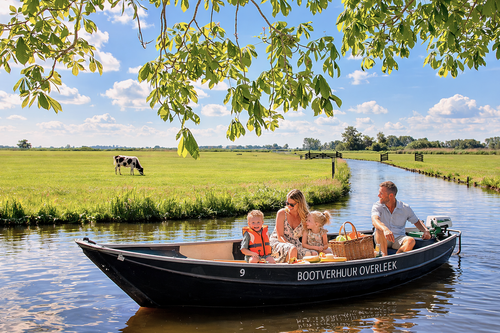
Boat rental Overleek
A unique spot in Waterland! Just above Amsterdam, amidst the picture-perfect Dutch countryside, you'll find this boat rental with waterside catering.
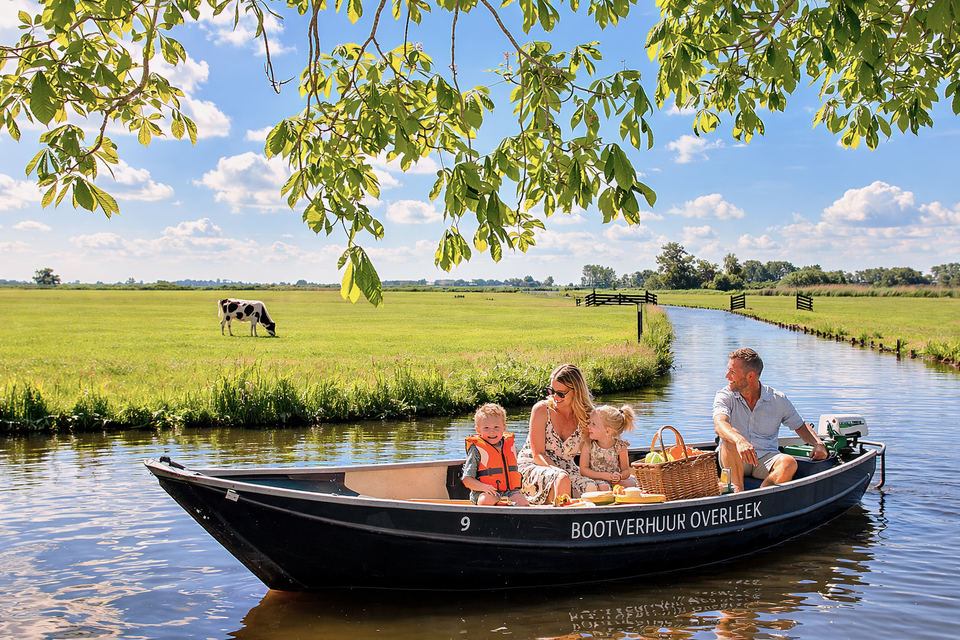

Boat rental Overleek
A unique spot in Waterland! Just above Amsterdam, amidst the picture-perfect Dutch countryside, you'll find this boat rental with waterside catering.
The garden and terrace are exclusively accessible to guests who have booked a boat with Boat Rental Overleek for the day.
Board one of the electric boats and unwind in the middle of nature. Sail through narrow ditches, across small lakes, past grazing cows and through the idyllic villages of Broek in Waterland, Zuiderwoude and Monnickendam. Enjoy a carefree day out and book one of the fresh picnic packages to take on board.
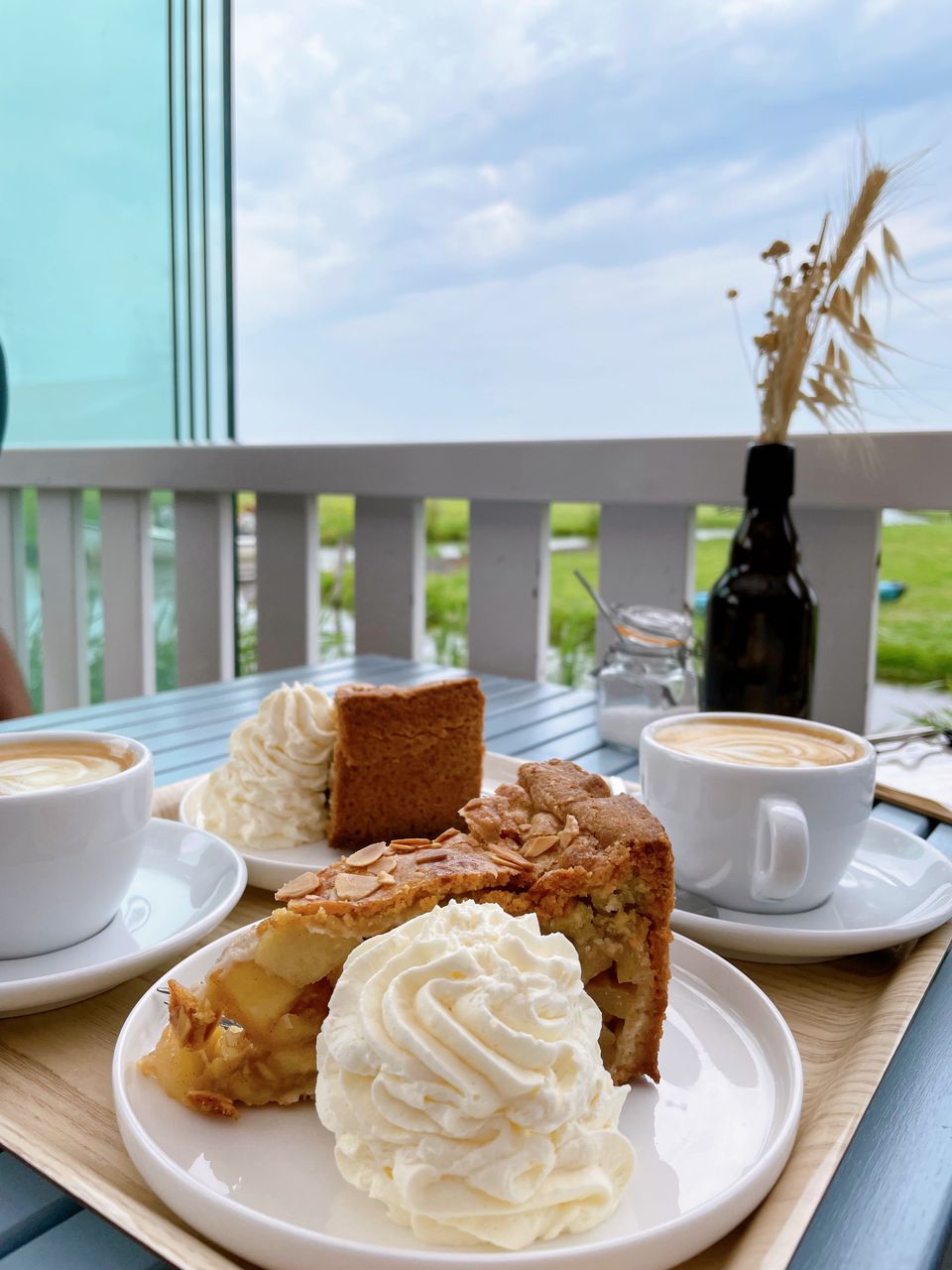
Before and/or after boating, enjoy a delicious piece of homemade cake, White Label coffee, homemade lemonade and/or a fresh juice in the garden or on the terrace. Meanwhile, the chickens scratch around the garden and the children can play happily.
Boat rental Overleek is open every day from 09:30 to 18:00 from the beginning to the end of September.
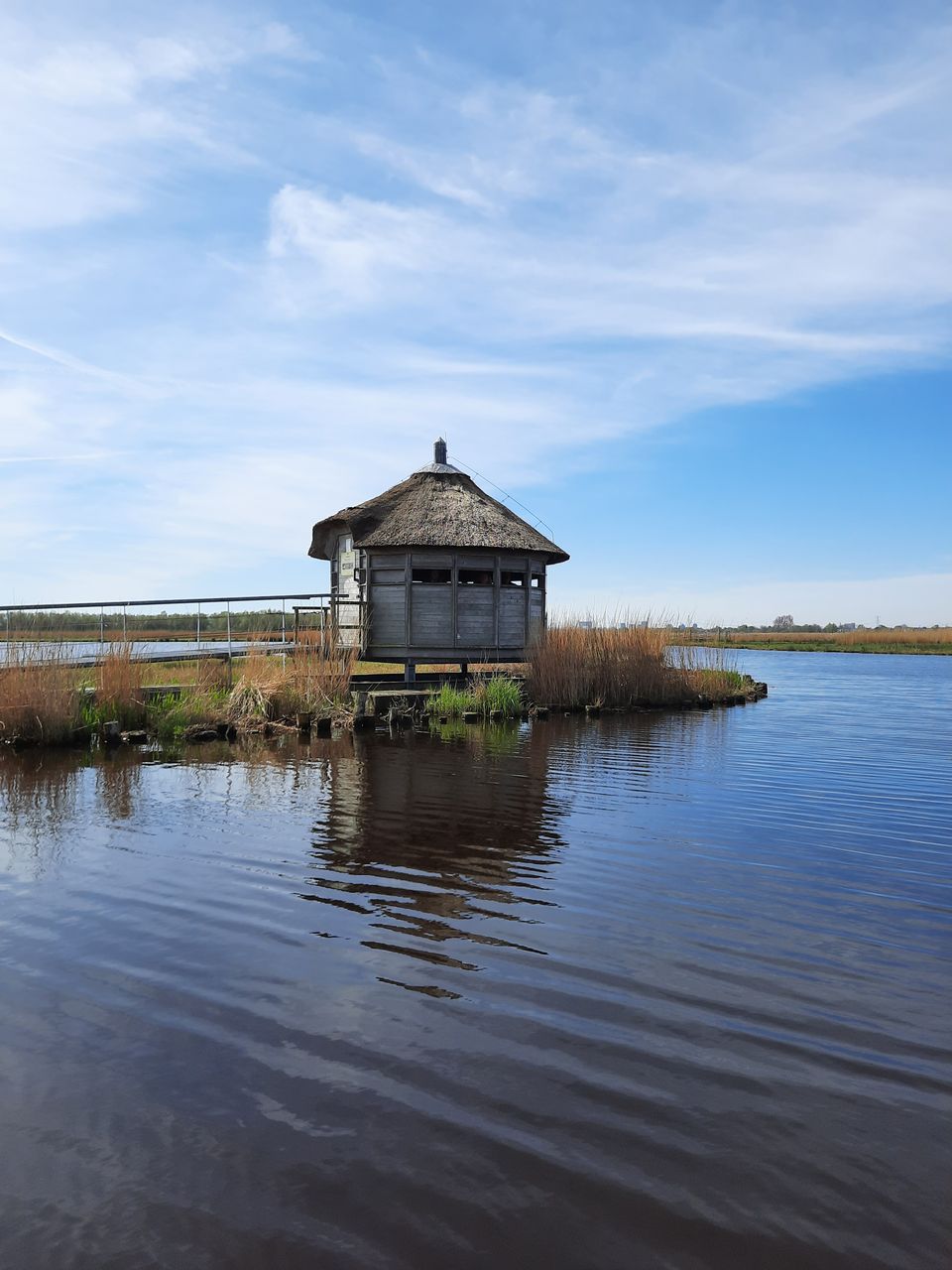
Bird-watching hut | Ilperveld
For meadow and reed birds, the Ilperveld is a favourite spot. While the black-tailed godwit, lapwing and redshank feel completely at home in the farm plots, the bittern, sedge warbler and bluethroat have found their place in the reed beds.
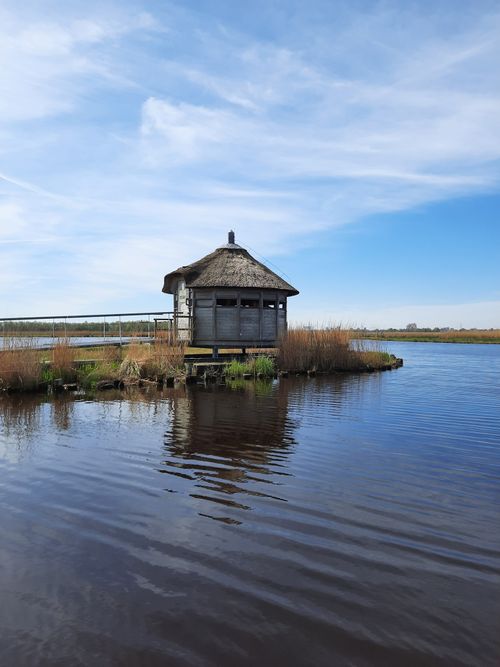
Bird-watching hut | Ilperveld
For meadow and reed birds, the Ilperveld is a favourite spot. While the black-tailed godwit, lapwing and redshank feel completely at home on the farm plots, the bittern, sedge warbler and bluethroat have found their place in the reed beds.
One place where these beautiful birds all congregate is at the bird hide near the visitor centre. The bird hide is right behind the visitor centre. Follow the 700-metre Ilperpad path and you will automatically see the bird hide appear. Take a seat in the hut and open one of the hatches and enjoy nature in peace!
Anton Heyboer Art Gallery
Anton Heyboer is one of the most famous artists of the past century.
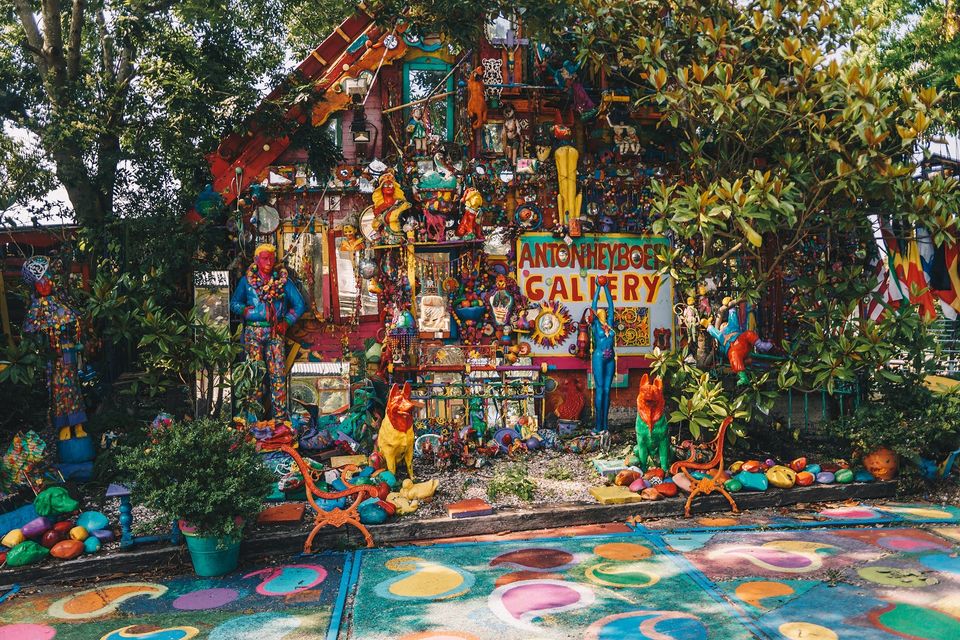
Anton Heyboer Art Gallery
Anton Heyboer is one of the most famous artists of the past century.
Many of his works have been acquired by international museums. And no these are not the least... Think Museum of Modern Art in New York, Museum of Fine Arts in Boston and Ohara Museum of Art in Japan.
But to admire Anton Heyboer's work, you don't have to travel far. You will find the Anton Heyboer Gallery in Den Ilp. Until his death in 2005, Anton Heyboer lived here with his five wives and made tens of thousands of works. His 'fifth' wife Petra Heyboer opened the Anton Heyboer Art Gallery where you can admire and buy original works by Anton Heyboer from Wednesday to Sunday.
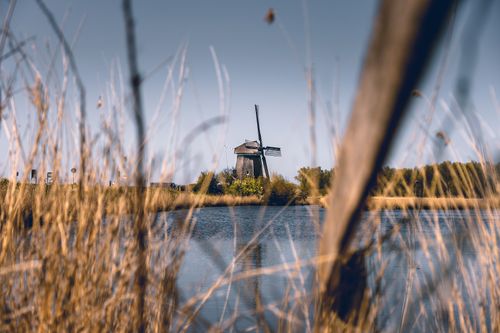
Listen | Twiskemolen
The Twiskemolen has stood on the border between the municipalities of Landsmeer and Oostzaan since 1974. Looking at the dates on the mill, it is immediately obvious that the mill is much older.

Listen | Twiskemolen
The Twiskemolen has stood on the border between the municipalities of Landsmeer and Oostzaan since 1974. Looking at the dates on the mill, it is immediately obvious that the mill is much older.
The Twiskemolen was originally built in 1541. Only then it was not in Het Twiske, but about 40 km away in Barsingerhorn. When people were looking for a mill for Het Twiske, this mill - then stored in Nieuw-Vennep - was bought in the late 1960s.
The Twiskemolen is one of the few polder mills in the Netherlands that is still actually in operation and is managed by a volunteer miller. For decades, the monumental mill combined with an electric drive has been pumping the approximately 650-hectare Twiske polder. Did you know that in one minute the mill can grind 20 to 60 cubic metres of water one and a half metres up to the other side of the dike?
Next to the windmill, on the dike, is an information panel where you can read more about the Twiskemolen.
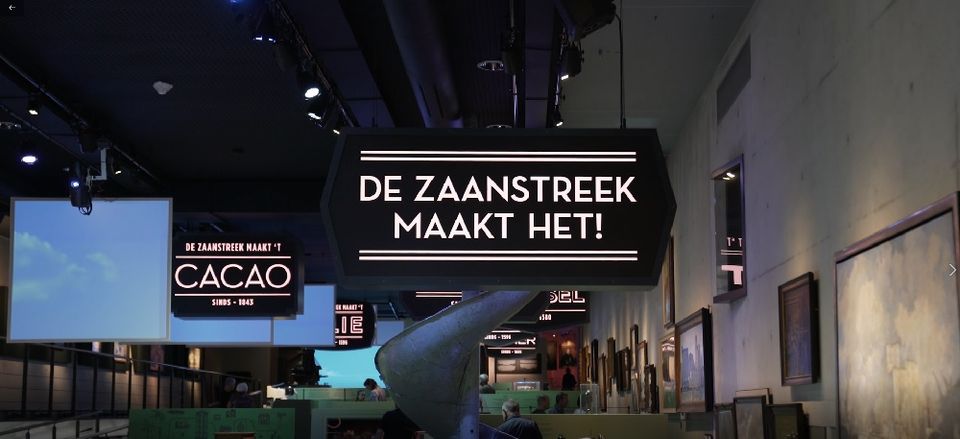
Zaans Museum
Are you looking for a unique and educational experience? Then dive into the fascinating world of the Zaans Museum! Located on the famous Zaanse Schans.
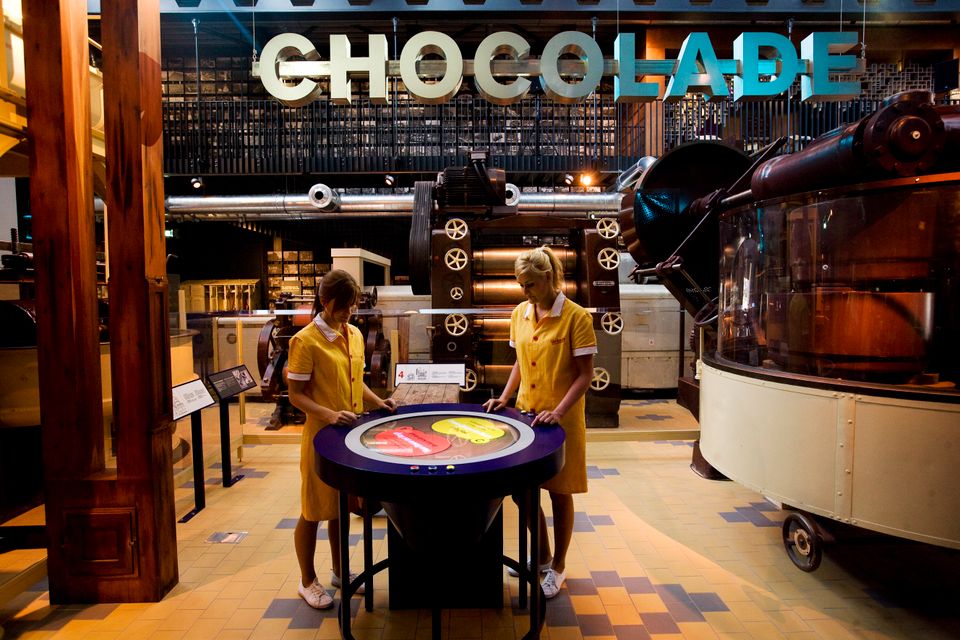
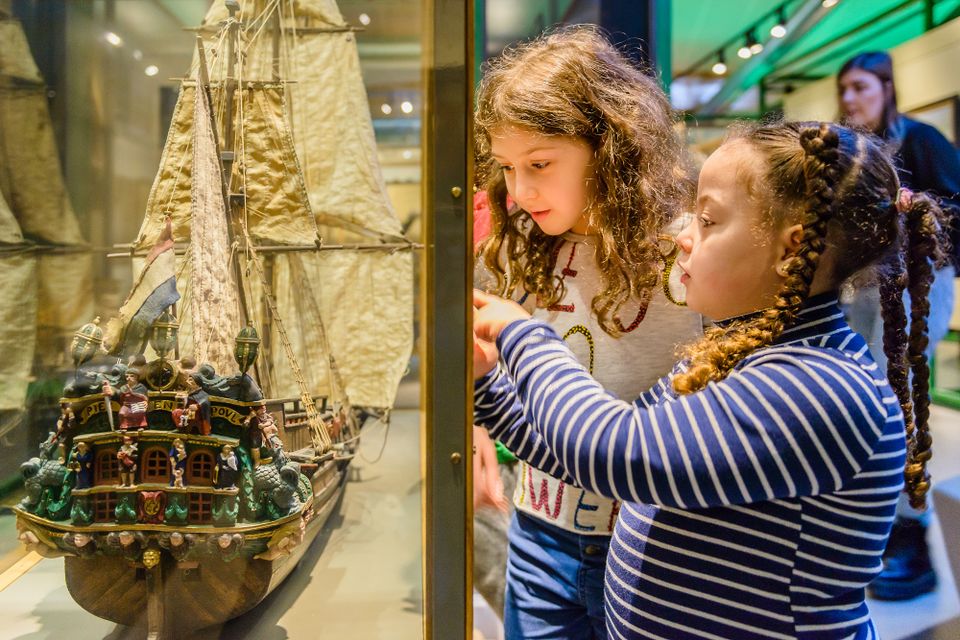
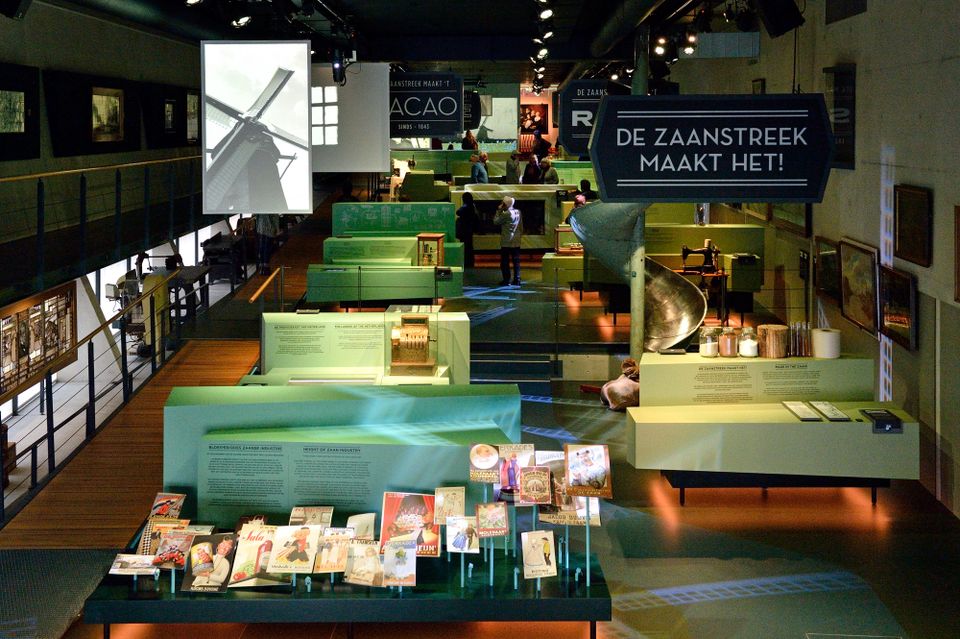
Zaans Museum
Are you looking for a unique and educational experience? Then dive into the fascinating world of the Zaans Museum! Located on the famous Zaanse Schans.
Fascinating collection takes you through the centuries. Admire historical objects, works of art, photos and documents that illustrate the unique Zaan identity. Stroll through authentic Zaanse interiors, experience how a merchant family lived in the Honig Breet House, or dive into the Verkade Experience and learn all about the famous biscuit factory.
Be surprised by the changing exhibitions, which delve deeper into specific aspects of Zaanse culture and history. From craft traditions to ground-breaking innovations, there is always something new to discover.
Join the adventure! Zaans Museum regularly organises guided tours, workshops and other activities for young and old. Get to know the Zaans clog makers, learn how to bake your own biscuits or go on a treasure hunt through the museum with the children.
- 73
- 94
- 93
- 45
- 44
- 48
- 25
- 49
- 46
- 06
- 07
- 08
- 09
- 11
- 12
- 13
- 95
- 97
- 98
- 99
- 56
- 55
- 54
- 57
- 01
- 02
- 22
- 21
- 15
- 19
- 17
- 12
- 74
- 50