Sailing at a Kwak
A true experience
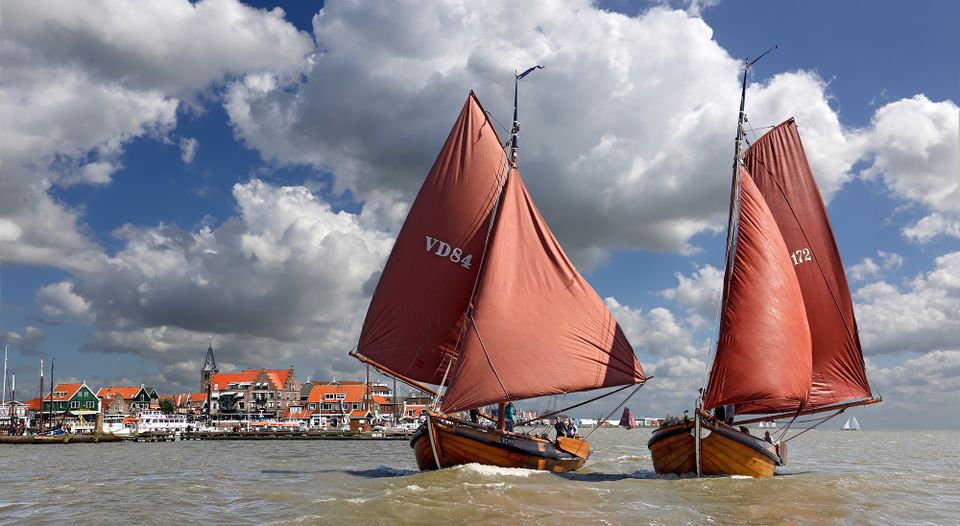


The strongly botter-related Volendam Kwak is the result of a development from the Middle Ages until the end of the last century. It is a wooden flat-bottomed boat with a length of about 16m and width of 4.50m, making it quite a bit larger than an ordinary botter (14m long and 4.20m wide).
The Kwak is larger because it was fished with trawls: the kwakkuil and the wonderkuil. These are specific Volendam fishing techniques that required more (sail) pulling power and therefore a larger vessel that could carry more sail.
At the front, the Kwak has a high head that allows the boat to 'break through' the waves better and creates a living and storage space under the forepeak, the forecastle. The stern is much lower, which is to make it easier to haul in fishing gear.
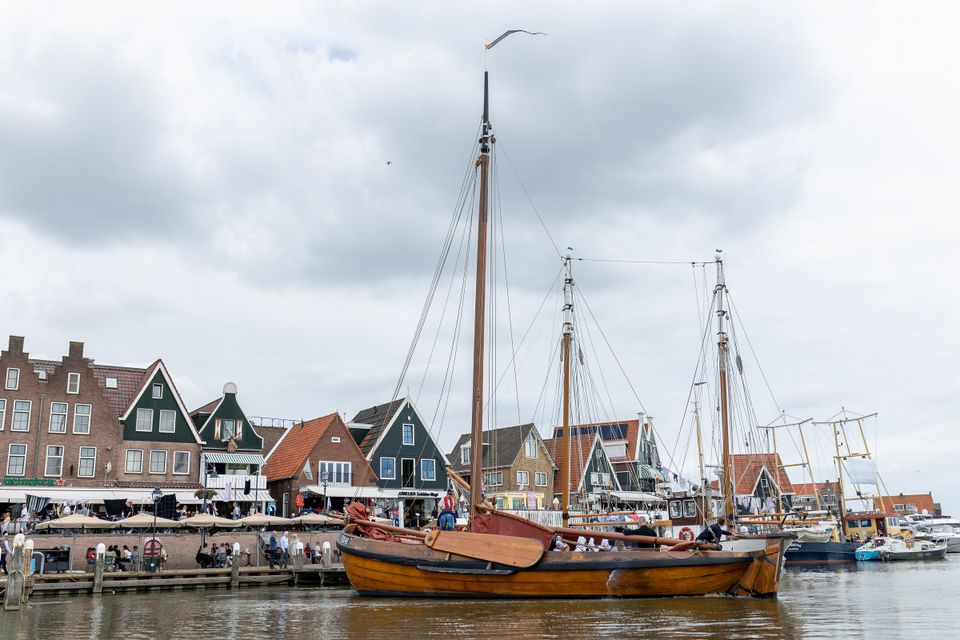
In the stern is the 'bun'. This is a space that is in open connection with the water on which the boat is sailing and is covered on the side by the perforated 'card plates'. The outside water can flow freely through it but the catch cannot get out, so it could be kept alive for days.
The bun has a lid so that the fish could be scooped out from above. Swords hang on either side, which are lowered to give counter pressure to the sails and prevent drifting.
In the forecastle was a small accommodation 'the roef' for the crew to sleep and eat. The wood stove provided some warmth and for preparing food. The forecastle of Volendam kwakken is often decorated with carvings, paintings and a motto.