History and water heritage in Purmer-Zuid
The Purmer will be 400 years old in 2022. It has been four centuries since this polder was drained using polder mills. Cycle past interesting places, read the stories and the Purmer comes to life.
To mark 400 years of the Purmer, two cycle routes have been created: one of 17 km through the northern part and one of 15 km through the southern part of the polder. This cycle route takes you along the southern part of the Purmer. Both routes start at the Purmerenderweg-Westerweg intersection near the Purmer church and can easily be combined. Use the routes to time travel through the history of the area!
Important information:
- Download the PDF file for the cycle route.
- The route is not signposted.
- The routes were created by the Waterlands Archive with the cooperation of Hoogheemraadschap Hollands Noorderkwartier.
You are going to see this
Purmerenderweg gate of honour
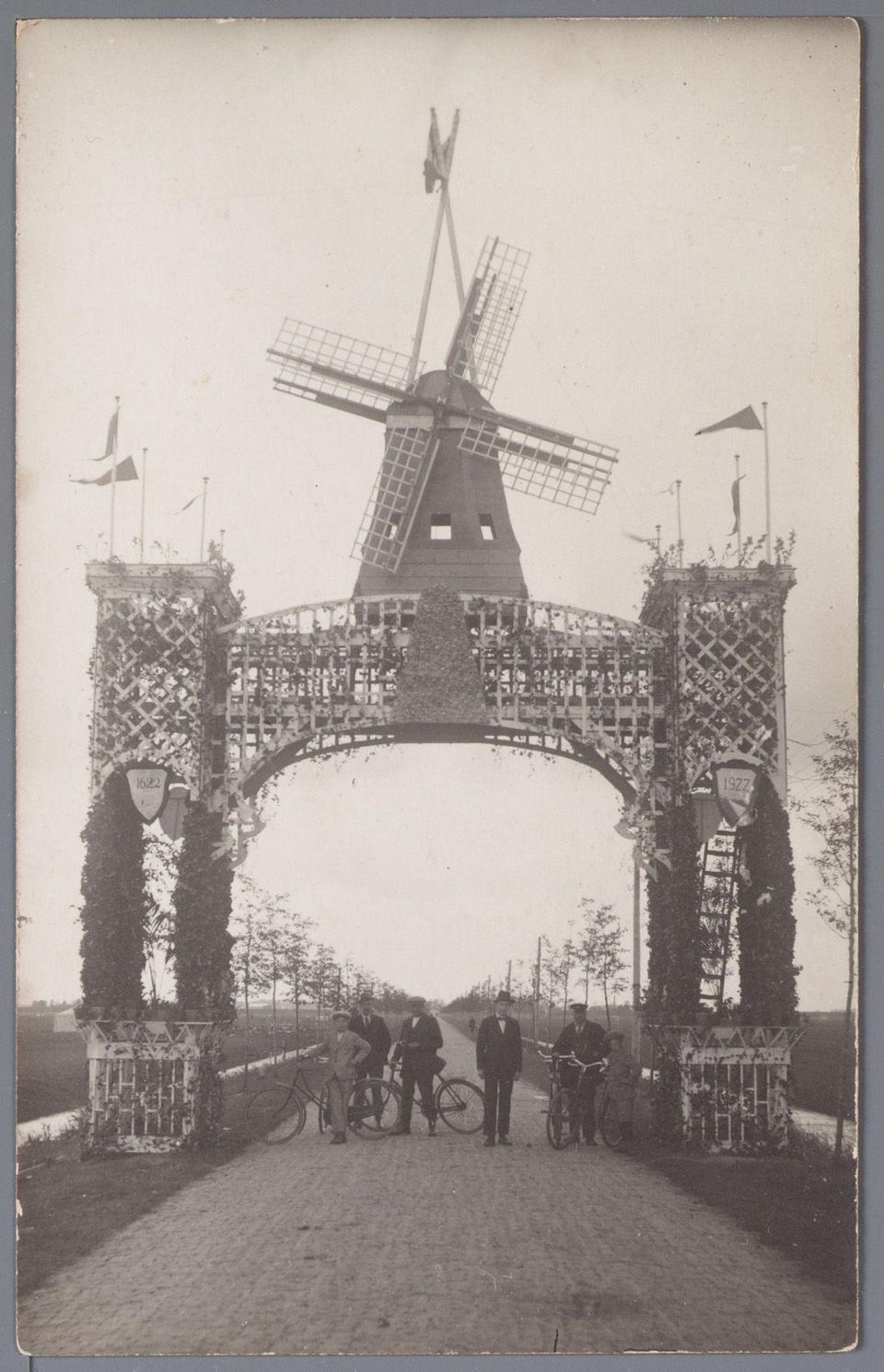
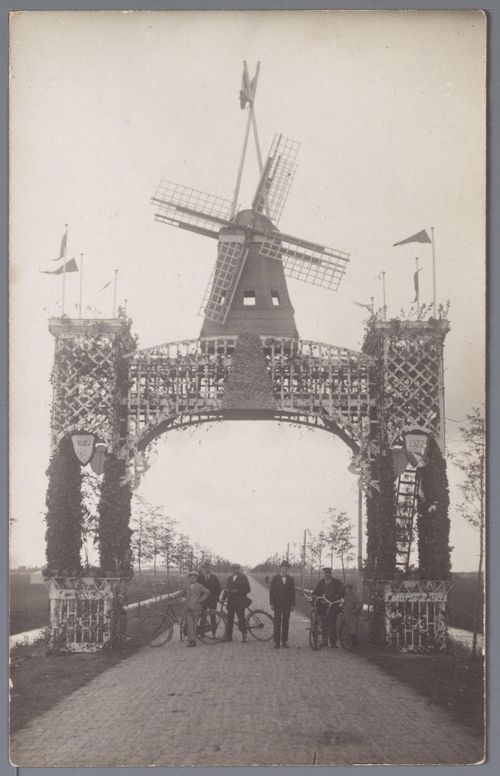
In 1922 when the Purmer had been drained for 300 years, there were gates of honour at various locations such as this one on Purmerenderweg.
Purmerenderweg gate of honour
In 1922 when the Purmer had been drained for 300 years, there were gates of honour at various locations such as this one on Purmerenderweg.
During the third centenary of the Purmer, beautiful gates of honour had been erected at various locations. This gate stood on Purmerenderweg, near the intersection with Westerweg. The photo was taken by M.B. van Baar and was taken towards Purmerend.
Monument to Jan Adriaansz Leeghwater
Jan Adriaansz Leeghwater was born in De Rijp in 1575. He was a mill builder and hydraulic engineer and helped reclaim several large lakes in North Holland, including the Beemster (1612), Purmer (1622) and the Wormer (1626).
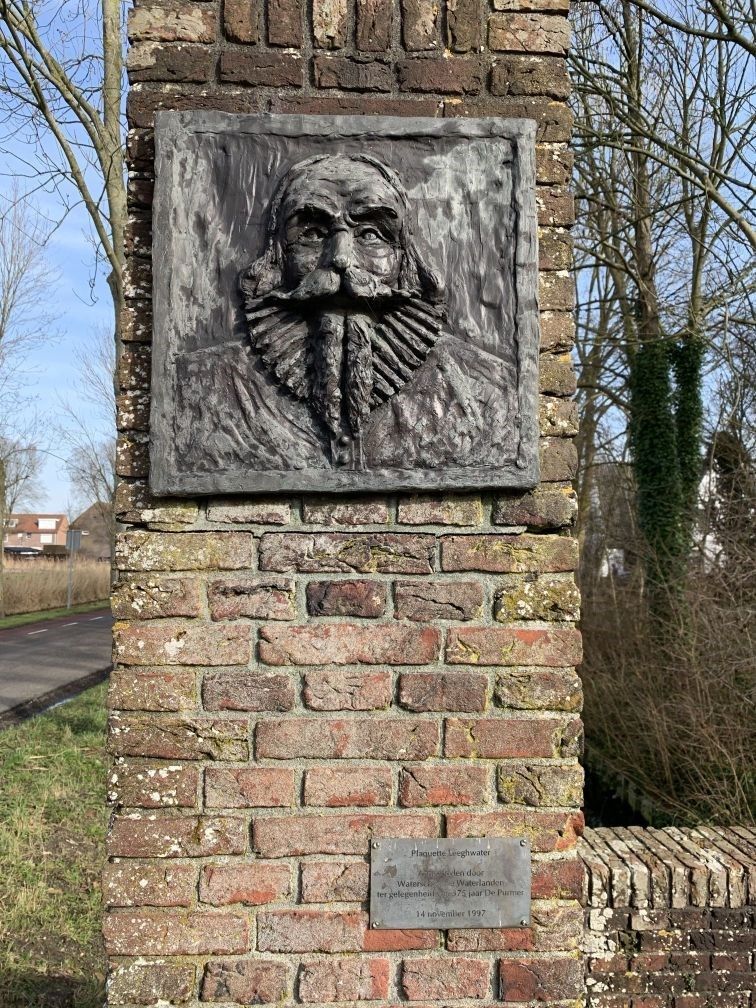
Monument to Jan Adriaansz Leeghwater
Jan Adriaansz Leeghwater was born in De Rijp in 1575. He was a mill builder and hydraulic engineer and helped reclaim several large lakes in North Holland, including the Beemster (1612), Purmer (1622) and the Wormer (1626).
In the Purmer, it is commemorated with this plaque that forms part of a memorial bench placed at the Westerweg-Purmerenderweg intersection in 1922, when the Purmer was 300 years old.
Zantwijck Farm
This farmhouse was built in 1920. A distinguished country house stood here in the 17th century. In 1859, it was demolished and a new farm arose, which was replaced by the present farmhouse in 1920.
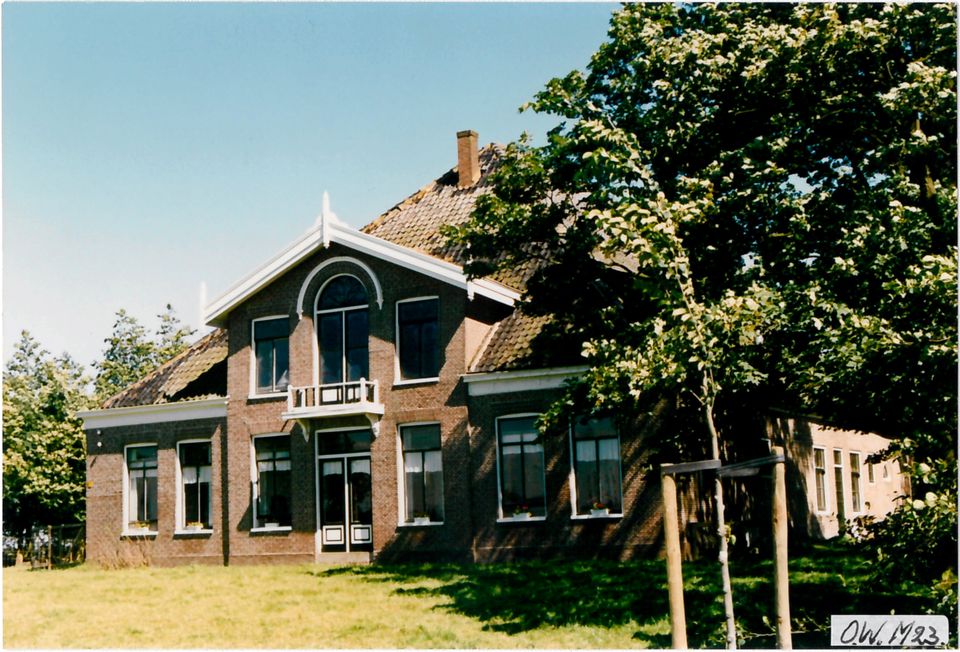
Zantwijck Farm
This farmhouse was built in 1920. A distinguished country house stood here in the 17th century. In 1859, it was demolished and a new farm arose, which was replaced by the present farmhouse in 1920.
The 1920 farmhouse at Oosterweg 23 stands on a plot with a long history. When the Purmer Lake was drained, the plot came into the hands of the Amsterdam corn and oxen merchant Pieter Claesz Overlander. He was a brother of Volkert Overlander, who in 1622 had Ilpensteijn castle built in the Nes near Ilpendam. The farm on this plot is called Santwick in a tax register from 1655. After 1761, the old farmhouse was probably converted into a country house by Arent van Sanen. It became a stately two-storey house with a so-called 'Blue Room', as was more common in substantial houses at the time. There was a stable for cattle and a cheese press. After Arent van Sanen died, Zantwijck came into the hands of his daughter Elisabeth, who was married to Edam timber merchant and mayor Jacob Teengs. Teengs had a forest and ornamental garden planted at Zantwijck, including elms, maples, laurel bushes, golden raisins and weeping willows. In 1859, the country house was demolished and a new farmhouse was built, which was replaced by the current farmhouse in 1920.
WolffenHoeck Farm
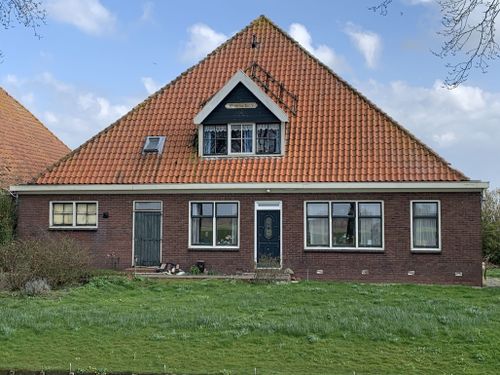
Farm WolffenHoeck (Oosterweg 13) was built in 1939. But what makes this place special is the history of a beautiful country house built here in the 17th century, probably by Clementia van den Vondel.
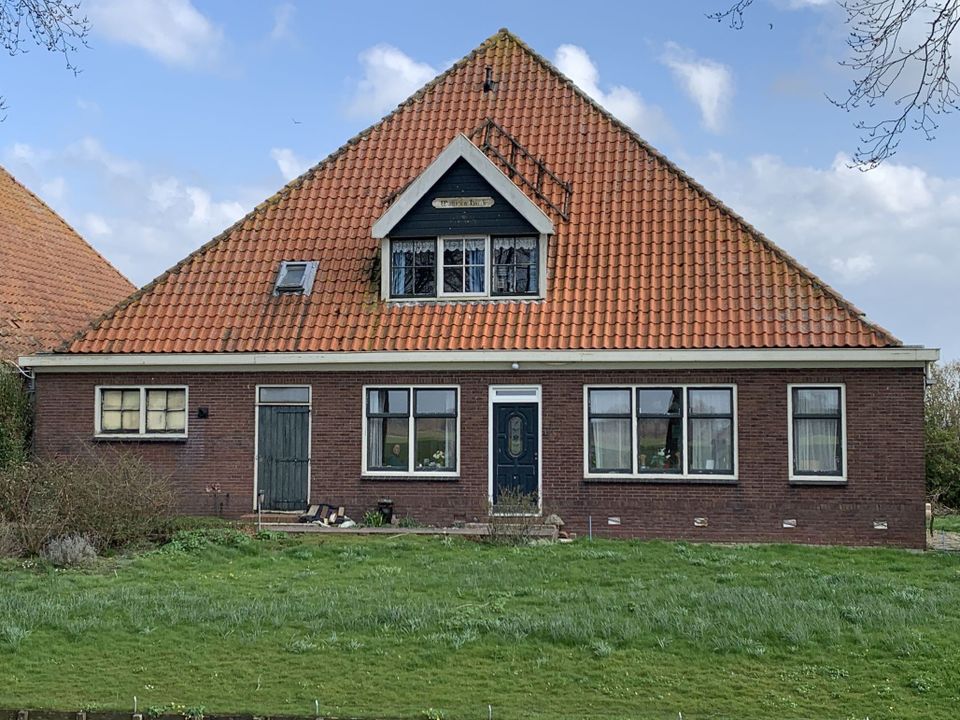
WolffenHoeck Farm
Farm WolffenHoeck (Oosterweg 13) was built in 1939. But what makes this place special is the history of a beautiful country house built here in the 17th century, probably by Clementia van den Vondel.
She was a sister of the famous poet Joost van den Vondel, who often visited his family in the Purmer. The country house had an orangery where all kinds of exotic plants and trees were grown. The orangery was unique in both the Purmer and the Netherlands. Later, the country house was rebuilt or possibly even replaced by a new country house, which was named WolffenHoeck, after the surnames of the owners: Pieter de Wolff and Suzanna van der Hoeck.
Mill at the Stink Dirt
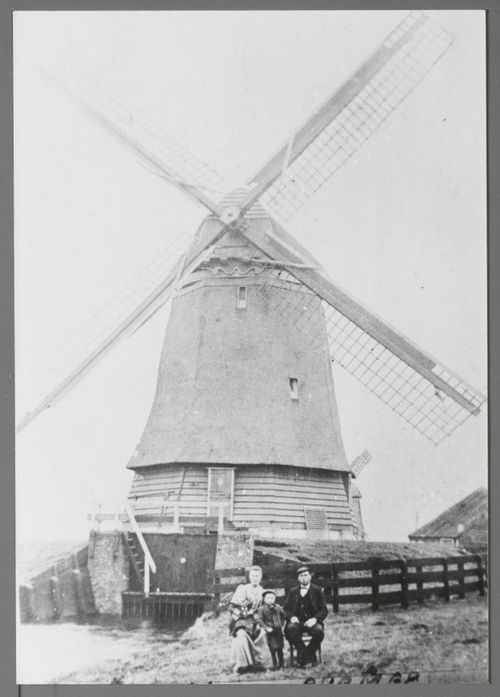
The Purmer Lake was drained between 1618-1622 using mills that pumped the water out on the Purmerringvaart.
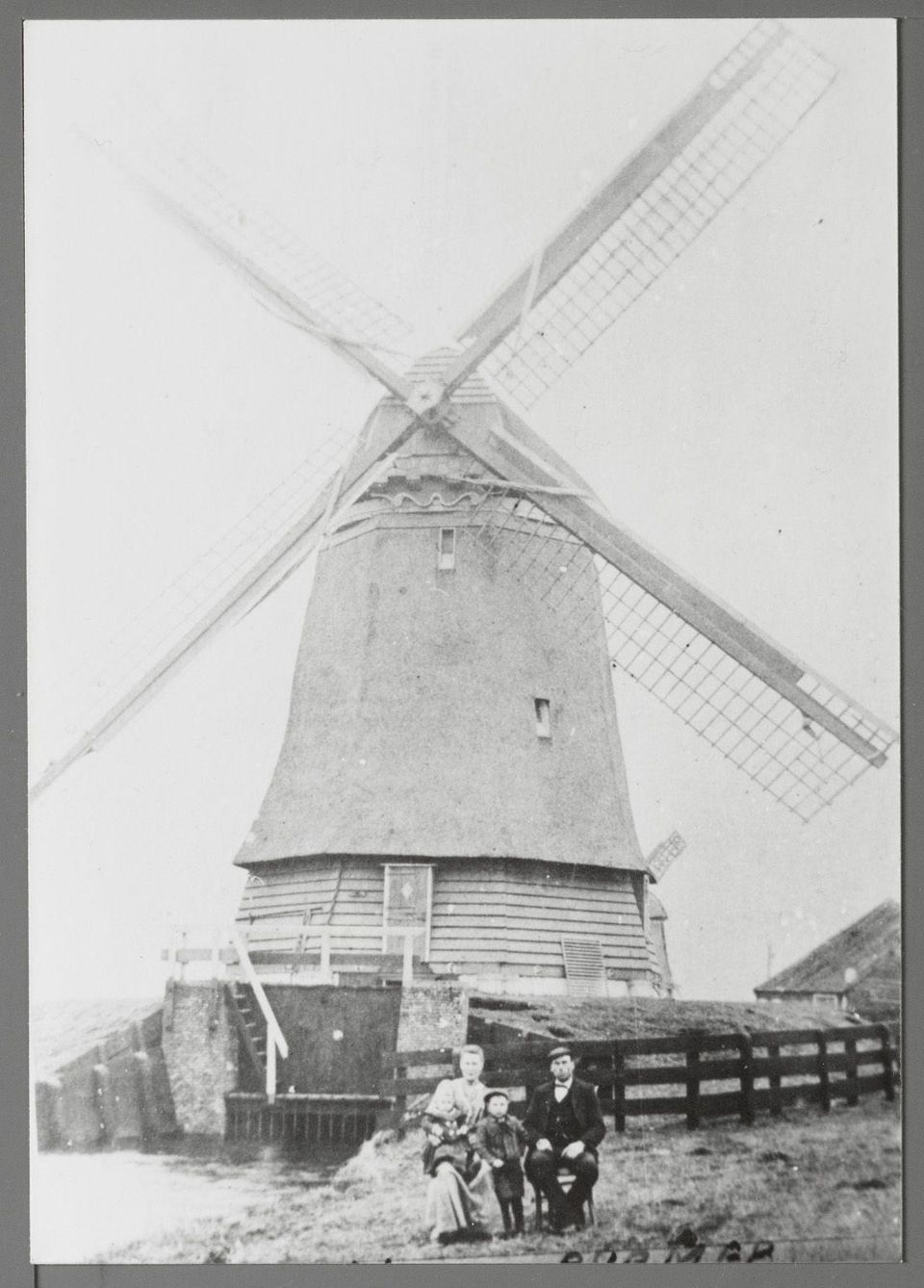
Mill at the Stink Dirt
The Purmer Lake was drained between 1618-1622 using mills that pumped the water out on the Purmerringvaart.
Via the Purmer Ee, which was also called the Stinkevuil, the water entered the IJsselmeer, which was then called Zuiderzee. Near the bridge were also three windmills. The three mills were also called the Stinkevuil corridor. Several mills standing together, which jointly pump out water, are called a mill corridor. This photo was taken around 1900 of one of the mills that stood here. In the foreground is miller Klaas Christiaansz Schaatsbergen and his family. The mill was demolished in 1909.
Purmer-Zuid pumping station
In 1992, this small water pumping station was opened in the south of the Purmer on the Purmerdijk. The capacity of the pumping station is 135 m³ of water per minute, the water is discharged into the so-called Schermerboezem.
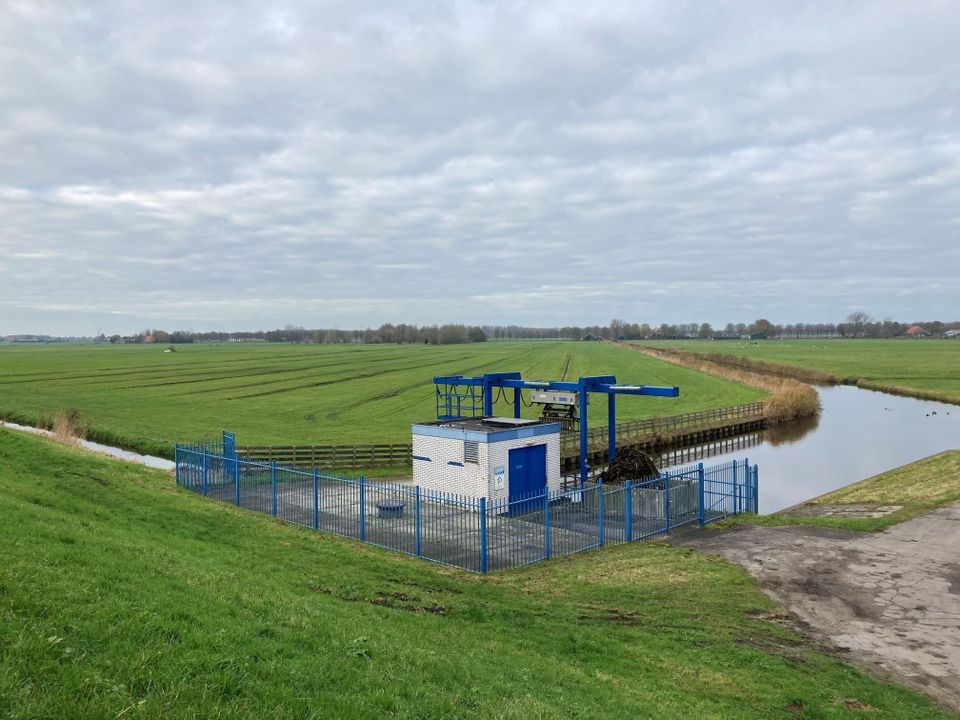
Purmer-Zuid pumping station
In 1992, this small water pumping station was opened in the south of the Purmer on the Purmerdijk. The capacity of the pumping station is 135 m³ of water per minute, the water is discharged into the so-called Schermerboezem.
Lake Purmer before reclamation
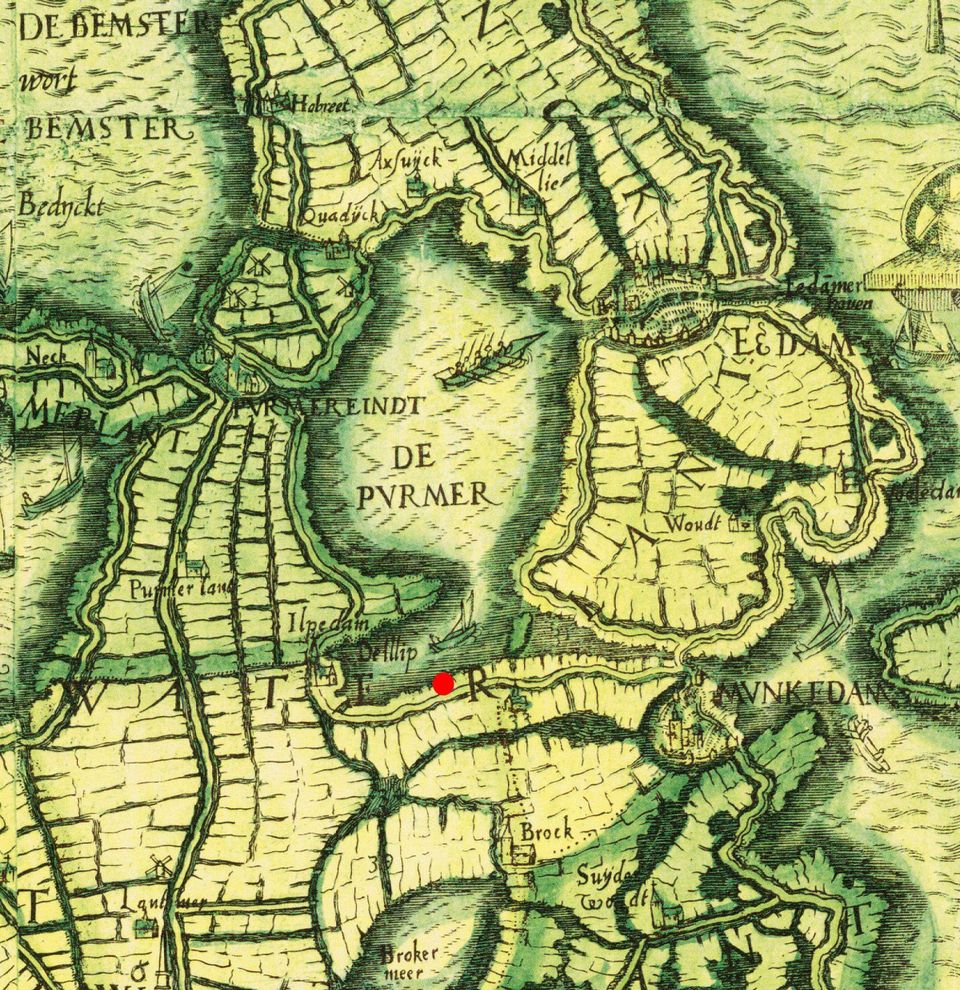
Cartographer Joost Jansz Beeldsnijder (also called Bilhamer, 1541-1590) made a topographic map of North Holland in 1575. The image shows a detail of the map showing Lake Purmer and the towns of Purmerend, Edam and Monnickendam.
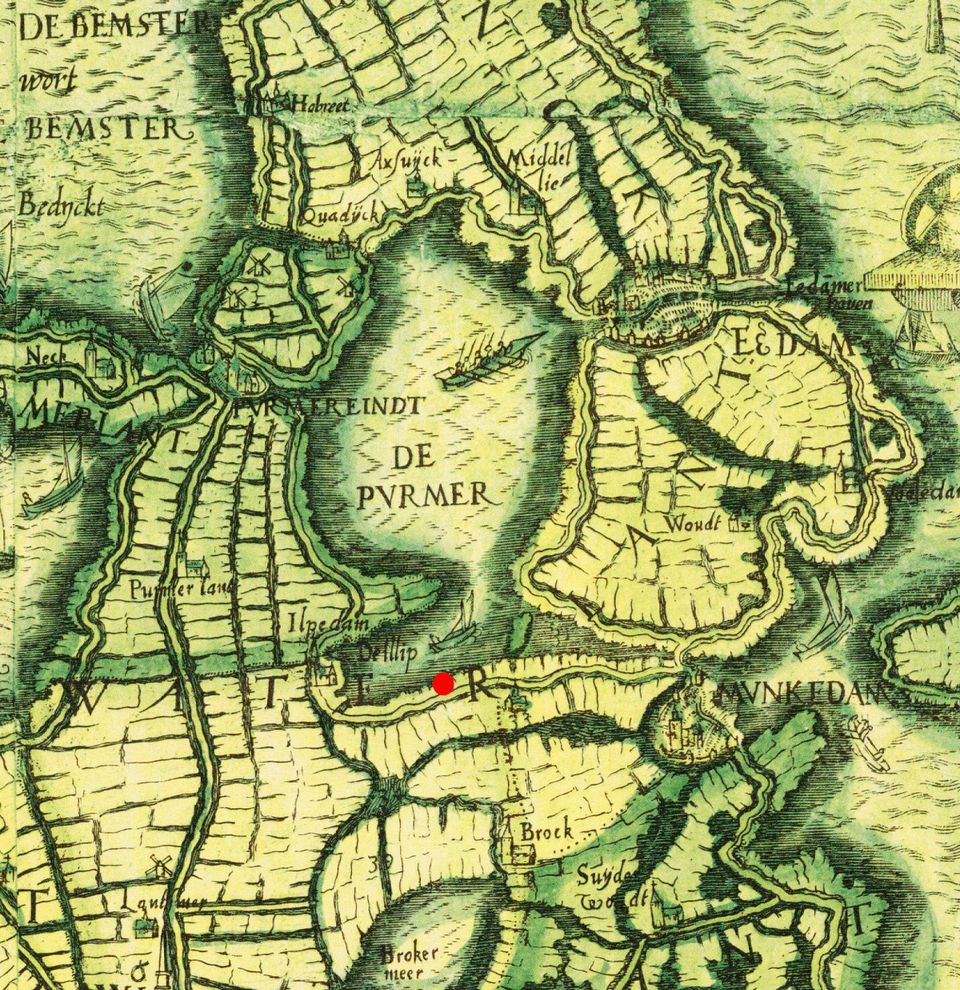
Lake Purmer before reclamation
Cartographer Joost Jansz Beeldsnijder (also called Bilhamer, 1541-1590) made a topographic map of North Holland in 1575. The image shows a detail of the map showing Lake Purmer and the towns of Purmerend, Edam and Monnickendam.
Cartographer Joost Jansz Beeldsnijder (also called Bilhamer, 1541-1590) made a topographic map of North Holland in 1575. The image shows a detail of the map showing Lake Purmer and the towns of Purmerend, Edam and Monnickendam. At the bottom right of the lake is an island; the water to its right is the Stinkevuil or Purmer Ee, which flows into the IJsselmeer at Monnickendam. If you look at the map while cycling, you will be approximately where the red dot is.
View the full map on the Waterlands Archive website.
Ilpenstein Castle
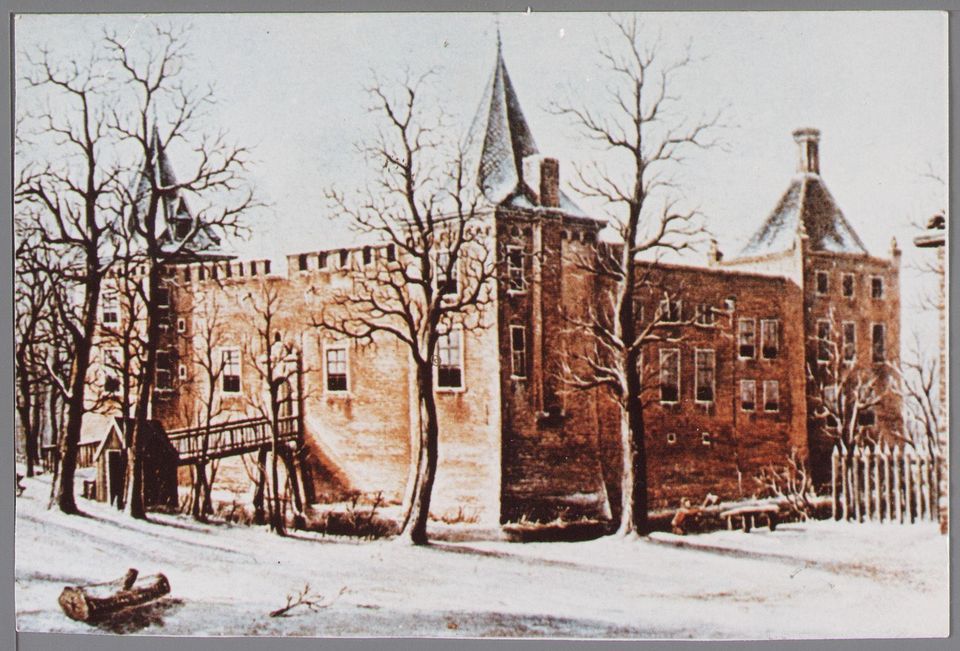
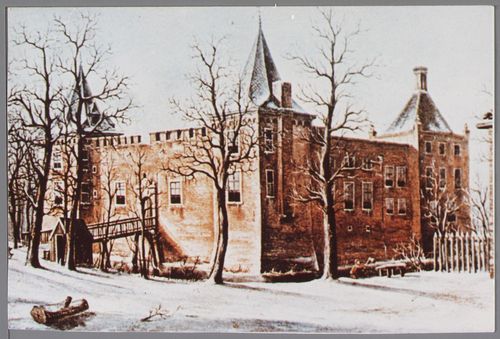
In 1622, Ilpenstein Castle was commissioned by Volkert Overlander, a wealthy mayor from Amsterdam. It may have been called a castle, but actually Ilpenstein was more of a country house.
Ilpenstein Castle
In 1622, Ilpenstein Castle was commissioned by Volkert Overlander, a wealthy mayor from Amsterdam. It may have been called a castle, but actually Ilpenstein was more of a country house.
In 1622, Ilpenstein Castle was commissioned by Volkert Overlander, a wealthy mayor from Amsterdam. Although it was called a castle, Ilpenstein was actually more of a country house. A famous resident of Ilpenstein was Frans Banning Cocq, then Heer (master) of the villages of Purmerland and Ilpendam. He was depicted as captain of the Amsterdam militia by painter Rembrandt in his famous painting the Night Watch . This painting hangs in the Rijksmuseum in Amsterdam. Streets have been named after both Volkert Overlander and Frans Banning Cocq in the Purmer-Noord residential area: the Overlanderstraat and the Banning Cocqgracht.
After the castle was demolished, a farm was built here, address Hofweg 1, which was also called Ilpenstein. The large orchard is a reminder of the former castle.
Polder de Nes
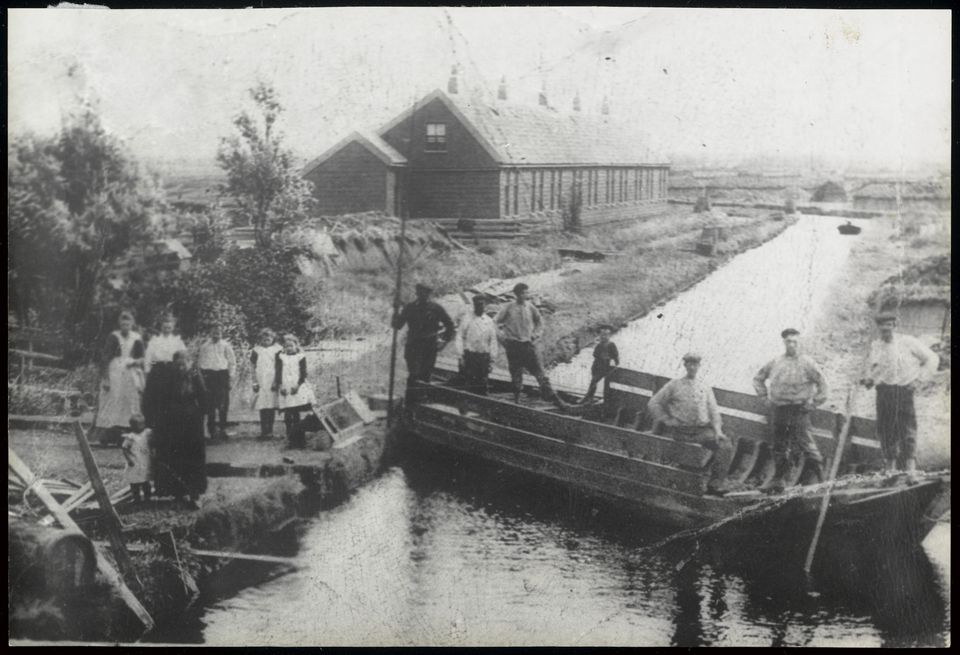
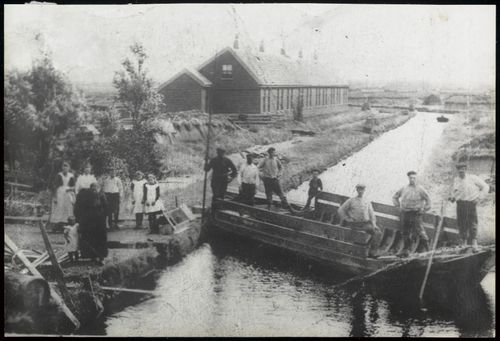
From 1903 onwards, peat was excavated in the small polder De Nes for several decades.
Polder de Nes
From 1903 onwards, peat was excavated in the small polder De Nes for several decades.
This provided not only (temporary) employment, but above all peat (fuel). The peat was transported from the polder to the Purmerringvaart in peat barges, where it was transferred to larger ships and transported away. The photo taken around 1904 shows a peat barge with some peat cutters. In the background is the so-called barracks that housed 12 dwellings for the workers. Part of this barracks is still there, but has been converted into housing.
See also'Here Wech en de Nes' for more information on this polder.
Groeneweg
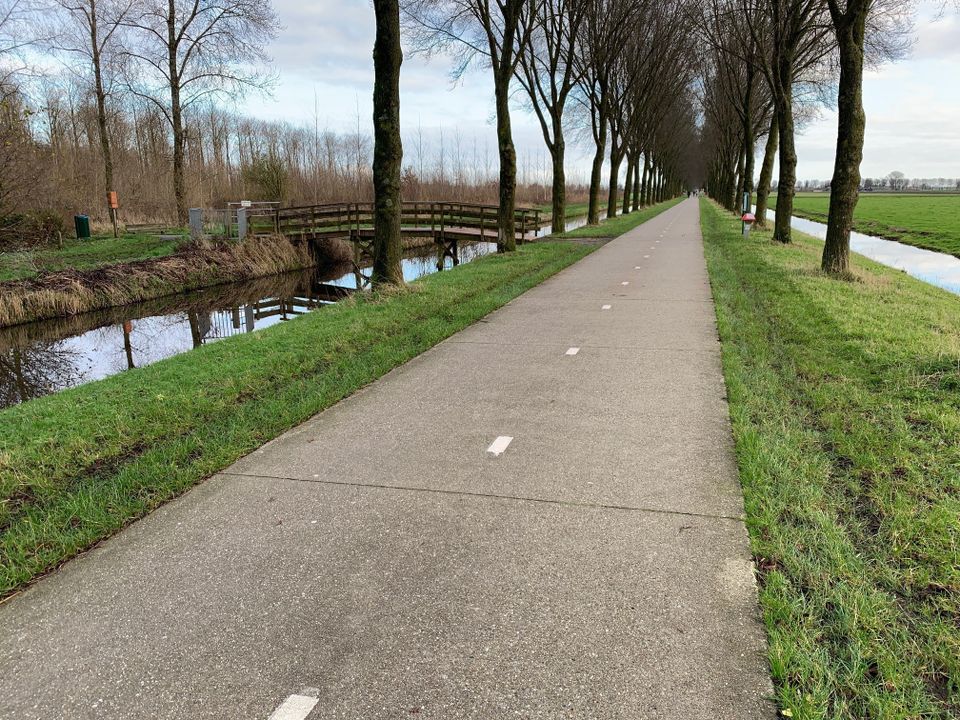
Nowadays, the Groeneweg is a paved cycle path from the Oosterweg through the Purmer towards Purmerend, vice versa. For a long time, this road was not paved, hence the name Groeneweg.
Groeneweg
Nowadays, the Groeneweg is a paved cycle path from the Oosterweg through the Purmer towards Purmerend, vice versa. For a long time, this road was not paved, hence the name Groeneweg.
The Groeneweg is a continuation of the Monnickendammerweg and is indicated as such on old maps. The part now called Monnickendammerweg was paved with Walloon clinkers in the period 1853-1854. Perhaps the name Groeneweg arose then because that part of the road was not paved. Whatever the case, the name Groeneweg became established and is still called that although it is nowadays a cycle path.
Molentocht
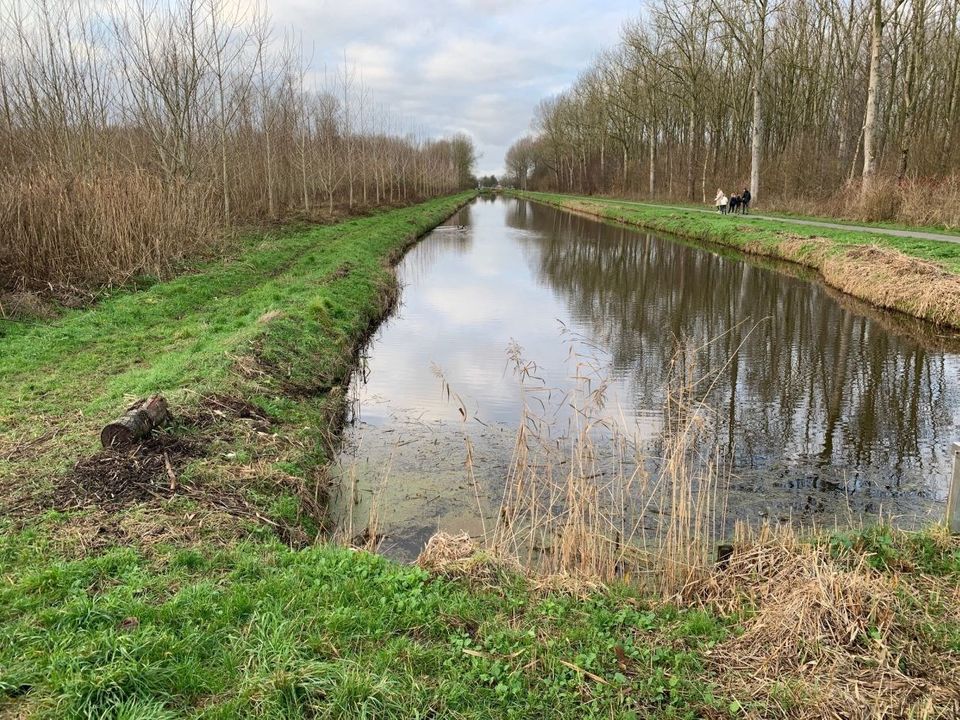
Wide canals are important in the Purmer to drain water properly when it rains. On this millrace through the Purmer forest, near Purmerend, there were three mills to pump the water away.
Molentocht
Wide canals are important in the Purmer to drain water properly when it rains. On this millrace through the Purmer forest, near Purmerend, there were three mills to pump the water away.
Old maps of the Purmer show wide ditches, so-called draught ditches on which not infrequently stood windmills that emptied into the Purmerringvaart. These draught ditches played an important role in the drainage of the Purmer. Some drainage ditches still flow through the Purmer forest that was constructed at the end of the last century, such as this Molentocht, after which the care home De Molentocht is named. There were three mills along Molentocht, as you can see on a detail of an 18th century map. To do so, click on 'Visit the website'.
Gun drop 'Milk is good for each'
Several resistance groups were active in the Purmer during the Second World War. In a farm on Westerweg, which has since been demolished, was the headquarters of the so-called KP (Knokploeg) Waterland
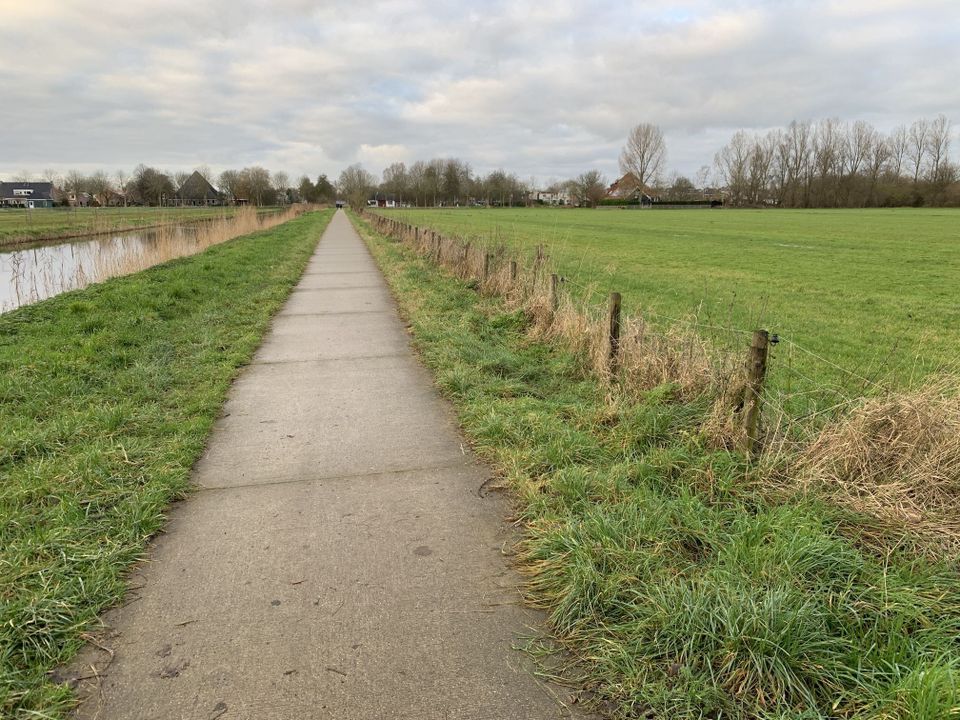
Gun drop 'Milk is good for each'
Several resistance groups were active in the Purmer during the Second World War. In a farm on Westerweg, which has since been demolished, was the headquarters of the so-called KP (Knokploeg) Waterland
Several resistance groups were active in the Purmer during the Second World War. In a farm on Westerweg, which has since been demolished, was the headquarters of the so-called KP (Knokploeg) Waterland. On the grounds next to the farm, Allied planes dropped weapons several times at night under the code name 'Milk is good for all'.
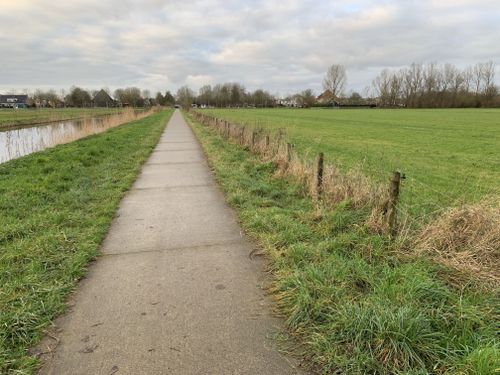
Spieringshof and Westwijck
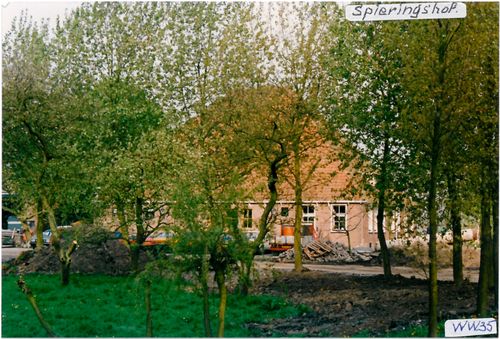
The small residential area of Spieringshof is a reminder of the farm of the same name that stood here. But before the farmhouse was built here, it was home to the Purmer's finest country estate: Westwijck.
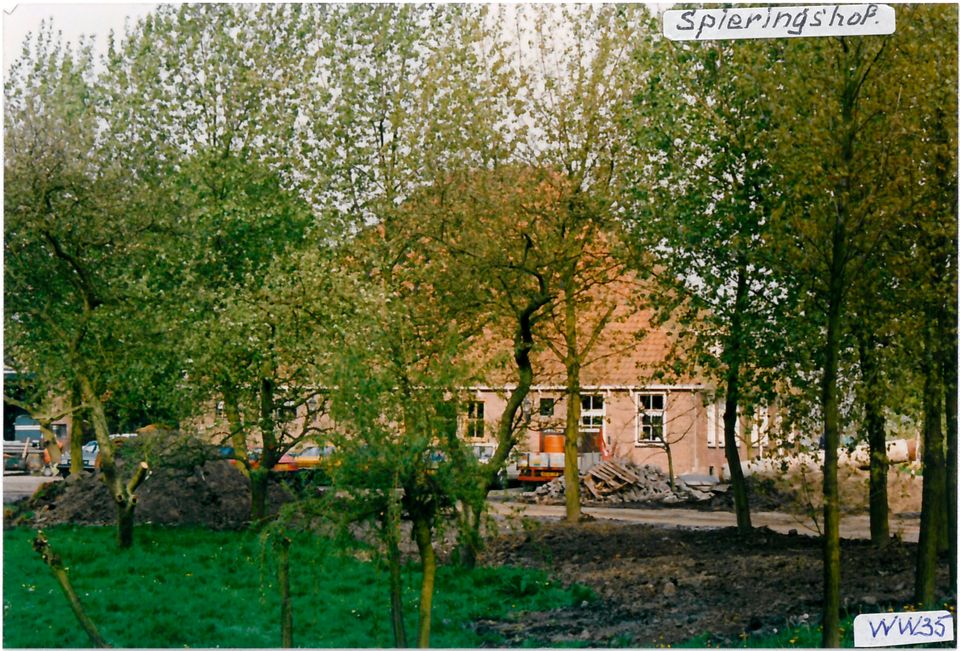
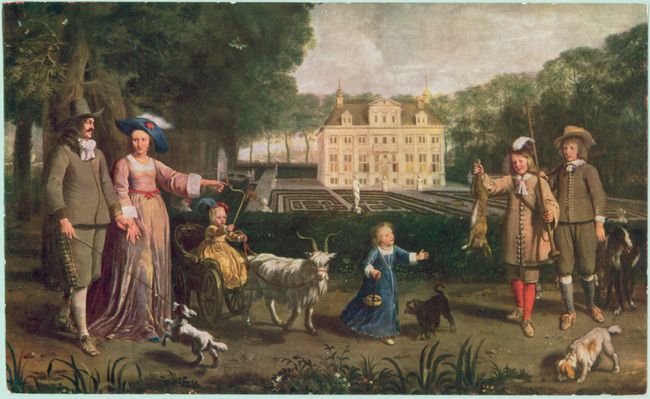
Spieringshof and Westwijck
The small residential area of Spieringshof is a reminder of the farm of the same name that stood here. But before the farmhouse was built here, it was home to the Purmer's finest country estate: Westwijck.
Built in 1637, commissioned by merchant Dieric Tholincx from Amsterdam. Westwijck was designed by the then-famous architect Philip Vingboons, who also designed the country house Ransbosch that stood on Oosterweg. Artist Cornelis Holsteijn made a beautiful painting of Westwijck. Near the house was a beautiful garden in which several statues stood. The Tholincx family lived on Herengracht in Amsterdam and will have used Westwijck as a country house. Sometime in the second half of the 17th century, Westwijck was renamed Spieringshof, named after the Spiering family who owned it at the time. In 1731, Spieringshof was sold to Dirk Boon, a former mayor of Monnickendam who had the house demolished. After that, the first farmhouse will have been built on that spot. The farm in the photo is a later stolp built in 1825 and demolished in 2013.
Fire Purifier church
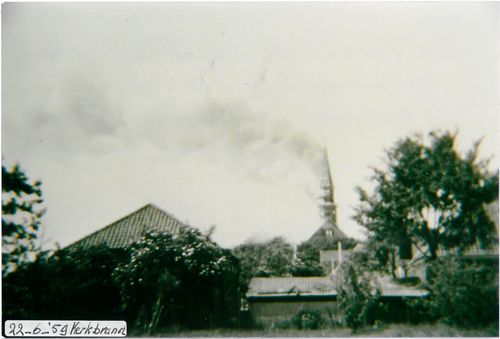
The first church in the Purmer was inaugurated in 1865. This church burned down in 1959 and largely collapsed.
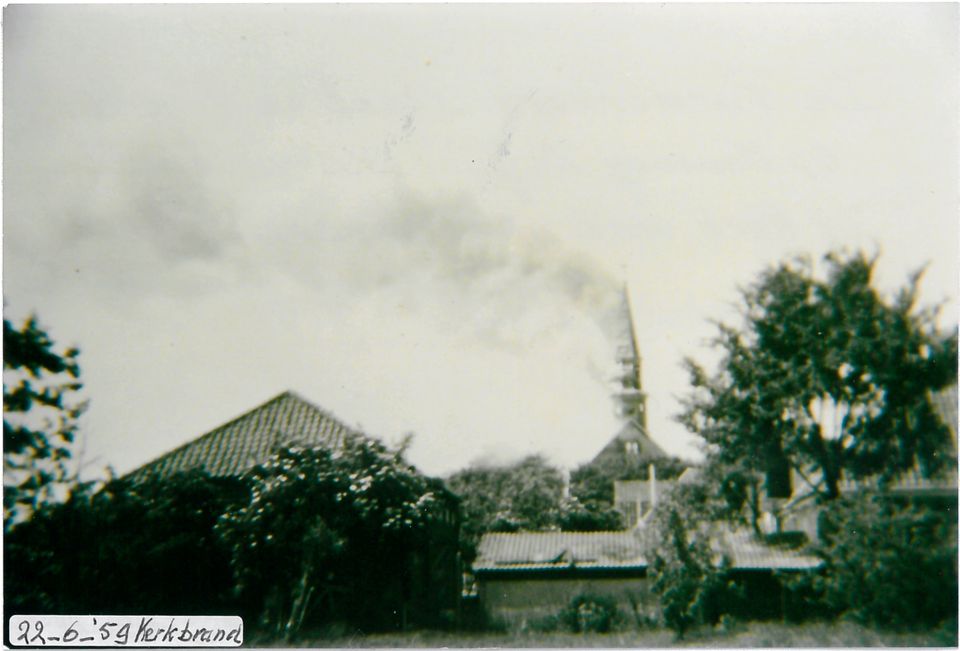
Fire Purmer Church
The first church in the Purmer was inaugurated in 1865. This church burned down in 1959 and largely collapsed.
The fire started during maintenance work on the church. Hundreds of people watched the church being destroyed by the fire. They saw the tower cock fall from the tall tower, they saw the tower crumble and the roof collapse. In short, the entire church was destroyed. The thick clouds of smoke could be seen far into the surroundings. After the fire, the present church was built.
Read more about the history of the Purerkerk.
Purmer church monument
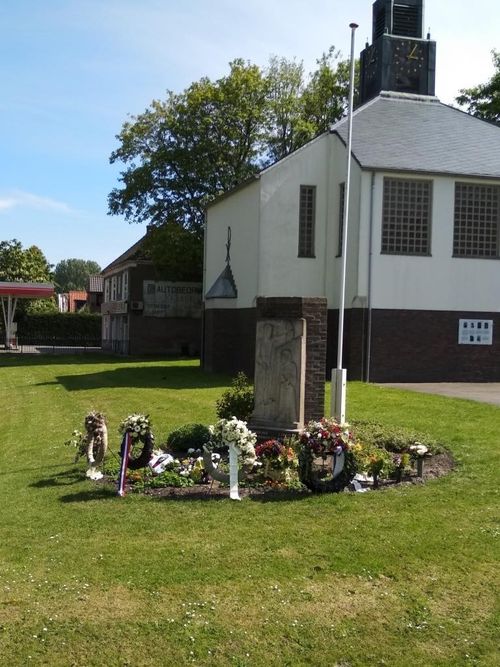
In 1950, near the Reformed church in the Purmer, this monument was erected in memory of four residents from the Purmer who died as a result of the war.
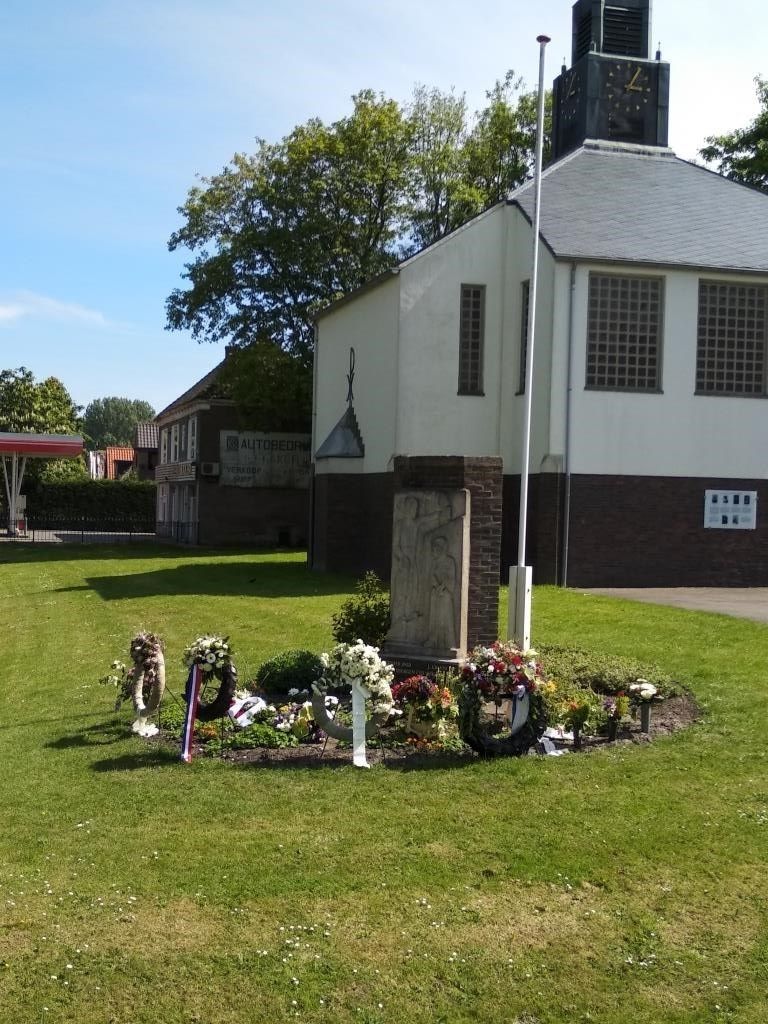
Purmer church monument
In 1950, near the Reformed church in the Purmer, this monument was erected in memory of four residents from the Purmer who died as a result of the war.
Sergeant Simon de Ridder (killed in plane crash), Dirk Schaatsbergen (machinist on the torpedoed, and still missing, submarine O13), resistance fighter Jacob Groot and Simon Groot (crew member torpedoed merchant ship).