
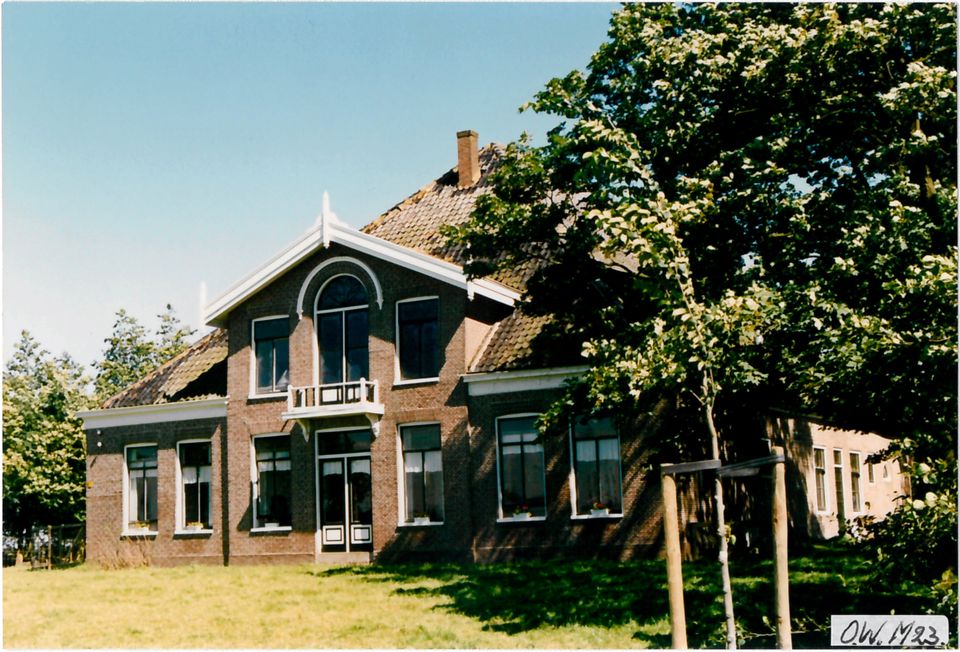
Zantwijck Farm
This farmhouse was built in 1920. A distinguished country house stood here in the 17th century. In 1859, it was demolished and a new farm arose, which was replaced by the present farmhouse in 1920.
The 1920 farmhouse at Oosterweg 23 stands on a plot with a long history. When the Purmer Lake was drained, the plot came into the hands of Pieter Claesz Overlander, a corn and oxen merchant from Amsterdam. He was a brother of Volkert Overlander, who in 1622 had Ilpensteijn castle built in the Nes near Ilpendam. The farm on this plot is mentioned in a tax register u...
The 1920 farmhouse at Oosterweg 23 stands on a plot with a long history. When the Purmer Lake was drained, the plot came into the hands of the Amsterdam corn and oxen merchant Pieter Claesz Overlander. He was a brother of Volkert Overlander, who in 1622 had Ilpensteijn castle built in the Nes near Ilpendam. The farm on this plot is called Santwick in a tax register from 1655. After 1761, the old farmhouse was probably converted into a country house by Arent van Sanen. It became a stately two-storey house with a so-called 'Blue Room', as was more common in substantial houses at the time. There was a stable for cattle and a cheese press. After Arent van Sanen died, Zantwijck came into the hands of his daughter Elisabeth, who was married to Edam timber merchant and mayor Jacob Teengs. Teengs had a forest and ornamental garden planted at Zantwijck, including elms, maples, laurel bushes, golden raisins and weeping willows. In 1859, the country house was demolished and a new farmhouse was built, which was replaced by the current farmhouse in 1920.