
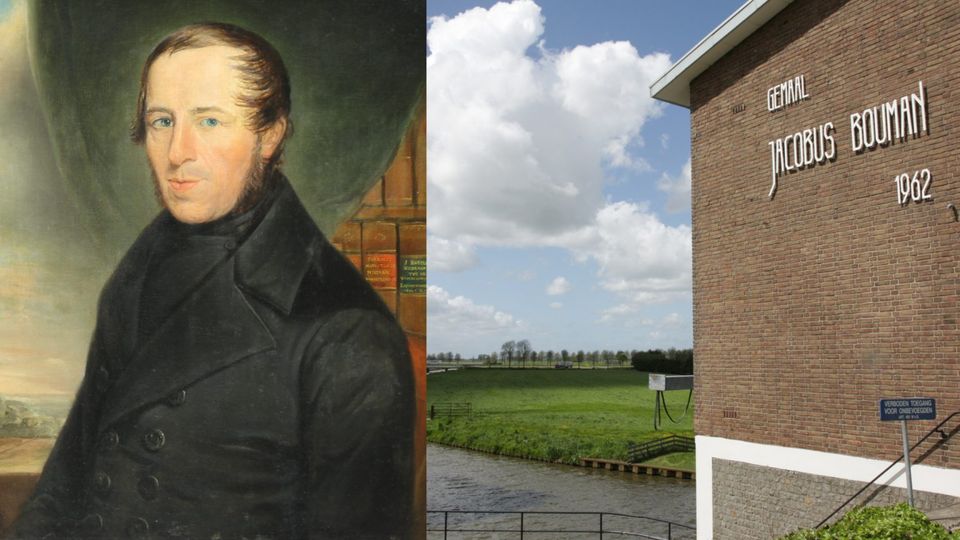
Jacobus Bouman pumping station | Beemster Mills
Contact
1461 DR Zuidoostbeemster Plan your route to Jacobus Bouman Pumping Station | Beemster Mills
In 1962, the last and then most modern pumping station in the Beemster was installed. Two electric motors can pump the water up 4.5 metres. The water is discharged into the Schermerboezem via the Beemsterringvaart.
Do you know that the water in the ring canal stands at -50 cm NAP? N.A.P. height of 0 metres is equal to an average North Sea level. If you want to know how the pumping station works, check out the information board.
This pumping station is named after Jacobus Bouman (1799-1877), a born and bred Beemsterling. A farmer, historian and administrator. He was one of the founders of the Dutch Agricultural Society in 1846.
He also wrote the book 'Diking, Rise and Flowering of the Beemster'. In it, he gives a detailed account of the developments in the new polder. From obtaining the patent to draining the Beemster lake, the difficulties during that work and how the new land flourished. A great reference work for those who want to know more about the origins and development the Beemster.
The Beemsterringvaart
The B...
Do you know that the water in the ring canal stands at -50 cm NAP? N.A.P. height of 0 metres is equal to an average North Sea level. If you want to know how the pumping station works, check out the information board.
This pumping station is named after Jacobus Bouman (1799-1877), a born and bred Beemsterling. A farmer, historian and administrator. He was one of the founders of the Dutch Agricultural Society in 1846.
He also wrote the book 'Diking, Rise and Flowering of the Beemster'. In it, he gives a detailed account of the developments in the new polder. From obtaining the patent to draining the Beemster lake, the difficulties during that work and how the new land flourished. A great reference work for those who want to know more about the origins and development the Beemster.
The Beemster ring canal
The Beemster dykes were tackled by the surrounding local administrators over the bridges. After all, the ring canal was a barrier to the movement of goods and people. A small boat was a simple aid, but heavy loads like a carriage or carriage could not carry it. There simply had to be a sturdy bridge that was wide and strong enough for horse and carriage. And as is still often the case today, cost was a major stumbling block.