


Defence Line of Amsterdam route
On this cycling tour in Laag Holland, you will discover six forts and a tangle of locks, dams, canals and dykes. An environment where you can really enjoy nature during the cycling tour!
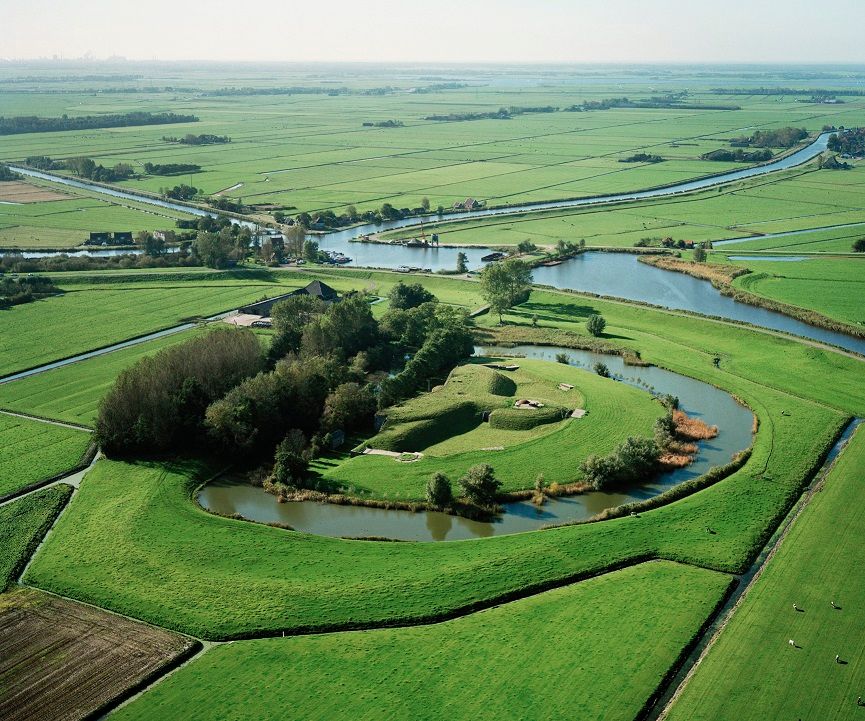
The Stelling van Amsterdam cycle route guarantees plenty of greenery. An armour for the capital, so that in times of war the government and the royal family could retreat here. That was the idea when, at the end of the nineteenth century, the fatherland's Department of War decided to set up a strip 15 to 20 kilometres long around Amsterdam as a line of defence. A damp armour, though, because the enemy - as soon as he would present himself - was denied access to the capital by flooding (inundating) large tracts of land within that strip. At the so-called accesses - places that could not be flooded - forts were erected (42 in total) to prevent the enemy from slipping past.
A strong sample of Holla...
The Stelling van Amsterdam cycle route guarantees plenty of greenery. An armour for the capital, so that in times of war the government and the royal family could retreat here. That was the idea when, at the end of the nineteenth century, the fatherland's Department of War decided to set up a strip 15 to 20 kilometres long around Amsterdam as a line of defence. A damp armour, though, because the enemy - as soon as he would present himself - was denied access to the capital by flooding (inundating) large tracts of land within that strip. At the so-called accesses - places that could not be flooded - forts were erected (42 in total) to prevent the enemy from slipping past.
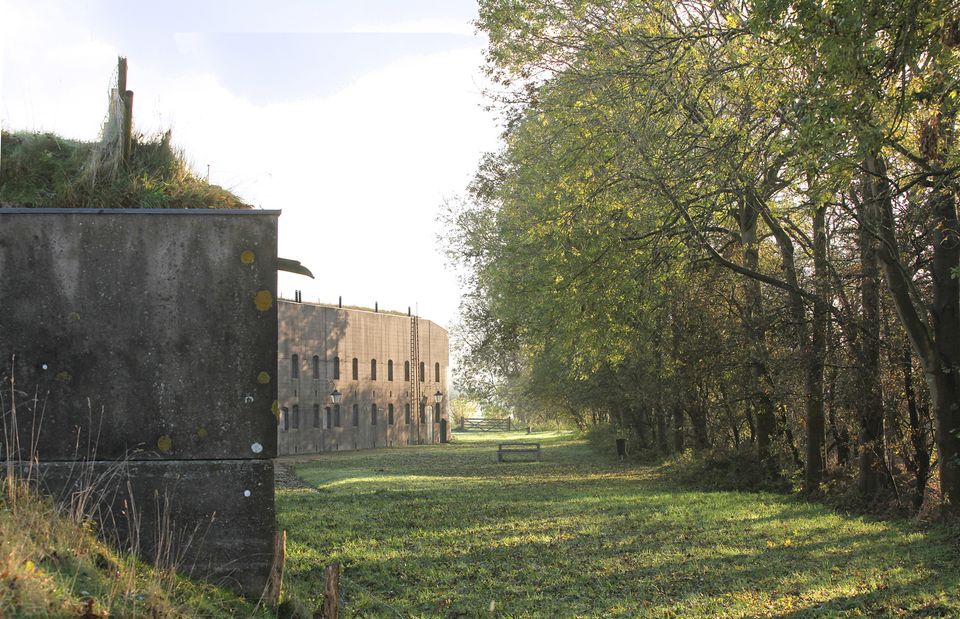
A strong example of Dutch hydraulic engineering ingenuity is what you will see on this Stelling van Amsterdam route. And with a little imagination, you can see the soldiers of yesteryear standing guard. Because very little has changed in the landscape since then. For a long time, it was forbidden to build within a one-kilometre radius of the Defence Line and thus only nature has been able to manifest itself abundantly here. Some forts are open for visits, such as those in Edam and Spijkerboor. Guided tours are provided here. Highly recommended to take a break from cycling!
Take a closer look


You are going to see this
-
95
-
94
-
28
-
04
-
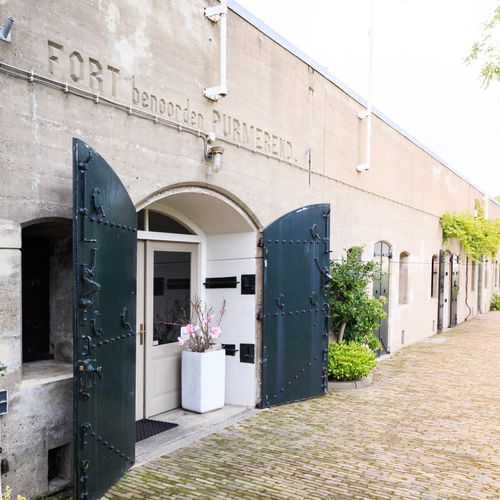
Fort Benoorden | Purmerend
Fort Benoorden is part of the Defence Line of Amsterdam and is part of the UNESCO World Heritage site 'Hollandse Waterlinies'. This defensive line of forts was built 15 to 20 kilometres around Amsterdam between 1880 and 1914.
Fort Benoorden | PurmerendFort Benoorden | Purmerend
Fort Benoorden is part of the Defence Line of Amsterdam and is part of the UNESCO World Heritage site 'Hollandse Waterlinies'. This defensive line of forts was built 15 to 20 kilometres around Amsterdam between 1880 and 1914.
Within this ring, the army, government and king could retreat in case of (possible) attacks on the Netherlands. An ingenious system allowed the land around the defence line to be flooded. Too shallow for boats and too deep for men and horses. Five forts and an inundation sluice of this defence line are located in De Beemster.
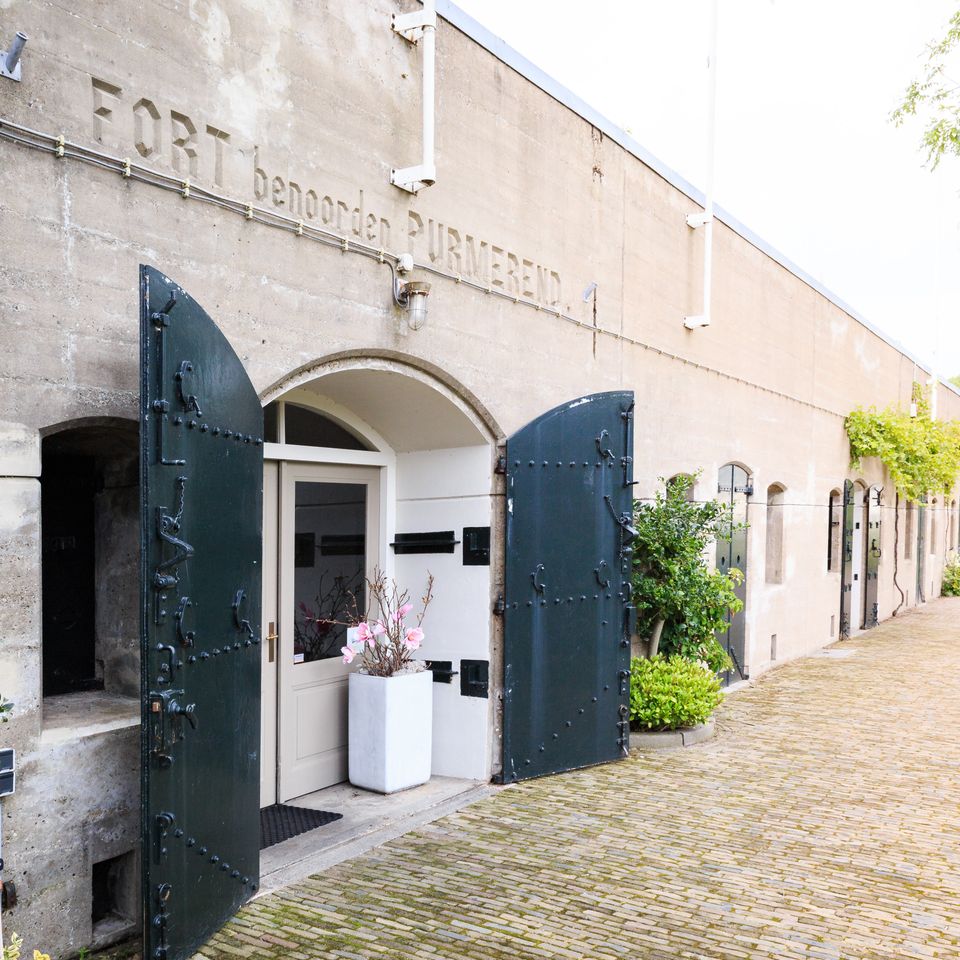
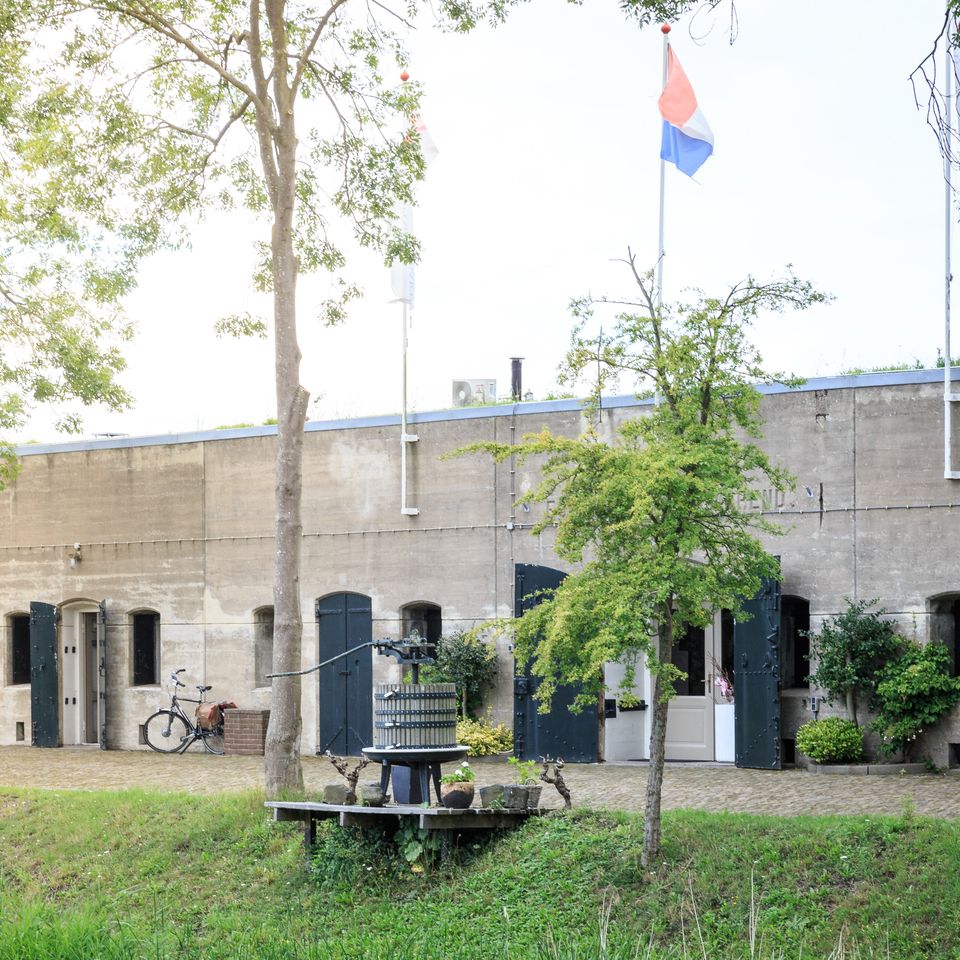
This fort was built to defend the vulnerable points formed by the Beemsterringdijk, Purmerenderweg and Rijperweg roads. The defensible earthwork was completed in 1895. The bombproof main building from 1912 is connected by covered corridors to the two lifting turret buildings. Today, wine is stored between the thick walls of this fort, as a wine importer has been located here since 1981.
The fort north of Purmerend was only added to the Defence Line of Amsterdam at a late stage (1907). The construction of this fort, which is part of the northern front of the Defence Line, made use of several new insights. One of the novelties applied was the construction of so-called poternes - corridors covered with steel and concrete - which formed a completely safe connection between the main building and the artillery units.
Poternes were constructed to the two lifting turrets, which housed the large artillery pieces, and to the machine gun emplacements set up at the front. On the right side of the fort's front, part of the terrain was excavated. This was done when a new access road was built.
-
-
05
-
Fort Resort Beemster
Fort Resort Beemster is one of the most luxurious and sustainable wellness resorts in the Netherlands. Here, enjoy soothing baths and saunas, relax body and mind, unwind and come into balance. After this bath of hospitality, gastronomy and wellness, you will feel fully recharged.
Fort Resort BeemsterFort Resort Beemster
Fort Resort Beemster is one of the most luxurious and sustainable wellness resorts in the Netherlands. Here, enjoy soothing baths and saunas, relax body and mind, unwind and come into balance. After this bath of hospitality, gastronomy and wellness, you will feel fully recharged.
Fort Resort Beemster is located in Fort aan de Nekkerweg, which is part of the Defence Line of Amsterdam. The fort, which used to house soldiers, has now been transformed into a unique spa and wellness, a hotel with 17 luxurious rooms and suites and two restaurants.
Spa & Wellness
In the wellness area, you will find many special saunas such as the Panorama sauna overlooking the beautiful Beemster and the wood-fired Maa sauna. You can enjoy daily laps in the Kelo sauna, a scrub session in the steam bath and a singing bowl session in one of the relaxation rooms. In fine weather, enjoy the sandy beach in a hammock or in the sunbathing area. Take a dip in the natural swimming pond, float in the solar pool or discover the island of Little Bali with barefoot path, meditation garden, hot spring, saunas, sandy beach and more.In the wellness restaurant, you can enjoy delicious dishes such as soups, salads, sandwiches and healthy smoothies. For a complete experience, enjoy treatments such as massages, hammam or facials in the spa. Enjoy peace and quiet, space and all that is good in terms of wellness, gastronomy and hospitality.

-
-
46
-
Inundation sluice in South Beemster ring dyke
The Inundation Lock is part of the Defence Line of Amsterdam and was constructed by the Department of War between 1890 and 1891.
Inundation sluice in South Beemster ring dykeInundation sluice in South Beemster ring dyke
The Inundation Lock is part of the Defence Line of Amsterdam and was constructed by the Department of War between 1890 and 1891.
The sluice formed the main point in the water control of the Beemster polder and was built for the purpose of "flooding the Beemster polder". It consisted of a sluice section in the dyke body and then a bowl section in the upper Beemster polder. Water from the North Holland Canal was let into the polder via this bowl. When the polder was flooded in 1940, it was done via this lock. After its military function ceased, the lock fell into disuse. The openings on the canal side were sealed with concrete and the sluiceways and discharge bed with earth.

-
-
Fort along Middenweg
The fort on Middenweg is part of the Defence Line of Amsterdam and is part of the UNESCO World Heritage Site 'Hollandse Waterlinies'. This defensive line of forts was built 15 to 20 kilometres around Amsterdam between 1880 and 1914.
Fort along MiddenwegFort along Middenweg
The fort on Middenweg is part of the Defence Line of Amsterdam and is part of the UNESCO World Heritage Site 'Hollandse Waterlinies'. This defensive line of forts was built 15 to 20 kilometres around Amsterdam between 1880 and 1914.
The fort is located on the southern ring dyke of polder De Beemster. The North Holland Canal runs behind the fort and the dike. An inundation sluice for the Beemster is located east of the fort. The purpose of the fort was to seal off and defend the accesses formed by the Middenweg and Zuiddijk roads. The original situation around the fort has been preserved: open polder landscape outside the Defence Line and the dike and canal inside the Defence Line.
The fort was used as a warehouse complex from unknown date until after 1974 and on 1-12-1950 as a gunpowder magazine. Later used by Eurometaal (vm Artillerie Inrichtingen); still in use in 1980/1983. Narrow gauge track was present for this purpose.
Facilities for a Detention and Residence Camp for political offenders were partially made in 1946 but the fort was not used as a camp.
Flora & Fauna are of great natural value. Due to strong temperature changes on the barren fort site, distinct dune vegetation occurs here. To be found are, among others, Wall Pepper, Sand Wall, Common Wallow, Jacob's Cross and Rough forget-me-not. Also found are Wolf's-foot, Red-water-herb and Pennywort. Long-eared owl and freshwater prawn are also residents of the nature reserve around the fort.A special feature of this fort was the washroom for the soldiers. An ingenious system cleans rainwater before it enters the wash basins. The sinks themselves can be tipped over so that the dirty water flows away.
The Fort on Middenweg can be admired but not visited.

-
-
Fort on Jisperweg
The fort is located along the southern ring dyke of De Beemster polder. The North Holland Canal runs behind the fort and the dyke. The fort had until the closure and defence of the access to it." (The Jisperweg.)
Fort on JisperwegFort on Jisperweg
The fort is located along the southern ring dyke of De Beemster polder. The North Holland Canal runs behind the fort and the dyke. The fort had until the closure and defence of the access to it." (The Jisperweg.)
Commissioned in 1918 as a military house for about 20 detainees, not being conscientious objectors, of the court martial. Other detainees were locked up in the Fort along Nekkerweg or the Fort near Spijkerboor. From the ring dyke, the access road leads to the fort's throat side. The fort watchman's house and the iron storage shed are
no longer present.A moat surrounds the entire fort; the access bridge is no longer present and has been replaced by a single dam. The main building has a door on the throat side and two windows with steel shutters to each room. The room leading to the pottery has a large double steel door. The front wall is still present and contains four machine gun emplacements and in the middle front, instead of a front building, a lifting turret building.
The nature reserve around the fort houses unusual birds such as the Golden Oriole and the Great Owl, among others. Particular plants include the Ground Featherweed, Ringleaf Vetch and Blue Woodruff.
-
-
43
-
60
-
Fort near Spijkerboor
The fort near Spijkerboor was the main fort in the northern front of the Defence Line of Amsterdam. From here, the highly strategic dykes around the Beemsterringvaart and the North Holland Canal were defended.
Fort near SpijkerboorFort near Spijkerboor
The fort near Spijkerboor was the main fort in the northern front of the Defence Line of Amsterdam. From here, the highly strategic dykes around the Beemsterringvaart and the North Holland Canal were defended.
The Fort near Spijkerboor was therefore equipped with the heaviest artillery of any fort in this part of the front. At the front, a rotating armoured turret was even fitted with two pieces of artillery of 10.5-centimetre calibre with a range of no less than ten kilometres. This turret and artillery are still present and can also be visited.
The two-storey fort building was used as a prison several times after the First World War. The bars in front of the windows and the interior murals date from those periods.
In 2026, the fort will reopen its doors for viewing! On these days, you can join guided tours, or set off on your own via a marked walking route.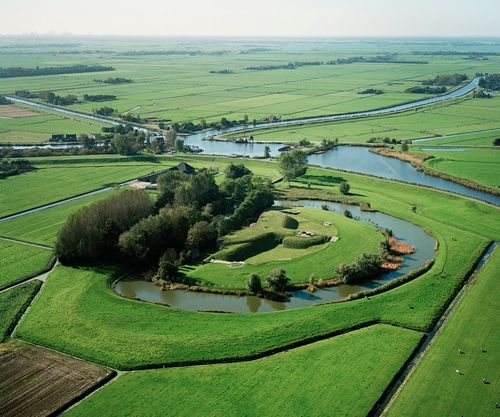
-
-
61
-
06
-
07
-
08
-
09
-
11
-
10
-
63
-
64
-
Fort near Edam
The Fort near Edam is part of the Defence Line of Amsterdam, part of UNESCO World Heritage Site the Dutch Waterlines, and was one of the last forts developed for this unique line of defence.
Fort near EdamFort near Edam
The Fort near Edam is part of the Defence Line of Amsterdam, part of UNESCO World Heritage Site the Dutch Waterlines, and was one of the last forts developed for this unique line of defence.
Compared to many other forts within the Defence Line of Amsterdam, the Fort near Edam is a relatively modern type of fort. The fort is distinguished from the older types by the use of (partially) reinforced instead of unreinforced concrete. At the same time, the fort has a few other notable deviations from the so-called B-type. In Edam, for instance, there are no short side fronts with lifting turrets. And the machine gun block in front of the front building gave way in Edam to an armoured casemate. This casemate was connected to the main building (a so-called poterne) by a corridor covered with concrete and steel. In the main building, especially in the kitchen, many of the original contents remain, including the large cooking kettles and boilers.
The fort can be visited with or without an accompanying guide. However, not all parts of the fort's building and grounds are accessible to visitors. This is indicated with signs, fences and ropes. Moreover, the fortress is located in a nature reserve protected by the Forestry Commission. Visitors are therefore requested to respect the peace and quiet and follow the instructions of the volunteers. Want to know more? Then visit the Fort near Edam website.

-
-
97
-
95




- 95
- 94
- 28
- 04
- 05
- 46
- 43
- 60
- 61
- 06
- 07
- 08
- 09
- 11
- 10
- 63
- 64
- 97
- 95