
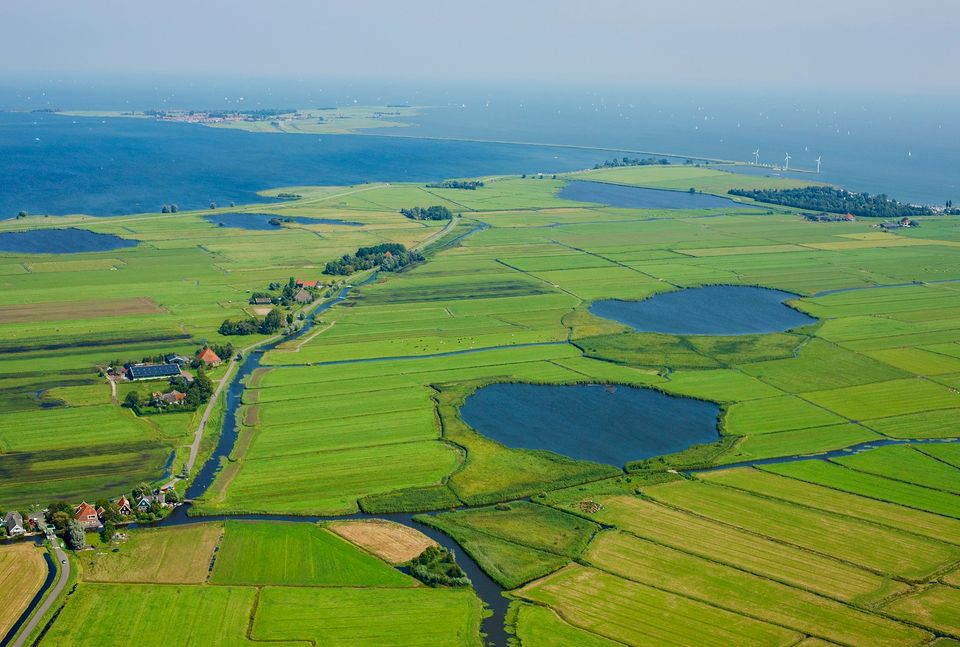
Meadow bird paradise Waterland-East
The first part of this cycle route takes you along the Hoogedijk from Volendam to Monnickendam. Here you already get a taste of how the landscape was shaped by the influence of the Zuiderzee.
In a number of places along the dike there is a small puddle or lake; this is where the sea once overpowered the dike. Along this stretch, or in cosy Monnickendam, you will find fine catering establishments that are perfect for a break with coffee, cake, lunch, dinner or a drink. Did you just enjoy cycling? No problem, on the way back you will pass here again.
Past Monnickendam, you cycle straight into Waterland-East. Take a moment here to absorb the area; the peace, the space, the views, the meandering ditches... it is so beautiful here! All year round, but especially in spring, you can feast your eyes on everything that lives, blooms and breeds here. As you know, Waterland-East is a popular spot for meadow birds, but what exactly are meadow birds?
We...
In a number of places along the dike there is a small puddle or lake; this is where the sea once overpowered the dike. Along this stretch, or in cosy Monnickendam, you will find fine catering establishments that are perfect for a break with coffee, cake, lunch, dinner or a drink. Did you just enjoy cycling? No problem, on the way back you will pass here again.
Past Monnickendam, you cycle straight into Waterland-East. Take a moment here to absorb the area; the peace, the space, the views, the meandering ditches... it is so beautiful here! All year round, but especially in spring, you can feast your eyes on everything that lives, blooms and breeds here. As you know, Waterland-East is a popular spot for meadow birds, but what exactly are meadow birds?
Meadow birds is the name given to birds that breed in meadows and fields. A distinction is made between primary and secondary meadow birds. Primary meadow birds actually only breed on grassland, while secondary meadow birds do so less. Primary meadow birds are mainly waders, such as the lapwing, black-tailed godwit and snipe. Some duck species and some small songbirds are also considered primary meadow birds. Secondary meadow birds include the coot and the mallard, for example; these bird species also breed in other landscapes.
To make meadow birds comfortable, a mosaic of different habitats will be created in this area. This will ensure that meadow birds find enough breeding, rearing and foraging areas with enough varied food for meadow birds and their young. This mosaic is mainly created around the Peereboom, Upper Forest and De Nes areas. Partly thanks to the extensive management of the farmers in this area, who know the land well, this area is rich in meadow birds. They take care of keeping the area open, fertilising with (mostly rough) manure which ensures good soil life, (delayed) mowing, grazing and removal of material such as reeds. Yet it also happens that agricultural activities counteract the quality of meadow bird habitats. The basic principle in this area is therefore: nature is leading, agricultural use supporting.
Cycling through the Peereboom, Opperwoud and De Nes area, depending on the time of year, you can clearly see what measures are being taken here. Curious? Cycle through quickly and read the story of the area Opperwoud and west of Dijkeinde