
The Kwadijker mill corridor | Beemster Mills
Contact
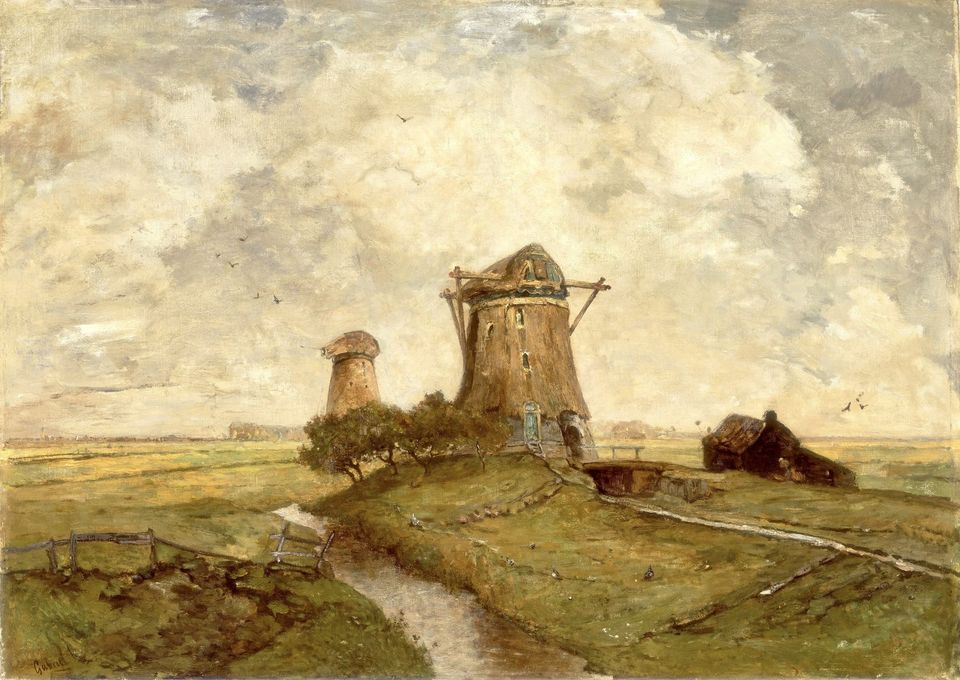
The placement of the mills resembled a game of chess against a very unpredictable opponent, nature. In March 1613, there were a total of 43 mills, three of which were at Kwadijk. The Kwadijker mill corridor consisted of four mills in 1635.
End of an era
In 1608, the dykes started the job with 21 mills and by 1610, 26 mills were already grinding the water out of the lake. Mills were moved, mills were added. Three mills in a row became four.
50 Mills regulated the water level in the Beemster until the advent of steam pumping stations. This was followed by demolition and sale of the parts. A bold and innovative era was over. In 1888, surveyor A.W. van Kleef stated that there were no more windmills in the Beemster,
Beemster windmills only had and number, except the Meercatje on the Meercatstochtsloot. The mills near de Rijp, Avenhorn and Beets had eloquent names. The Volharding, the Knevelaar.
From lake to world heritage site
The layout of the new...
End of an era
In 1608, the dykes started the job with 21 mills and by 1610, 26 mills were already grinding the water out of the lake. Mills were moved, mills were added. Three mills in a row became four.
50 Mills regulated the water level in the Beemster until the advent of steam pumping stations. This was followed by demolition and sale of the parts. A bold and innovative era was over. In 1888, surveyor A.W. van Kleef stated that there were no more windmills in the Beemster,
The Beemster windmills each had their own number, with the exception of the Meercatje on the Meercatstochtsloot. The mills near de Rijp, Avenhorn and Beets had melodious names: the Volharding and the Knevelaar.
From lake to World Heritage Site
The layout of the reclaimed land, geometrically organised and entirely in the Renaissance style, is still clearly visible. This was one of the reasons why UNESCO included the Beemster Reclamation on the World Heritage List in 1999.
On the Oostdijk near Kwadijk, where a row of windmills once stood, lies Fort Benoorden Purmerend. It is one of the five forts in the Beemster and forms part of the UNESCO World Heritage Site known as the Dutch Waterlines. Here, you find yourself in a piece of World Heritage squared. Unique? Absolutely, because this is where the Dutch Water Lines and the Beemster Reclamation Project converge, creating a ‘World Heritage Site squared!’