
Listen | Posthorn (part 1)
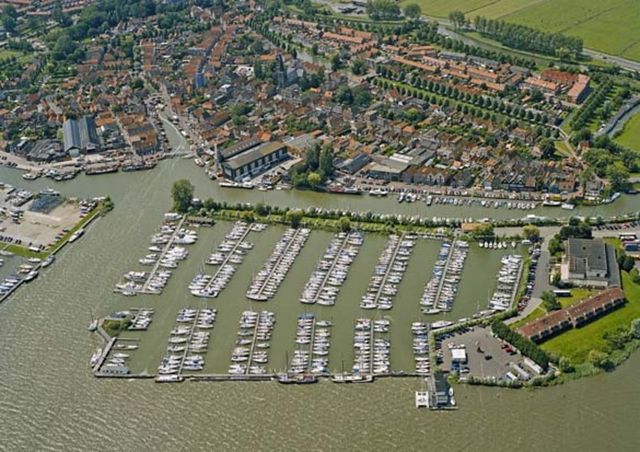
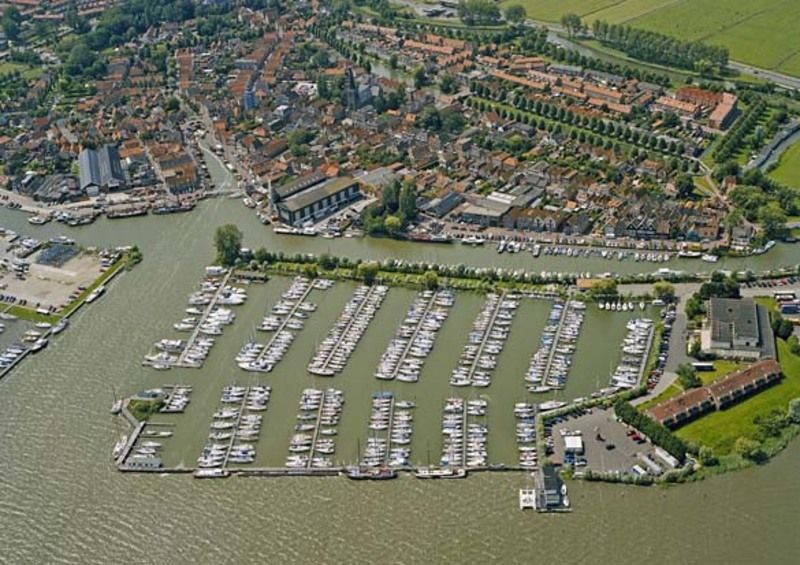
At the end of the road, follow the bend to the left. Transporting goods and people to and from Monnickendam was mainly done by water. Due to its location, the port town formed an important link between the sea and the hinterland.
Until the Purmer Ee was closed off around the year 1400, Monnickendam was an important seaport that rivaled Amsterdam as the region's most important city. But to prevent flooding in the hinterland, the Count of Holland decided to close off the Purmer Ee. In exchange, Monnickendam received more extensive excise duties. That seemed like a good deal, but it certainly wasn't. Indeed, the Monnickendammers did not know that the seaport would silt up because of the closure of the river. As a result, large sea ships could no longer reach the port and henceforth sailed on to Amsterdam. Thus, the closure of the Purmer Ee led to the decline of Monnickendam and the prosperity of its competitor Amsterdam. Monnickendam turned into a transit port for goods to and from our capital city.
Until the construction of...
Until the closure of the Purmer Ee around the year 1400, Monnickendam was an important seaport that rivaled Amsterdam as the region's most important city. But to prevent floods in the hinterland, the Count of Holland decided to close off the Purmer Ee. In exchange, Monnickendam received more extensive excise duties. That seemed like a good deal, but it certainly wasn't. Indeed, the Monnickendammers did not know that the seaport would silt up because of the closure of the river. As a result, large sea ships could no longer reach the port and henceforth sailed on to Amsterdam. Thus, the closure of the Purmer Ee led to the decline of Monnickendam and the prosperity of its competitor Amsterdam. Monnickendam turned into a transit port for goods to and from our capital city.
Until the construction of the Afsluitdijk in 1932, Monnickendam remained an important port, although it was no longer a major seaport. After the closure of the Purmer Ee, the construction of the Afsluitdijk was the second major setback for town. This cut Monnickendam off from the North Sea, so to speak. Fishing declined and more and more traders and craftsmen left the town. Yet the economic decline also had positive consequences. Monnickendam was so poor that there was not enough money to replace old buildings. As a result, we can still enjoy the historic centre today as it looked centuries ago.